

While the idea has been discussed in academic circles off and on in independent India, it has not found much political traction in the past. Absence of two-party system, complications of coalition politics and lack of political commitment have often queered the pitch in the past. However, at present two large coalitions, the National Democratic Alliance (NDA) led by the Bhartiya Janata Party (BJP) and the INDIA alliance led by the Indian National Congress (INC), seem to have become a reality in national politics. Even in States, two competing political formations led by different national or regional parties are emerging. Hence, time seems to be ripe for introduction of the shadow cabinet system in India, writes Sunil Kumar, a former civil servant.
In the last two decades the country has seen two Prime Ministers (PM) with contrasting leadership styles, in the UPA government led by the late Dr. Manmohan Singh and in the NDA/BJP government led by Narendra Modi. While the former was dubbed and painted as a ‘weak’ leader, the latter has been projected as a ‘strong’ leader. So much so that the Government of India itself has come to be projected as the ‘Modi Government’ and Cabinet Ministers have become virtual non-entities with all major decisions relating to their Ministries being taken by the Prime Minister’s Office (PMO). Institutions like the Inter-State Council has become defunct. The Planning Commission was abolished w.e.f.1st January, 2015. Quite often even the Cabinet Ministers are taken by surprise when major decisions about their portfolios are announced by the Prime Minister. All initiatives are attributed to the Prime Minister. Almost all schemes are known as Pradhan Mantri such-and-such scheme. A sizeable section of the population (BJP supporters) believe that if ever India had a strong leader at the helm, it has been post- 2014.
Yet the Indian Constitution has put in place a Parliamentary system of government wherein the leader of the party/coalition having a clear majority in the Lok Sabha is sworn in as the Prime Minister who, in turn, constitutes his/her Council of Ministers comprising of leaders selected by him/her. All Ministers hold office as long as they enjoy the confidence of the Prime Minister and the Council of Ministers led by the PM remain in office as long as they enjoy the support of majority of MPs in the Lok Sabha. In the Westminster type of Parliamentary democracy (also followed in India), the principle of ‘collective responsibility’ guides the functioning of the Council of Ministers. The position of the Prime Minister has been characterized as ‘primus inter pares’ or first among equals. However, the current position in India is very different with the Prime Minister openly avowing his position as above all others in the Council of Ministers. This position is also seen in the case of some Chief Ministers in their States.
Be that as it may, the questions that arise at this stage are many. The Indian political system theoretically subscribes to the principle of separation of powers. But once the executive assumes supremacy and begins to dictate terms to other organs of government, then legislative oversight goes for a toss. Let us see how this has happened.
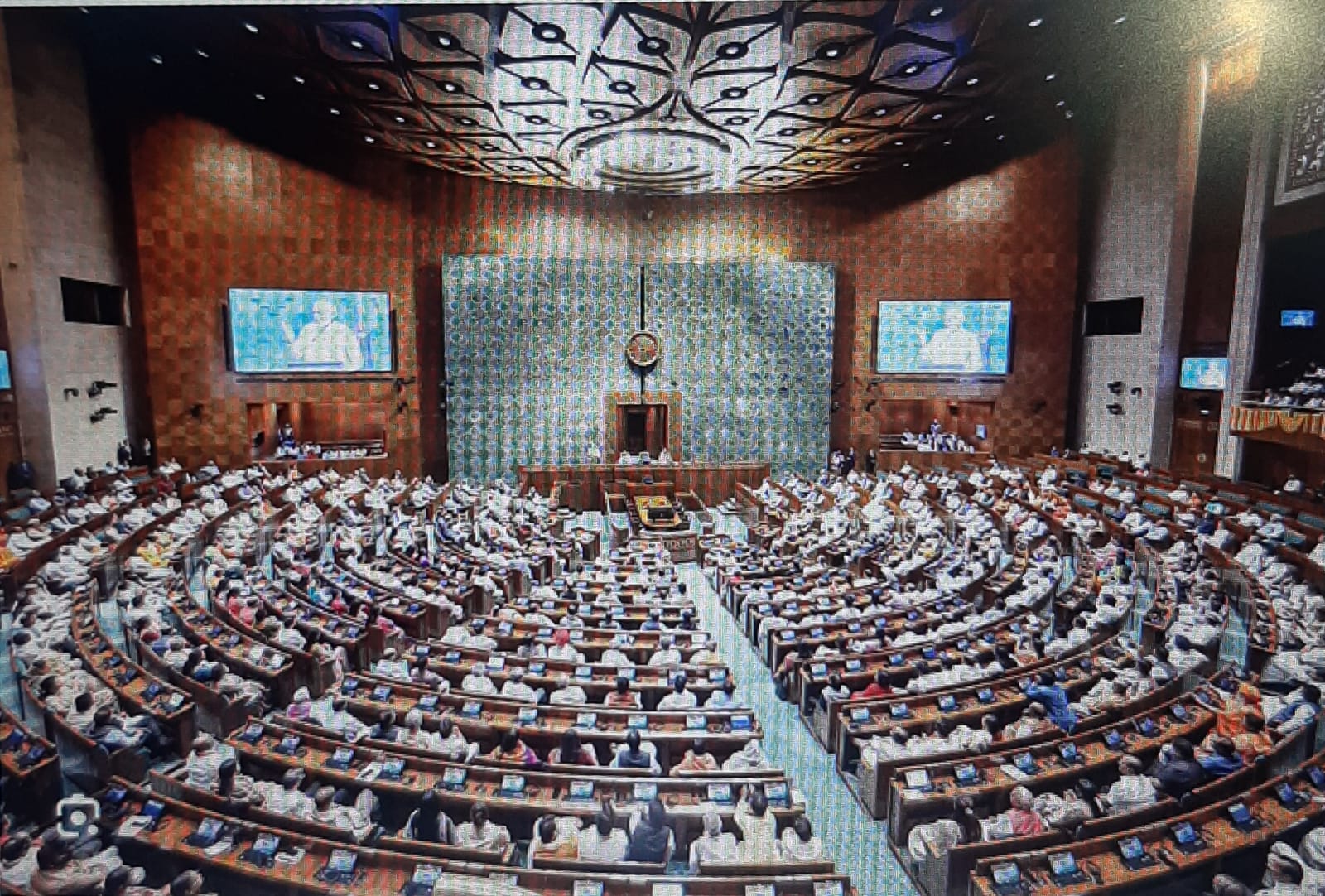
First, the opposition parties are reduced to non-entities. How this has been done in the last twelve years need not be gone into detail here. Suffice it to say, that actions such as not conducting election to the post of the Deputy Speaker of Lok Sabha for the past seven years; denying the ‘Leader of Opposition’ status to the largest political party in the Opposition in 17th Lok Sabha on the ground that their number was slightly less than the prescribed ten percent of the total strength of the House; subjecting leaders of the Opposition to public ridicule by calling them ‘Pappu’ and virtually casting them in the role of enemies instead of political adversaries, have contributed to reducing the Parliament to an echo chamber where all MPs are supposed to stand up and applaud the entry of the PM. Even in Parliamentary Party meetings, chants of Modi -Modi are heard as if a rock star is being greeted by frenzied fans in a concert! Second, the number of sittings of the House get reduced. The tendency to ‘bulldoze legislation’ without any meaningful debate or showing any inclination to take into account reasonable and logical points raised by the Opposition becomes the norm rather than the exception. The functioning of the Standing Committee system also gets diluted. Consequently, Ministers and officials start adopting a cavalier attitude towards Parliament and parliamentary proceedings. The effect shows in the quality of legislation, deliberations, and legislative oversight over government. These strike at the root of democracy and upset the delicate balance between the executive and the legislature.
Third, when ideas like ‘One Nation, One Election’ gain currency and legislations are drafted without adequate examination of opposing points of view, the result is that it includes proposals which virtually render ineffective the most important parliamentary tool, the ‘No Confidence Motion’. In India we have the example of a Union government falling after losing the trust vote by one vote. However, today the government will make sure that such an eventuality never arises by letting the investigative agencies such as CBI, ED whisk away MPs in alleged inquiries on the pious plea that all are equal before law and the law is merely taking its own course.
The unfortunate consequences for Indian democracy in all the above, apart from the enormity of vitiating the parliamentary process, is that political parties, preoccupied with survival and chicanery, do not devote any serious attention to the business of legislation, policy-making or governance. This proves detrimental to the nation and betrays the people. What can be done then to infuse responsibility, accountability and gravity in legislation and governance?
In my view, we could do well to emulate the British practice of the Opposition party/coalition forming its ‘shadow cabinet’, a custom also practised in Australia, Canada and New Zealand. This would add gravitas to parliamentary proceedings. Debates in Parliament would then be expected to be better informed and focused aimed upon governance instead of scoring brownie points and winning popular approval of an ad hoc nature.
The shadow cabinet can be described as ‘government-in-waiting’. The Leader of the Opposition (LOP) heads the shadow cabinet and members are selected from the elected MPs. Some political parties elect the members of the shadow cabinet while others leave this to the choice of the LOP. Each member of the shadow cabinet is assigned a specific Ministry and they are expected to study and analyse the policies, schemes of the concerned Ministry and ask questions, participate in discussions and use all Parliamentary tools to ensure accountability of the Ministers to the Parliament. The principle of collective responsibility applies to all members of the shadow cabinet too even though they do not enjoy any executive responsibility and their remuneration is the same as that of any other MP. They are allotted seats in the front benches and generally sit in Parliament facing the Ministers.
In India there is no concept of the shadow cabinet as of now. Once defeated in polls, the focus of the opposition parties shift to opposing the government in the House and on the streets. Since Indian democracy is more of an ‘electoral democracy’ where the entire focus is on winning elections rather than governance post-elections, all political parties compete only to come up with more popular schemes and programmes aimed at influencing voters . It becomes a zero-sum game where electoral profligacy sweeps aside administrative and fiscal prudence. Immediate electoral returns blind politicians to long-term adverse impact of their policies on governance. After winning elections, overnight MPs are expected to become masters in governance and able to provide policy direction to the Ministries that they are allotted to head. More than administrative ability, their political heft determines their place in the Cabinet and the allocation of the Ministry. Consequently, more often than not, most Ministers seem to fumble when it comes to budget-making, formulation and implementation of departmental schemes and they are excessively dependent on the bureaucracy.
A stint in the shadow cabinet could possibly change this. The shadow Minister would be expected to study the working of the allocated Ministry deeply and develop his understanding of the portfolio. This would become possible through serious study in the Parliament library, interaction with experts (government & non-government), developing an understanding of the legal language deployed in preparation of laws enacted by the Parliament and administrative terms used in scheme guidelines. Study and analysis of CAG reports tabled in Parliament would add to their experience. Together with their political acumen and understanding garnered from interaction with common people, this experience can significantly enhance their performance as Ministers as and when their party/coalition comes to power. Howsoever utopian this may sound, even if it succeeded in achieving a fraction of its purpose, we would still be considerably better off than we are today.
Next, it would foster the culture of ‘collective responsibility’ among the members of the shadow cabinet and, through them, in the party or coalition. These members would have a significant role to play even in the drafting of election manifestos as they would always keep an eye on the fact that all promises made in the manifesto would need to be seen to be implemented as and when they are voted to power.
Further, in a situation where a coalition of parties come to power, participation in the shadow cabinet would ensure relatively easy adjustment and accommodation of policies and programmes of constituent parties in the Common Programme of Action (CPA) to be implemented. It would go a long way to ensure that pre-poll alliances with agreed CPA win the confidence of the voters rather than the unholy post-poll alliances which are solely driven by hunger for power. The task of government formation would also become very smooth. In present practice, first the leader has to be elected and endorsed by all constituent parties, then the list of members in the Council of Ministers is finalized by the PM designate. All the drama surrounding even allocation of portfolios would get considerably reduced. It would be sign of a mature democracy.
If the practice of electing members of the shadow cabinet is adopted, then it would greatly curtail the power of the LOP to choose his/her team unilaterally. There would be a strong possibility then of MPs with stature, ability and popular support in the party getting elected as shadow ministers. In England, more often than not, when the leader falters and his/her public ratings drop, the challenge comes from those who have been in the shadow cabinet. This would enhance inner party democracy. However, political parties can leave the selection of shadow Ministers to the discretion of the LOP too.
As for the bureaucracy, they would be on their toes and would perforce have to respect and support the shadow Ministers through the act of providing information due to them even as MPs. Officials would know that they could very well become their political bosses after elections. Likewise, even members of the public would know as to who to approach other than those in Government. Think Tanks would also do well to share their policy papers and conduct advocacy with the shadow cabinet apart from the Government as is the case now.
The voters would be in a position to make informed choices during polls and also assess the candidates’ performance based on their communication skills reflected not only in parliamentary proceedings but also in their interaction with the media. An independent media which dwells not only on the official press notes issued by the Press Information Bureau (PIB) and briefings by Ministers but also on those by the shadow cabinet would play a very important role in presenting the full picture and unbiased reporting of policies and events to the public.
In this context the suggestion made by Prof. Tarunabh Khaitan[i] that the leader of the Opposition (LOP) should not be seen as part of the government but as a part of the state is noteworthy. The LOP should be taken into confidence on important matters by the Government and s/he should have the power to request briefing from the defence, intelligence chiefs and senior bureaucrats like the Cabinet Secretary and Secretaries to Government of India. Likewise, his suggestion that LOP should have the power to schedule discussions one day a week when Parliament is in sesion and the session should then be presided over by the Deputy Speaker has great merit. If the LOP also heads the shadow cabinet then it adds further merit to the suggestion made.This arrangement should be put in place not only at the Union level but also in the states and in local governments (where elections are contested on party lines). This has the potential to change the tone and tenor of democracy as it is practised in the country.
While the idea has been discussed in academic circles off and on in independent India, it has not found much political traction in the past. Absence of two party system, complications of coalition politics and lack of political commitment have often queered the pitch in the past. However, at present two large coalitions, the National Democratic Alliance (NDA) led by the Bhartiya Janata Party (BJP) and the INDIA alliance led by the Indian National Congress (INC), seem to have become a reality in national politics. Even in States, two competing political formations led by different national or regional parties are emerging. Hence, time seems to be ripe for introduction of the shadow cabinet system in India.
Given the recent focus on the ills plaguing the education system, the bleak job prospects and uncertain future in the country (brought to the fore by the protest movement led by Gen Z), it would have been wonderful if the shadow Education Minister had engaged with and addressed the protesters and written about how they would have addressed the concerns of the youth. This is just by way of illustration. Issues related to the economy, foreign policy, security environment, centre-state relations etc. are all crying for articulation of an alternative point of view which sadly is missing. Mere change of personnel in the corridors of power would not be enough if political parties/alliances continue to let citizens be ‘missing in action’ in public policy formulation.
To conclude, it is the right time to adopt the ‘shadow cabinet’ system in the country wherein the LOP as the head of the shadow cabinet is granted constitutional rights to be regularly briefed on issues relating to national security, international relations and domestic policy by senior government officials and on certain legislative matters. At the state and local government level, it would be confined to subjects that fall within their purview. The shadow cabinet would provide those MPs an opportunity to master intricacies of governance regarding the Ministry/Department assigned to them. It would reinforce collective responsibility, improve legislative functioning, ensure legislative oversight over the executive, curb the tendency to bulldoze legislation, and strengthen inner-party democracy. It could also check the capriciousness of leaders. Above all, in Indian conditions, a pre-poll coalition like INDIA alliance or NDA, would get an opportunity to settle leadership struggles and ugly jostling for power among constituents smoothly as then everyone would have been working as part of a team even when they were sitting on the Opposition benches. It has all possibility of emerging as a key step in the transition of India from an electoral democracy to a true democracy where the government remains answerable to the legislature and accountable to the people at all times.
(Sunil Kumar is a visiting Senior Fellow associated with the Centre for Cooperative Federalism and Multilevel Governance in Pune International Centre and a former civil servant. Views expressed are personal.)
[i] Restoring Democracy: An 11-Point Common Minimum Programme for the United Opposition; Tarunabh Khaitan; The Wire, July 17, 2023; https://m.thewire.in/article_pdf/politics/united-opposition-democracy-common-minimum-programme