

The problem of humanity has been application of dual standards in statecraft – choosing between good terrorists and bad terrorists, ‘good’ dictators and ‘bad’ dictators -as per one superpower’s geopolitical perilous convenience, writes former IAS officer V S Pandey
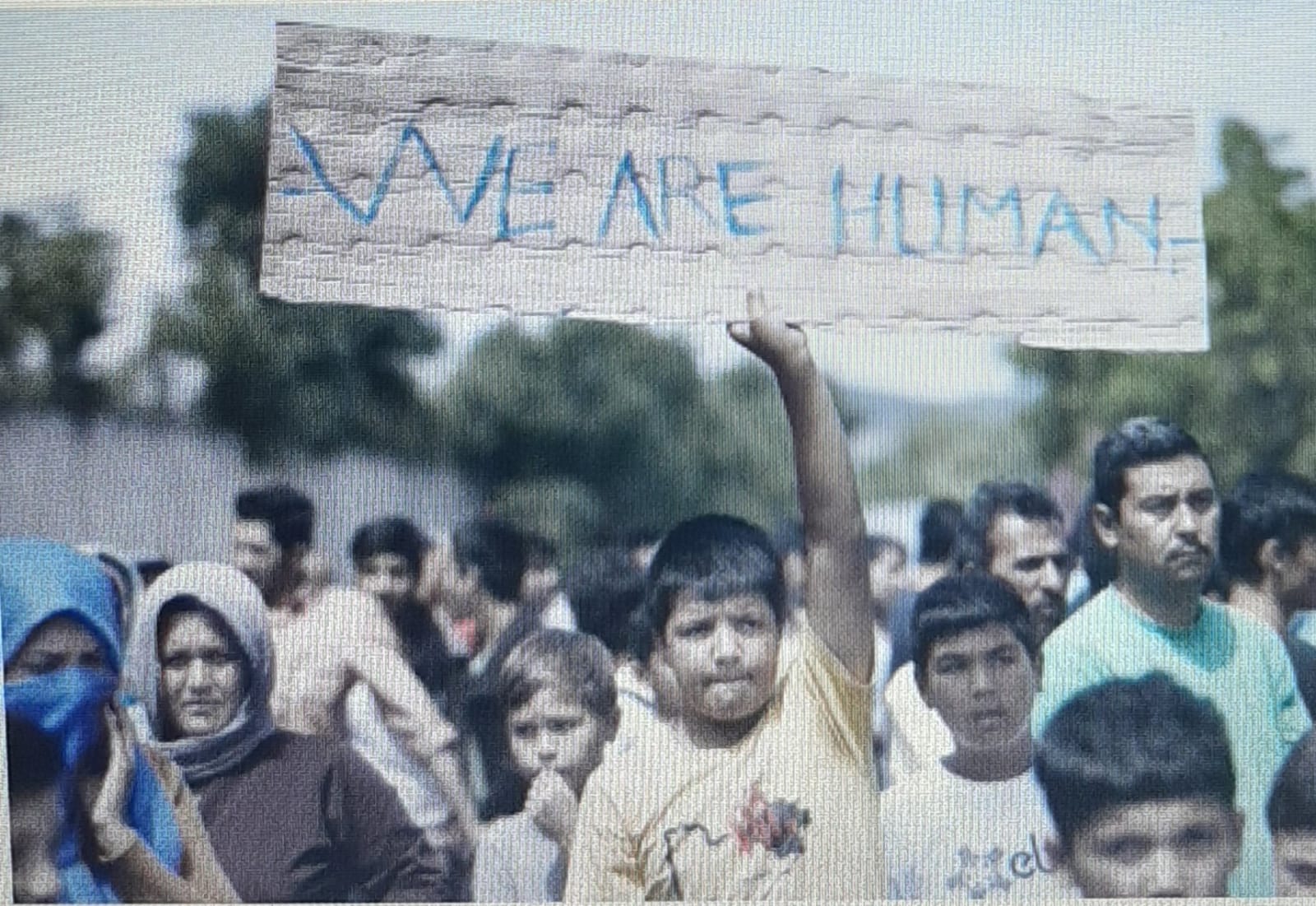
History is witness to the continuous collision between demands of adherence to international laws regarding respect for national sovereignty and integrity versus the gory details of tyrannical regimes ruthlessly crushing their own citizenry to remain in power in perpetuity. The grave question humanity faces today is should something be done to mitigate the suffering of millions of people due to denial of basic human rights by their rulers or should they be allowed to suffer humongously on the pretext of protecting the sovereignty of nations and being complicit in letting them deal with their people as they wish.
The modern international order rests on two powerful principles that are sometimes inimical: the sovereignty of states and the rights of individuals. Sovereignty emphasizes territorial integrity and non-interference in internal affairs, while human rights doctrine asserts that every individual possesses universal and inalienable freedoms regardless of political boundaries. The friction between these two ideas has become increasingly visible in contemporary global crises, especially where regimes are accused of systematically suppressing civil liberties and women’s rights. The central question is both moral and political: should sovereignty remain sacrosanct even when states fail to protect — or themselves violate — the most basic rights of their citizens?
The concept of sovereignty traces its modern roots to the 1648 Peace of Westphalia, which ended Europe’s devastating religious wars and established the norm that rulers would control their territories without external interference. This principle later became foundational to the international system and was formally embedded in the Charter of the United Nations in 1945. At the time, newly independent nations strongly supported sovereignty because it offered protection against colonialism and external domination.
However, the horrors of the Second World War profoundly altered global thinking. The Holocaust and other mass atrocities made it clear that states themselves could become perpetrators of extreme violence against their populations. In response, the international community adopted the Universal Declaration of Human Rights in 1948, affirming that individuals—not just states—are subjects of international concern. Over time, treaties, conventions, and international courts expanded this framework, culminating in institutions such as the International Criminal Court, designed to prosecute genocide, war crimes, and crimes against humanity.
Despite this normative shift, the Cold War era largely preserved the primacy of sovereignty. Global powers frequently avoided intervention in internal conflicts to prevent escalation between rival blocs. Yet the post-Cold War period exposed the moral limits of strict non-interference. The genocides in Rwanda and ethnic violence in Bosnia demonstrated the catastrophic consequences of international passivity.
These failures eventually led to the emergence of the “Responsibility to Protect” (R2P) doctrine, endorsed by the United Nations in 2005. R2P reframed sovereignty not as absolute authority but as responsibility. According to this doctrine, states must protect their populations from genocide, ethnic cleansing, war crimes, and crimes against humanity. When they fail—or are themselves the perpetrators—the international community may take collective action through diplomatic, humanitarian, or, in extreme cases, military means authorized by the United Nations Security Council.
The moral logic behind this evolution is straightforward: sovereignty cannot be a shield for systematic brutality. Nowhere is this tension more visible than in cases involving the suppression of women’s rights. Gender-based restrictions often serve as a clear indicator of broader authoritarian control. When governments deny women access to education, employment, or public participation, the issue moves beyond cultural practice into the realm of structural human-rights violations.
There are compelling reasons why sovereignty continues to hold significant weight in global affairs. First, intervention carries risks. Military or political interference by external powers can intensify conflicts, destabilize regions, and sometimes worsen humanitarian conditions. The 2003 Iraq war remains a cautionary example frequently cited in international discourse, where humanitarian arguments were intertwined with strategic objectives, ultimately undermining trust in intervention frameworks.
Second, sovereignty protects weaker states from domination by stronger ones. Many countries remain wary that humanitarian language could be misused as a pretext for geopolitical influence. This concern is particularly strong in the Global South, where colonial history still shapes political perceptions.
Third, sustainable social transformation often requires internal legitimacy. External pressure may encourage reforms, but durable change typically emerges from domestic institutions and civic movements rather than external imposition.
Yet these considerations do not override the ethical imperative to protect individuals from severe abuse. Instead, they emphasise the need for carefully calibrated responses. International law increasingly reflects this balance: sovereignty remains fundamental, but it is no longer unconditional.
Women’s rights have become a particularly powerful lens through which this transformation is visible. Restrictions on women often correlate with broader patterns of authoritarian governance, making gender equality not only a human-rights issue but also a governance indicator. When half the population is denied agency, the legitimacy of sovereign authority becomes morally contested.
The historical trajectory of international law suggests a clear direction: sovereignty remains a cornerstone of world order, but it cannot be treated as more sacred than the dignity and fundamental freedoms of human beings. Where states fail in their primary duty to protect citizens rights, especially of the most vulnerable, including women—the moral legitimacy of non-interference inevitably comes into question.
Finally, every action needs to be judged on the principle of “ the Categorical Imperative” laid down by Immanuel Kant’s moral philosophy, which is an absolute, unconditional, and universal moral law that commands actions regardless of personal desires or consequences. It guides moral decisions by requiring that one only acts according to maxims that could rationally be willed as a universal law for everyone.
This formulation dictates that if an action cannot be universalized without contradiction, it is morally forbidden. So it is morally impermissible to support one dictator and hate another, tolerate violation of human rights in one country and enter into war with another country to enforce freedom and human dignity. The problem of humanity has been application of dual standards in statecraft – choosing between good terrorists and bad terrorists, ‘good’ dictators and ‘bad’ dictators -as per one superpower’s geopolitical perilous convenience.
(Vijay Shankar Pandey is former Secretary Government of India)