

A corrupt politician who built his brand on moral superiority is now playing the oldest trick in the legal playbook — judge-shopping dressed up as principle, writes former IAS officer V.S.Pandey
Former Chief Minister of Delhi Arvind Kejariwal is back with his theatrics and blatant lies once again. After having secured a discharge from lower court, which by all accounts on the basis of tons of verifiable evidence available in the chargesheets filed by CBI and ED against accused Kejariwal and others can be called “a manipulated verdict” devoid of any merit and legal basis. But one thing is certain that there is a certain audacity to Arvind Kejriwal’s brand of politics that, one must grudgingly admit, requires considerable nerve. Here is a man who, based on the facts available in public domain and mainstream media conclusively proved to be a corrupt person to the core, spent a decade presenting himself as India’s conscience — the lone crusader against a corrupt establishment, the broom-wielding messiah who would sweep Delhi’s politics clean. The imagery was an outright lie and deceit but powerful. The narrative was false, fraud but seductive. And now, stripped bare by the very judicial system he once invoked against his opponents, that narrative collapsed in spectacular fashion.
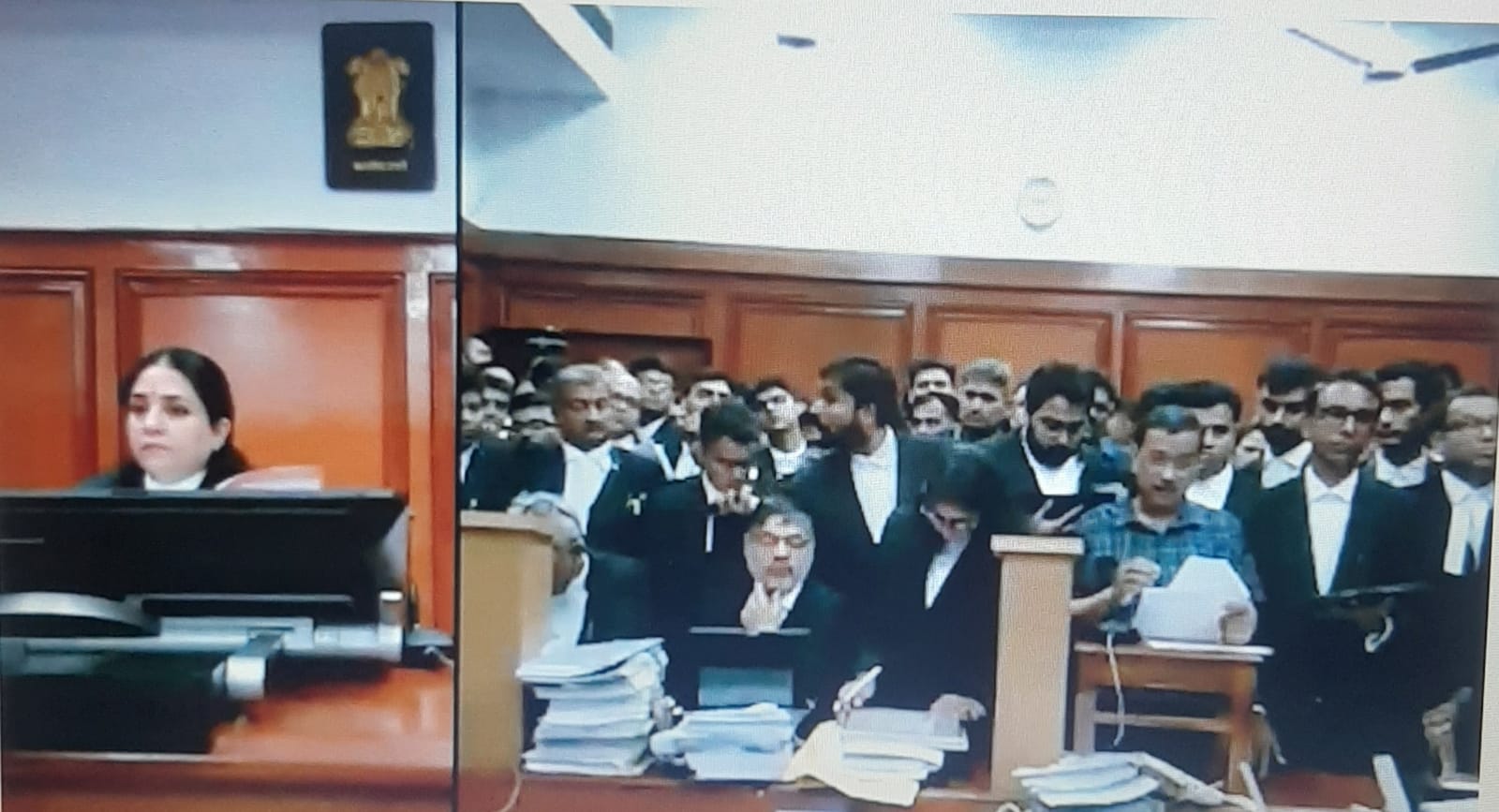
The latest episode in the Delhi excise policy case has moved to the Delhi High Court, and with it has come what may well be remembered as one of the most brazen exercises in legal theatre this decade has produced. Appearing personally before Justice Swarana Kanta Sharma, Kejriwal urged her to recuse herself from hearing the CBI’s plea against his discharge, citing what he called a “reasonable apprehension of bias.” He tried desperately, as is his habit of speaking only lies, trying to dress his argument in the respectable clothes of legal precedent, invoking the Supreme Court’s judgment in Ranjit Thakur v Union of India — the law, he reminded the court, only requires a litigant to show reasonable apprehension, not actual bias.
Fair enough, in theory. The doctrine of perceived bias exists for good reason, and no litigant should be compelled to face a judge they genuinely fear will be partial. But doctrine can be weaponised, and in Kejriwal’s hands, it has been transformed into something far less principled — a calculated attempt to replace a judge who has made inconvenient but factual and judicious observations with one who might prove more accommodating.
Let us trace the timeline, because it is instructive. On February 27, a trial court discharged Kejriwal, Sisodia and 21 others, finding that the CBI had failed to establish a prima facie case, with the chargesheet containing numerous gaps unsupported by witness statements or documents. The discharge order was detailed, the product of months of argument. Kejriwal’s supporters celebrated it as vindication. He told the High Court he was “no longer an accused.”
But a discharge at the trial court stage is not an acquittal. It is not exoneration. It is a finding that the prosecution has not yet placed sufficient material before the court to warrant a trial. The CBI retained — and exercised — its legal right to challenge that order before a higher court. That is not persecution. That is the rule of law functioning exactly as designed.
On March 9, Justice Sharma issued notice to all 23 accused on the CBI’s plea, observing that certain findings of the trial court prima facie appeared erroneous and warranted deeper consideration by the High Court. She also stayed the trial court’s recommendation for departmental action against the CBI’s investigating officer. These were entirely routine judicial actions — the kind taken by High Courts every week across the country when reviewing lower court orders. A High Court judge examining whether a trial court’s reasoning is sound is not evidence of bias. It is, quite literally, the job description.
Kejriwal, however, was “shocked.” He told the court his heart sank when the March 9 order came, complaining that a detailed discharge order was termed “erroneous” after a hearing of only five to ten minutes. The lament is revealing in its strategic selectivity. Where was this concern for procedural thoroughness when AAP’s own legal manoeuvres played out over years? Where was this reverence for the time courts invest in their decisions when Kejriwal’s bail was being argued through multiple forums, including the Supreme Court itself?
The accusations against Justice Sharma escalated from there. Kejriwal alleged a “trend” of the court endorsing the investigating agencies’ arguments and claimed the judge had already effectively declared him guilty, with only the sentence left to be pronounced. He went further still — arguing that Justice Sharma’s attendance at events linked to the RSS and its affiliate, the Akhil Bharatiya Adhivakta Parishad, created a perception of bias. A sitting High Court judge attending legal fraternity events is now, apparently, grounds for recusal.
This is not a litigant seeking justice. This is a corrupt politician seeking a favourable bench. The Solicitor General, Tushar Mehta, put the danger bluntly: if judges begin recusing themselves on such grounds, the question arises of whether any judge would be able to hear sensitive matters. He warned against the courtroom being turned into a stage for theatrics. The warning deserves to be heard. Because what Kejriwal is doing — and the surrounding media spectacle of him arguing his own case “in person,” winning praise from the judge for arguing well — is precisely that: theatre.
Consider the fuller picture that Kejriwal’s courtroom performance carefully omits. He was arrested and spent months in custody. He secured bail from the Supreme Court. The corruption charges against him were very severe and never dropped through prosecutorial failure alone — a discharge order, contested and now under High Court review, followed years of legal back-and-forth across multiple forums. The Supreme Court, on September 13, 2024, allowed his bail in the corruption case related to the excise policy scam — after the High Court had previously denied it. At every stage, the judiciary — the same judiciary he now claims is irredeemably biased — has been his recourse.
A corrupt man’s “honest man” narrative was always a false political construction. Honesty, as a public identity, was Kejriwal’s founding capital. Corruption was the evil he alone could defeat. The Anna Hazare movement, the RTI activism, the hunger strikes — all built toward an image of a man too principled to bend. That image served him magnificently at the ballot box. It survived two terms as Chief Minister. It survived considerable turbulence. It has not survived the excise policy case.
The recusal gambit is, at its core, an admission of vulnerability dressed up in legal language. A man confident of his innocence before the full scrutiny of the law does not need a sympathetic judge. He needs an honest court. Kejriwal, having secured one apparently manipulated favourable ruling at the trial court, now wishes to ensure the same at the High Court — not by the strength of his case, but by removing the judge he fears might not agree.
India’s judiciary is not without its flaws. No institution is. But the principle that justice must be consistent, that judges cannot be vetted for their likely temperament by the accused, is foundational. To chip away at that principle — while wrapping the chisel in the language of fairness — is perhaps the most dishonest act of Kejriwal’s thoroughly dishonest legal odyssey.
The broom, it turns out, swept everything under the rug.
(Vijay Shankar Pandey is former Secretary Government of India)