

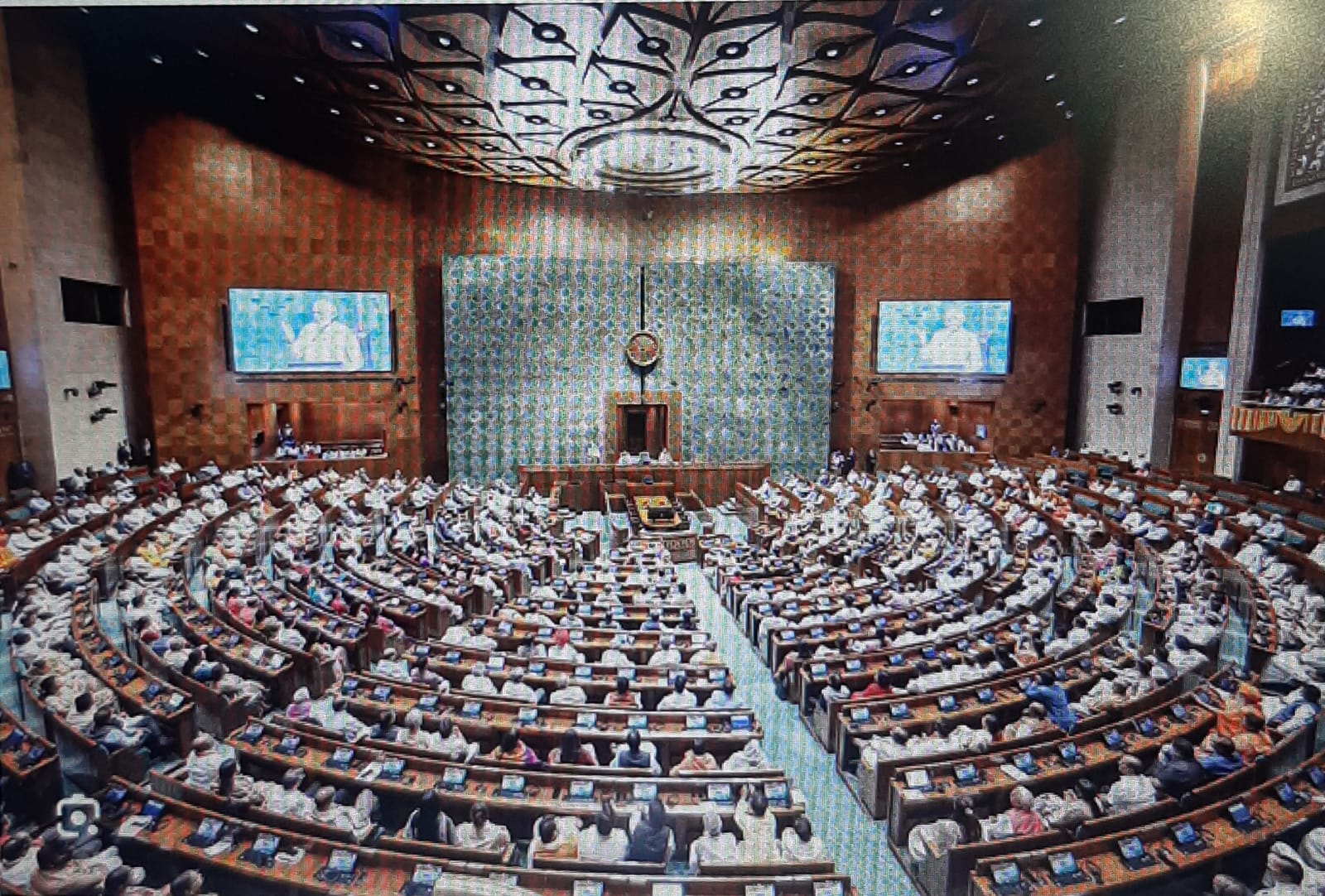
The whole business of ‘uncontested election’, whether to the Lok Sabha or Rajya Sabha, Vidhan Sabha or the rural and urban local governments, has come to the fore in recent times. The withdrawal of candidature by all candidates other than those of the ruling Bharatiya Janata Party (BJP) in the Surat Parliamentary Constituency and efforts by the BJP to repeat the same in Indore during the 2024 General Elections had raised a furore. This trend was objected to by different political parties and civil society organizations. Even academics sat up and began to look at the whole issue afresh, writes former Civil Servant Sunil Kumar.
A writ petition has been filed by the Vidhi Centre for Legal Policy, in the Supreme Court (SC) in 2025 (the Association for Democratic Reforms (ADR) has been included as an intervenor) wherein the Court has been urged to declare the relevant provisions relating to ‘unopposed elections’ in the Representation of the People Act (RPA), 1951 as ultra vires on grounds of being undemocratic and failing to provide the electorate with a chance to exercise their right to vote. This has been especially underlined in the light of the SC judgment in the People’s Union for Civil Liberties (PUCL) vs Union of India (2013) wherein the SC ruled that the right to cast a negative vote by opting for NOTA is protected in direct elections under Article 19(1)(a) of the Constitution. The matter is currently sub judice.
Election Process
The Parliament and the State Legislative Assembly & Legislative Council elections are organized by the Election Commission of India (ECI) and the elections to local governments (rural and urban) by the State Election Commission (SEC). Both are Constitutional bodies and have the daunting task of conducting free and fair elections. The electoral process has been laid down in the Representation of the People Act (RPA), 1950 and 1951. While RPA 1950 focuses on pre-election work like delimitation of constituencies and the preparation of electoral rolls, the RPA 1951 lays down the actual electoral process in detail including rules for candidates, registration of political parties and resolution of electoral disputes. The provisions of the RPA 1951 are also largely applicable to elections to local governments (rural and urban) since most States have not legislated a separate law for holding local government elections and follow the provisions laid down in the RPA 1951 and rules made thereto. Even the West Bengal Panchayat Elections Act, 2003 has similar provisions.
The election process commences with the announcement of the election schedule. In order to avoid delays in completion of the election process, the Constitution stipulates that there would be no interference by the Courts and disputes, if any, can be settled by the Courts only by means of election petitions filed by the affected parties. This has been largely adhered to and upheld by the Courts.
Unopposed elections
Section 53(2) of the Representation of the People Act, 1951, and Rule 11 of the Conduct of Election Rules, 1961, currently allow for the immediate declaration of candidates as elected when the number of candidates is equal to or less than the number of seats after withdrawal of nominations.
History of Unopposed Elections
There are a number of instances since the first general elections held in 1951-52 wherein candidates have been declared elected unopposed. Between 1951-52 to 2024, 35 candidates have been declared elected unopposed to Lok Sabha. Most of these were in the first three general elections. Likewise, 77 candidates have been declared elected unopposed in State Legislative Assembly elections in Nagaland, 63 in Jammu & Kashmir and 40 in Arunachal Pradesh[i].
Elections to Local Government
The phenomena of ‘uncontested elections’ is much more prevalent in local government elections whether rural or urban. A petition was recently filed by the YSR Congress Party (YSRCP) in the SC wherein it was alleged that its candidates in different districts of Andhra Pradesh were attacked, intimidated and prevented from filing nominations within the stipulated period in the urban local government elections scheduled for October 28, 2026. Consequently, the party candidates could file their nomination in only 321 of 809 wards of 22 urban local governments which go to polls on October 28. The petitioner had sought extension of time for filing nominations on the ground that their candidates were physically prevented from filing their nominations in the given time. Rule 7 of the 2026 Rules empowers the State Election Commissioner to alter and re-notify the election programme where the election process is interrupted. Among other pleas, the petitioner had also sought a stay on the declaration of unopposed election results. Subsequently, the SC directed the SEC to resolve the complaints filed by the YSRCP and directed the Director-General of Police (DGP) to provide full protection to those candidates who seek it. It also directed the SEC to postpone publication of the final list of contesting candidates till October 25. Now the polls are scheduled to be held on November 1, 2026.
In States like Uttar Pradesh, there are not enough candidates especially for the election to wards in Gram Panchayats. Consequently, even after election of the Gram Pradhan, the Gram Panchayat cannot be constituted because of vacant seats of Ward Members. In such a scenario, the elected Gram Pradhans take the lead and get their supporters to file nomination papers for election of ward members. More often than not, there being only one set of validly filed nomination papers, such candidates are declared elected unopposed. Candidate apathy for election to ward members in Gram Panchayats largely stems from the widespread understanding that ward members have no real say in the functioning of the Gram Panchayat. The statutory Standing Committees are non-existent and all powers are virtually concentrated in the Gram Pradhan and the Panchayat Secretary. The honorarium payable to ward members is also a pittance even when compared to that of the Gram Pradhan.
The situation is somewhat different in West Bengal, where all elections are contested on party lines. Instances of candidates of rival parties being physically intimidated and prevented from filing nominations by the ruling party routinely emerge. In the 2018 Gram Panchayat elections, over 30 percent of candidates were declared elected unopposed and almost all such candidates belonged to the then ruling Trina Mool Congress (TMC) party. Following wide-spread condemnation and judicial strictures, the percentage of candidates declared elected unopposed fell sharply to 9.5 percent in the 2023 Panchayat elections. Even then the Kolkata High Court had come down heavily on the failure of the SEC to ensure free participation in certain districts of West Bengal. On the other hand, there are very few instances of unopposed elections in Kerala where too local government polls are contested on party lines.
Government Schemes
In recent times, some states ruled by the BJP have announced schemes wherein Gram Panchayats receive a substantial amount as additional funds for development if all candidates are declared elected unopposed. These Gram Panchayats are called ‘Samras Panchayats’. The trend was started in Gujarat and has now extended to states like Madhya Pradesh, Chhattisgarh, Maharashtra and even Andhra Pradesh. Needless to say, the constitutional legality of such schemes appears questionable. However, there is no such scheme for urban local governments.
What it Hides
It is important to decode what the trend to win elections without entering into a contest hides, especially as most candidates winning elections unopposed happen to belong to the ruling party, whether at the union or in the states. Initially, most such candidates belonged to the then dominant party, the Indian National Congress while, in the last decade or so, it is the BJP which happens to be the ruling party at the Centre and in many states.
Upon deIving deep into the phenomenon of unopposed elections, the full play of money and muscle power can be seen. Political parties and candidates are not loath to pay substantial sums of money to candidates (who could potentially mar their victory prospects) for withdrawal of their candidature. It may also take the form of issuing physical threats to such candidates through the underworld. The political links of local mafia with the ruling parties are quite well known. Political manipulation, coercion and intimidation are all par for the course.
It also emerges, unhappily, that apparently political parties are not averse to committing ‘murder of democracy’ when they are in power. For instance, in the last Panchayat elections held in Andhra Pradesh in 2020 when YSRCP was in power, the percentage of unopposed elections had shot up dramatically in the Mandal elections from 2% in 2014 to 24% and from 0.09% to 19% in Zilla Parishad elections. The then State Government had even brought in an ordinance to curtail the term of the SEC and appoint a more ‘pliant’ SEC instead. The Telugu Desam Party (TDP) was then at the receiving end whereas it is now accused of giving it back to YSRCP in the same coin.
Likewise, the efforts of the Congress-led government to ‘control’ the then CEC, Shri T.N. Seshan (who had reportedly run amok) by appointing two more Election Commissioners in the ECI is well-known. Similarly, all political parties had colluded in not putting up a candidate against Smt. Dimple Yadav when she contested the by-polls from Kannauj Lok Sabha seat (vacated by Shri Akhilesh Yadav) as a Samajwadi Party (SP) candidate in 2012.
The partisan role of the electoral machinery wherein the Returning Officers (RO), being more concerned with ‘administrative convenience’ rather than enduring the ‘headache of organizing the ‘dance of democracy’, choose to reject nomination papers on technical grounds (instead of helping the candidates rectify those technical defects at the time of submission of nomination papers), also becomes clear. When the officers deputed to ensure free and fair polls turn a blind eye to electoral malpractices, then the role of the electoral machinery itself comes into question. The situation gets compounded when the large army of Observers deputed by the ECI and the SEC also fail to intervene in time and the ECI and the SEC choose to be inactive.
The issue of electoral integrity is too important to be left to the Courts alone. It is time all stakeholders (especially citizens, political parties and contesting candidates), came together to address the challenge being posed by the new emerging trend which, if left unchecked, could eventually lead to ‘single party democracy’. The accountability of the ECI and the SEC has to be firmly ensured and they must both carry out and be seen to be carrying out their constitutional mandate.
Free and fair elections are the cornerstone of a vibrant democracy. Both the ECI and the SEC are armed with adequate powers to ensure the integrity of the electoral process. As the elections have to be completed within a tight, stipulated time-frame, the judiciary has been largely circumspect in directly intervening in the matter. Thus, it is all the more reason why the ECI and the SEC should exercise their residual powers granted under Article 324 of the Constitution (and validated by the Supreme Court in several judgments) and ensure holding of free and fair elections.
This would call, inter alia, for the following:
One, the ECI and the SEC should intervene and rectify cases of administrative delinquency during the electoral process. Cases of rejection of nomination papers on technical grounds by ROs must be examined immediately. Sufficient time could be provided in the election schedule itself so that candidates are not left to twiddle their thumbs and wait for filing election petitions after the elections are over.
Two, in all cases where all candidates except one withdraw their candidature, an immediate independent inquiry must be conducted by the ECI/SEC as may be the case. This inquiry should be conducted by a senior officer and specifically examine the conduct of the concerned candidate, police and the officers dealing with the scrutiny of nomination papers. The report should be submitted to the ECI/SEC within a week. Till such time, the authorities should refrain from declaring the result.
Three, it is not enough for the authorities tasked with conducting free and fair elections to maintain ‘peace’ in the office premises of the RO/ARO. Order needs to be maintained in the constituency and instances of candidates being attacked or waylaid on way to the RO’s office must be dealt with severely.
Four, schemes such as the ones announced by the State Governments of Gujarat, Madhya Pradesh, Maharashtra, Andhra Pradesh etc. wherein Gram Panchayats are promised additional development funds if the Panchayat is constituted without elections (all candidates being elected unopposed) fall under the ambit of electoral malpractice of bribing the voters. The SEC of such states would do well to examine these schemes and declare them ‘null and void’ through a well-reasoned speaking order using the residual powers vested in them by Article 324 of the Constitution. Let the concerned state governments challenge the order of the SEC in a Constitutional Court.
Five, the issue of the manner of appointment of CEC/EC and SEC needs a closer look if the credibility of the institution is to be maintained. They should not be seen as ‘government stooges’ and must enjoy the confidence of all stakeholders. This can be done by amending the appointment process laid down by law. The issue of safeguarding their ‘institutional integrity’ cannot be ignored any longer.
Six, the electoral machinery comprising of the bureaucracy and the police must play their role in a bipartisan manner once the electoral process is underway. Administrative convenience must give way to ensuring the free play of electoral democracy. This would mean creating the conditions where candidates can file their nomination papers without being coerced or intimidated, electioneering takes place as per the electoral rules and voters are able to exercise their right to vote fearlessly. Ensuring electoral integrity is the primary duty of the entire bureaucracy and the police working under the direct control and supervision of the ECI/SEC.
Seven, all political parties and party candidates need to renew their commitment to democratic norms and refrain from using loopholes in electoral laws to dismantle the very edifice of democracy which is an integral part of the basic structure of the Constitution as defined by the Supreme Court in the Kesvananda Bharati case.
Eight, the Constitutional Courts need to step in and intervene at the right time to ensure that the ECI and the SEC perform their assigned tasks diligently and adhere to the letter and spirit of the Constitution.
Nine, certain changes in electoral laws such as prescribing a certain minimum percentage of votes before a candidate is declared elected could also be made. This would serve to strengthen democracy. Likewise, there is a strong case for strengthening the NOTA option in the electoral laws.
To conclude, uncontested elections strike at the root of electoral democracy. It is high time that issues related to safeguarding institutional integrity of Constitutional bodies like the ECI and the SEC are addressed on priority. Maintaining electoral integrity is sine qua non in democracy and cannot be allowed to be compromised by any stakeholder, be they the candidates or political parties. The State should not attempt to lure voters into forging a bogus consensus given the harsh reality of existing social, economic and political divisions in society. To presume that such consensus is desirable in rural areas seems to be more of an act geared towards perpetuating status quo and a regressive rather than progressive move. After all, success of democracy depends on effective negotiations among different groups and arriving at broad consensus rather than enticing voters by promising large sums for development works. Alas, the art of negotiation between parties seems to be largely absent in the prevailing political narrative at all levels. The rot is much deeper than what gets reflected in the phenomena of uncontested elections. Failure to act now will spell the death knell of democracy.
(Sunil Kumar is a visiting Senior Fellow associated with the Centre for Cooperative Federalism and Multilevel Governance in Pune International Centre and a former civil servant. Views expressed are personal.)
[i] When winning without votes becomes democracy’s shortcut; Frontline; May 26, 2025; https://frontline.thehindu.com/politics/analysisuncontested-elections-voter-rights-india-2025/article69620973.ece