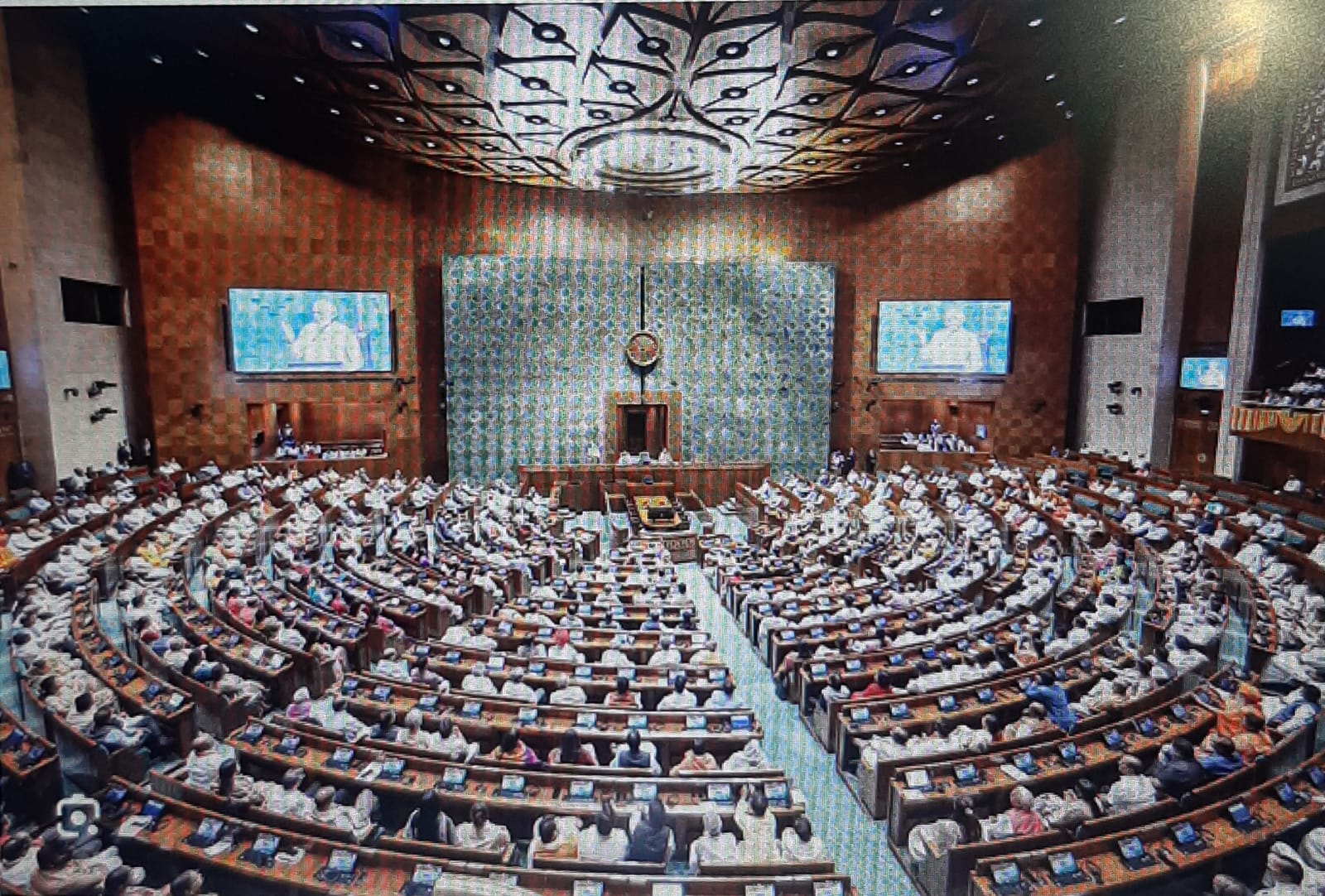


Economic growth, electoral victories cannot substitute for institutions that protect citizens from arbitrary power
India’s institutional renewal must begin with a simple principle: public office is a responsibility, not a privilege. Parliament should provide adequate time for legislative scrutiny and strengthen committee oversight. Judicial appointments and transfers should follow transparent procedures, while courts require sufficient resources to reduce delays. Constitutional and statutory bodies must be protected from arbitrary interference, and vacancies in accountability institutions should be filled promptly, writes former IAS officer V.S.Pandey.
India’s biggest challenge today is not merely to build stronger institutions, but to ensure that they remain independent, accountable and accessible to all. In 2012, economists Daron Acemoglu and James A. Robinson published Why Nations Fail: The Origins of Power, Prosperity, and Poverty, a book that challenged conventional explanations of national prosperity. Its central argument was that the success or failure of nations depends fundamentally on the character of their institutions.
Countries do not remain poor simply because they lack natural resources, educated people or entrepreneurial talent. Nor do they become prosperous merely because they adopt modern technology or pursue rapid economic growth. Their institutions determine whether citizens can exercise their abilities, participate in economic activity and hold those in power accountable.
This argument is particularly relevant to India, where impressive economic achievements coexist with persistent deficiencies in governance, public services and the administration of justice.
Institutions determine the destiny of nations :Acemoglu and Robinson distinguish between inclusive and extractive institutions. Inclusive institutions distribute political power relatively broadly, protect property and individual rights, enforce the rule of law and provide citizens with opportunities to participate in economic and political life.
Extractive institutions, by contrast, concentrate power and economic opportunities in the hands of a privileged minority. They may produce periods of rapid growth, but their underlying purpose is to preserve the advantages of those who control the state.
The distinction is not simply between democratic and authoritarian governments. A country may conduct regular elections while its institutions remain extractive. If political influence determines access to public resources, if laws are enforced selectively, or if citizens cannot challenge arbitrary decisions, electoral democracy alone cannot guarantee inclusive development.
India’s institutional paradox: India possesses many of the essential foundations of an inclusive institutional order: a written Constitution, universal adult suffrage, an independent judiciary, a federal structure, an elected legislature and a constitutional Election Commission. These institutions have survived political upheavals, changes of government and periods of exceptional centralisation.
Yet the existence of institutions does not establish their effectiveness. Their real test lies in whether they can constrain the government of the day, protect unpopular minorities and deliver justice without discrimination.
The evidence suggests that India’s institutional performance is mixed, but that several important democratic safeguards have weakened.
Where institutions are falling short: Parliament is meant to scrutinise the executive, examine legislation and represent the interests of citizens. When important laws are passed without adequate debate, parliamentary committees receive limited opportunities to examine policy, or legislative sessions are disrupted by repeated confrontation, this constitutional function is diminished.
The problem is not confined to the ruling party. Governments have a responsibility to facilitate debate, while opposition parties must use parliamentary procedures constructively rather than treating disruption as their principal instrument of protest.
The judiciary presents another contradiction. India’s courts have repeatedly defended constitutional rights and intervened against arbitrary state action. Yet the enormous backlog of cases, prolonged pre-trial detention and unequal access to legal representation undermine the practical value of judicial independence.
A 2025 report by the International Commission of Jurists identified structural weaknesses in judicial appointments, transfers and accountability. It also highlighted the scope for executive influence over the composition of the higher judiciary. The challenge is therefore not merely to preserve judicial independence in principle, but to strengthen the procedures that make it effective in practice.
The Election Commission, investigative agencies, information commissions and anti-corruption bodies face a similar test. Their credibility depends on whether they act impartially, investigate allegations consistently and remain insulated from political pressure.
Why institutions begin to fail : Institutional decline rarely occurs through a single dramatic event. More often, it develops gradually through a series of decisions that weaken established safeguards.
The first cause is the concentration of political power. When governments view independent institutions as obstacles to their authority rather than essential checks on it, appointments, investigations and administrative decisions can become instruments of political advantage.
The second is the erosion of institutional autonomy. A regulator, investigative agency or constitutional authority cannot command public confidence if its leadership, resources or decisions are excessively dependent on the executive.
The third is the politicisation of administration. Civil servants and police officers are expected to implement lawful policy impartially. Frequent transfers, political interference and incentives to please powerful individuals can undermine professional independence.
The fourth is the weakening of accountability. Institutions become vulnerable when misconduct is not investigated, vacancies remain unfilled, audit findings are ignored and citizens cannot obtain timely remedies.
Finally, institutional decline is reinforced by public indifference. Citizens may tolerate weakened safeguards when a government delivers visible economic benefits or represents their political preferences. But institutions exist precisely to protect society when those in power change or misuse their authority.
The way forward : India’s institutional renewal must begin with a simple principle: public office is a responsibility, not a privilege. Parliament should provide adequate time for legislative scrutiny and strengthen committee oversight. Judicial appointments and transfers should follow transparent procedures, while courts require sufficient resources to reduce delays. Constitutional and statutory bodies must be protected from arbitrary interference, and vacancies in accountability institutions should be filled promptly.
Investigative agencies must apply the law consistently, regardless of political affiliation. Civil servants should be protected against arbitrary interference while remaining accountable for professional misconduct. The independence of the media, the right to information and the freedom of citizens to question public authority must also be safeguarded.
Above all, political parties must recognise that institutional independence is not a concession to their opponents. It is a protection against the possibility that they themselves may one day become victims of arbitrary power.
India’s future will not be determined solely by the rate at which its economy grows, the number of infrastructure projects it completes or the scale of its technological achievements. It will depend equally on whether an ordinary citizen can obtain justice, challenge an unlawful decision and participate in public life without fear or favour.
The lesson is that prosperity cannot be separated from the institutions that sustain it. India does not need to choose between economic development and democratic accountability. It needs institutions capable of delivering both.
The measure of a successful nation is not how powerful its government becomes, but how effectively its institutions ensure that power remains accountable to its people.
(Vijay Shankar Pandey is former Secretary Government of India)