

Since politics in local governments generally mimics that of state and national politics, the thrust of election campaign of candidates and political parties is on mobilising voters through play of money-based politics. All tricks of the trade are deployed to circumvent the prescribed election expenditure limits, writes former IAS officer Sunil Kumar
In the third and concluding part of this comparative study of local government elections in Kerala and Maharashtra, the voter turnout, vote share of political parties, the phenomenon of ‘unopposed’ elections and the election results would be examined and learnings for all stakeholders based on how politics plays out in local governments would be analysed.
Voter Turnout
The local government elections in Kerala were held on 9th and 11th December, 2025. These included 6 Municipal Corporations, 87 Municipal Councils, 14 District Panchayats, 152 Block Panchayats and 941 Gram Panchayats. The voter turnout in Kerala was around 73.69 percent. The voter turnout was lower in urban areas as compared to the rural areas. However, taken together, the polling percentage in all districts of Kerala showed a marginal dip compared to the local government elections held in December 2020. The sharpest dip was seen in Thrissur Municipal Corporation elections where the voter turnout dipped from a high of 71.88 percent in 2020 to 62.45 percent in 2025.
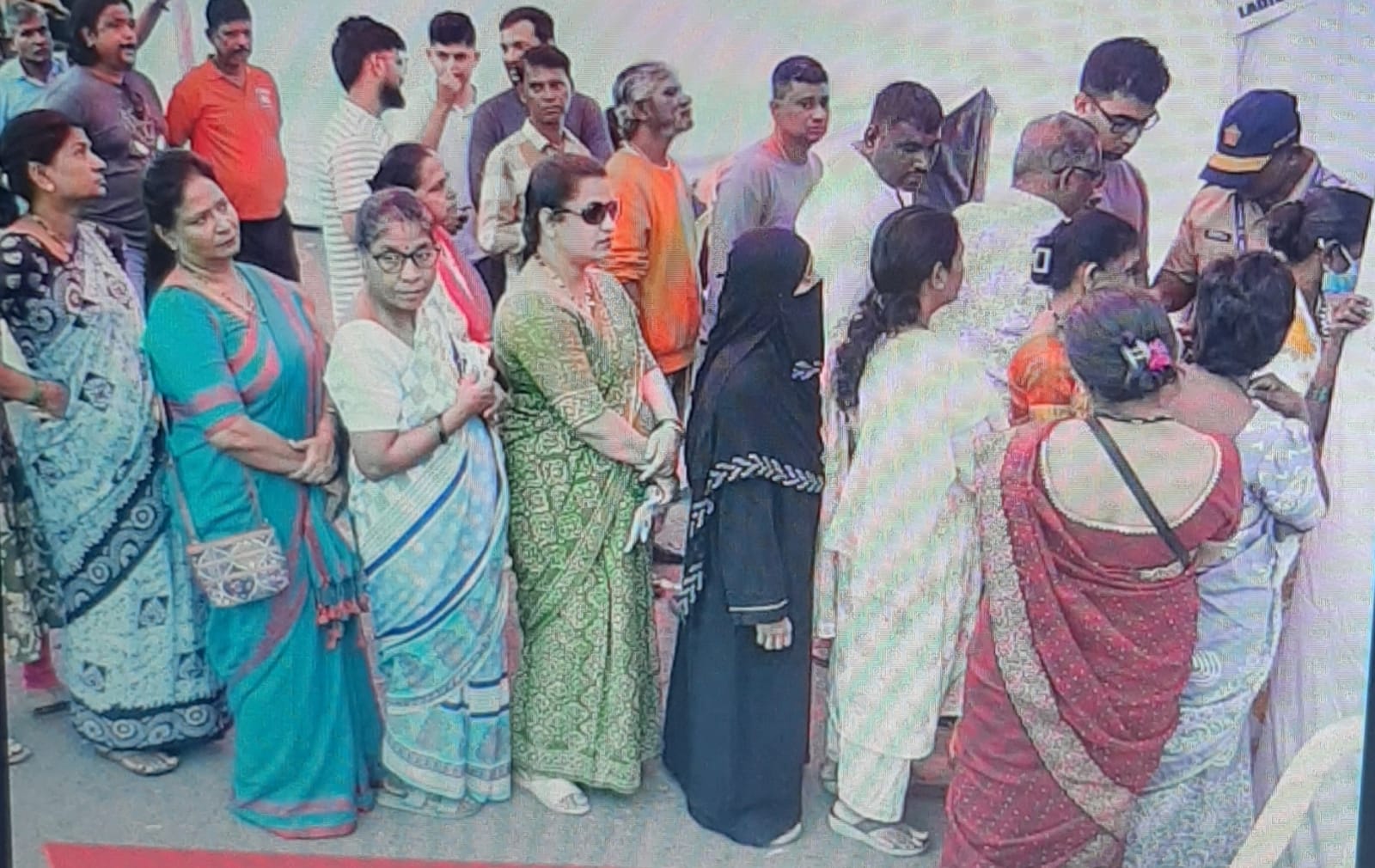
In Maharashtra, the elections to Municipal Councils were held in December 2025 and to all 29 Municipal Corporations on 15th January, 2026. The elections for 731 seats in 12 Zila Parishads (ZP) and 1462 seats in 125 Panchayat Samitis (PS) were held on 7th February, 2026. The voter turnout in the Municipal Council elections was around 68 percent, while it was about 54.7 percent in the Municipal Corporation elections.The voting percentage was about 68.28 percent in the ZP and PS elections. Data reveals that three districts (Parbhani, Kolhapur & Chhatrapati Sambhajinagar) polled over 70 percent votes while six districts were in the 65 to 70 percent range and three districts were below 65 percent. Ratnagiri in Konkan region recorded the lowest voter turnout at 55.79 percent. A comparison with the votes polled in the 2017 local government elections reveals that the polling percentage in 2026 dipped in almost all Municipal Corporations except perhaps Navi Mumbai.
Another distinctive feature of voter turnout in the two states is that the difference in voter turnout ranges between 8 to 12 percent for selected Municipal Corporations of Kerala and Maharashtra (Table 1). The dip in voting percentage compared to the last elections is visible in both Kerala and Maharashtra. Navi Mumbai alone reportedly showed a slight improvement in voter turnout in Maharashtra elections while in Kerala the voting percentage declined in all Municipal Corporations.
Table 1: A comparative chart of Voter Turnout in selected Municipal Corporations in Local Government Elections
| Kerala | Maharashtra | ||||
| # | Municipal Corporation | Voter Turnout (%) | # | Municipal Corporation | Voter Turnout (%) |
| 1 | Thiruvananthapuram | 58.29 | 1 | Mumbai | 52.94 |
| 2 | Kochi | 62.44 | 2 | Thane | 50 |
| 3 | Kollam | 63.35 | 3 | Pune | 52.42 |
| 4 | Kozhikode | 69.55 | 4 | Pimpri – Chinchwad | 57.71 |
| 5 | Kannur | 70.33 | 5 | Nagpur | 51 |
If the voter turnout is compared district wise, then it is evident that in Kerala, the voting percentage in the northern districts have consistently been higher than the southern districts. In Maharashtra, the lowest turnout was recorded in Ratnagiri district in the Konkan. However, the lowest voter turnout in a district of Kerala was still over 12 percent more than that in Maharashtra. (Table 2)
Table 2: A comparative chart of Voter Turnout in selected Districts
| Kerala | Maharashtra | ||||
| # | District | Voter Turnout (%) | # | District | Voter Turnout (%) |
| 1 | Thiruvananthapuram | 67.47 | 1 | Pune | 68.89 |
| 2 | Ernakulam | 74.57 | 2 | Satara | 67.80 |
| 3 | Kollam | 70.35 | 3 | Kolhapur | 74.45 |
| 4 | Kozhikode | 77.26 | 4 | Ratnagiri | 55.79 |
| 5 | Kannur | 76.77 | 5 | Latur | 63.50 |
The variation in voter turnout in local government elections across the two states is also an indicator of the health of local government in each state.
Election Results
In Kerala, the results were seen as a resounding win for the UDF. The LDF’s control over GPs fell from 577 to 340, to 63 (-48) in Block Panchayats and to 7 (-4) in District Panchayats. In Municipal Corporations, the control of LDF declined from 5 to 1 while in Municipal Councils it declined from 43 to 29. On the other hand, the UDF retained it’s hold over Kannur Municipal Corporation and stormed into power in three more MCs, seven of the 14 district panchayats (+4), 54 of the 86 municipalities (+13), 79 block panchayats (+41), and 505 gram panchayats (+184).
The BJP led NDA registered a resounding win in the prestigious Thiruvananthapuram Municipal Corporation where it won 50 of 101 seats on its own. This was the culmination of a process which had been set in motion much earlier. In 2020, the BJP led NDA had won 35 of 101 seats. The NDA also registered a win in Tripunithura Municipality where it unseated the LDF[i]. (Table 3)
Table 3: Ward wise Local Government Election Results: Kerala, 2025
| Party Alliance | Gram Panchayat | Block Panchayat | District Panchayat | Municipal Council | Municipal Corporations |
| UDF | 8021 | 1241 | 196 | 1458 | 187 |
| LDF | 6584 | 928 | 148 | 1103 | 126 |
| NDA | 1447 | 54 | 1 | 324 | 93 |
| Others | 1283 | 44 | 1 | 320 | 14 |
| Total | 17337 | 2267 | 346 | 3240 | 421 |
On the other hand, in Maharashtra it was the BJP which emerged as the overwhelmingly dominant party in the 29 municipal corporations, winning roughly 50 percent of total seats. The Mahayuti alliance (BJP + Shiv Sena (Shinde) + allied NCP) took control of 24 of the 29 Municipal Corporations. BJP emerged as the single largest party in Brihan Mumbai Municipal Corporation (BMMC) with 89 seats and wrested control of the largest and richest Municipal Corporation in the country for the first time. Likewise, the Mahayuti had control over 207 of 288 Municipal Councils and Nagar Panchayats. Among the opposition parties, the performance of the Indian National Congress (INC) was not bad and it had representation statewide. (Table 4)
Table 4: Local Government Election Results: Maharashtra, 2026
| # | Party / Group | Municipal Corporation seats | Municipal Corporations won | Municipal Council & Nagar Panchayat seats | Municipal Councils & Nagar Panchayats won |
| 1 | Bharatiya Janata Party (BJP) | 1,425 | 20 | 3091 | 117 |
| 2 | Shiv Sena (Shinde faction) | 399 | 3 | 961 | 53 |
| 3 | Indian National Congress (INC) | 324 | 1 | 852 | 28 |
| 4 | Nationalist Congress Party (NCP – Ajit Pawar) | 167 | 1 | 760 | 37 |
| 5 | Shiv Sena (UBT / Thackeray faction) | 155 | 1 | 423 | 9 |
| 6 | Nationalist Congress Party (SP – Sharad Pawar faction) | 36 | 0 | 294 | 7 |
| 7 | Maharashtra Navnirman Sena (MNS) | 13 | N.A. | N.A. | N.A. |
| 8 | Bahujan Samaj Party (BSP) | 6 | N.A. | N.A. | N.A. |
| 9 | Parties registered with SEC | 129 | N.A | N.A. | N.A. |
| 10 | Unrecognised parties | 196 | N.A. | N.A. | N.A. |
| 11 | Independents | 19 | N.A. | N.A. | N.A. |
| 12 | Others | 3 | 477 | 37 | |
| Total | 2869 | 29 | 6859 | 288 |
Vote Share
The State Election Commission (SEC) of Kerala has officially released the vote share of all the three major political formations in the local government elections, 2025. (Table 5)
Table 5: Vote Share of competing Political Formations in Kerala Local Government Elections- 2025
| Alliance | Municipal Corporations | Municipalities | Grama Panchayats | District Panchayats | Total Vote Share (State wide) |
| UDF | 35.51% | 39.07% | 39.15% | 42.01% | 38.81% |
| LDF | 33.63% | 29.63% | 34.51% | 38.66% | 33.45% |
| NDA | 22.60% | 14.29% | 13.73% | 15.66% | 14.71% |
| Others | 8.25% | 17.01% | 12.61% | 3.67% | 13.03% |
This clearly shows that the UDF secured over 5 percent more votes than the LDF which had virtually swept the local government elections in 2020. The LDF suffered setbacks in their known bastions. In the last elections, the vote share of LDF was 40.18 percent, UDF 37.92 percent and NDA 15.02 percent. Thus, LDF lost about 7 percent votes which in a tightly contested bipolar contest virtually amounts to a landslide victory for the victor.
The gains made by the UDF is as much a testimony to their smart election campaign strategy as also to the mistakes made by the ruling LDF. Commentators have attributed the defeat of LDF and resurgence of UDF to public dissatisfaction with governance outcomes, allegations of corruption, perceptions of administrative arrogance, and the normalisation or justification of political violence collectively.[ii] The centralisation tendency, weakening of political autonomy of local governments, the trend to treat local governments more as implementing agencies too played a role in the disenchantment of voters. All these factors were smartly capitalized upon by the opposition parties.
In Maharashtra, so far, the state-wide vote share of political parties have not been officially released by the SEC. Only city-specific vote share details are available. BJP has emerged as the strongest political party by a large margin and improved its vote share as well as seat share considerably over it’s performance in 2017 elections. The split in Shiv Sena and NCP has weakened them although they still remain competitive. It is the INC which has marginally improved its position both in terms of vote and seat share.
Unopposed Elections
Unlike Kerala where there were no reported instances of ‘unopposed elections’, in Maharashtra (especially in Municipal Corporation elections) on 65 seats candidates were declared elected ‘unopposed’. Of these 43 belonged to the ruling BJP, 18 to Shiv Sena (Shinde), 2 to NCP (Ajit Pawar), one independent and one to Indian Secular Largest Assembly of Maharashtra. On all these seats, all other candidates withdrew their candidature. The opposition alleged foul play. The SEC ordered inquiry and the concerned Municipal Commissioners reported that they had received no complaints from any quarter. Given the fact that almost all ‘unopposed’ candidates belonged to the ruling Mahayuti alliance, it was suspected that both money and administrative pressure played a part. The BJP defended the development on the grounds that there were past precedents. However, there is no denying the fact that given the shifting political allegiance of most candidates, it was hardly a surprise if a large number of candidates were declared elected unopposed in Maharashtra. This trend was particularly noticeable in Kalyan-Dombivali, Bhiwandi Nizampur in Thane district, Panvel, Jalgaon and Dhule.
Is there Voter Apathy?
Voter apathy in urban local government elections has been bothering all stakeholders for quite sometime now.[iii] This is particularly marked when viewed in relation to voter turnout in Lok Sabha and Vidhan Sabha elections. Even in Kerala, the voter turnout in Lok Sabha elections held in 2024 (71.27%) was higher than that recorded in the local government elections in 2025 and, more so, when compared with urban local government elections. In Maharashtra, the voter turnout in the Vidhan Sabha elections held in 2024 was way higher at 65.11 percent. Traditionally, highest voter turnout is recorded in rural local government (Panchayat) elections, Vidhan Sabha and Lok Sabha elections across states. Municipal elections generate lowest interest among voters.
A study conducted by Gokhale Institute of Politics & Economics (GIPE) in 2016 had revealed that women, youth (18 to 35 years), affluent sections and the highly educated tended to be most disinclined to vote in municipal electionsn and described as ‘intermittent voters’. The study also concluded that higher voter turnout in municipal elections led to higher percentage of ‘independents’ winning elections[iv].
Voter apathy can also be attributed to the perception among voters that municipalities are weak and unable to address any of their ‘real’ problems for which they have to depend upon their MLA or the District Collector. However, the voter turnout is higher in smaller urban local governments (Nagar Panchayats) even though they are the weakest in terms of funds, functions and functionaries and quality of service delivery to citizens. A question to ponder over here is whether voter apathy is also influenced by the quality of politics in local governments.
Politics in Local Governments
While in Kerala, all local government elections are contested on party lines, in Maharashtra only Gram Panchayat elections are not contested on party lines. The experience of Kerala shows that citizen’s interest in local governments remains high when compared to other states like Maharashtra. Instances of elected candidates switching sides after elections are much lower in Kerala than in Maharashtra. This is also due to the fact that the provisions in The Kerala Local Authorities (Prohibition of Defection) Act, 1999 bars elected members of local governments from switching parties after being elected and provides for disqualification if they defect. On the other hand, the Maharashtra Local Authority Members’ Disqualification Act, 1986 (MLAMDA) provides for political realignment (merger) provided two-third members agree to do so. Independents face disqualification if they join any party after election. However, in practice, independents can form an Aghadi (Front) and align with political parties to secure presidentship of committees. But then they become tied down to the Aghadi for full five years and cannot really act as independents! Hence, recently in Ambernath Municipal Council elections, members elected on tickets of INC switched to BJP. Undue delay in deciding disqualification petitions by the District Collector/Divisional Commissioner renders the strict provisions of the MLAMDA toothless and indirectly places the ruling party/alliance in the state at an advantageous position in negotiations with independents and smaller parties for forming post-poll alliances.
Further, the elected local government representatives are largely viewed as ‘political intermediaries’ between the voters and the powerful bureaucracy in local governments. Politics largely revolves around cornering of contracts and ensuring delivery of services to voters upon payment of premium. The ‘corporator-contractor-bureaucrat’ nexus has become the all powerful symbol of politics in local governments. This further fuels voter apathy especially of the ‘intermittent voter’ types mentioned in the GIPE study.
Efforts to increase Voter Turnout
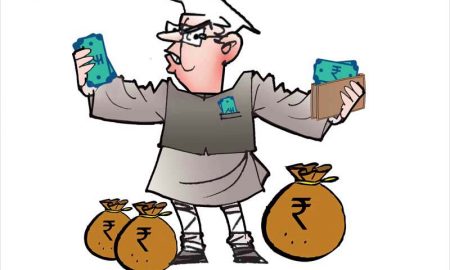
Since politics in local governments generally mimics that of state and national politics, the thrust of election campaign of candidates and political parties is on mobilising voters through play of money-based politics. All tricks of the trade are deployed to circumvent the prescribed election expenditure limits. Play of money power was more on display in Maharashtra local government elections than in Kerala where both fronts have relatively dedicated cadre of booth level workers. The efforts of the SEC to increase voter turnout remained mostly symbolic and ineffective.
Election Manifesto
In Kerala election manifestos were issued at three levels – ward, local government and the state while in Maharashtra election manifestos were neither prepared nor issued for all local governments. In Kerala, the focus of state level manifestos was on strengthening local governments, greater devolution, improving service delivery and addressing local issues among others. In Maharashtra, promise of freebies to voters registered a strong presence in election manifesto of major parties in the high stakes Municipal Corporation elections[v].
Election Campaigns of Political Parties
The election campaign of political parties in Kerala and Maharashtra reflected two contrasting styles. The focus in Kerala elections was more on intense door to door campaign and mobilising voters around issues while in Maharashtra, the political parties and candidates engaged in serious political campaign only when the elections were announced and candidates decided. Unlike Kerala there was no election campaign in pre-election phase. The candidates focused on informing the voters about what they had done and what they intended to do. The works listed were largely relating to infrastructure such as parks, street lights, bus shelters, reading rooms etc. The political parties focused on big-ticket construction works such as extension of metro, construction of flyovers, increasing road density etc. There was hardly any specific focus on extending or improving water pipelines or sewerage and storm water drain network. Improving quality of basic service delivery was barely touched upon. Established tools of electioneering such as putting up large hoardings, organizing road shows, public rallies, press conferences, advertisement on social media, tv, radio, print media were all utilised by candidates and parties depending upon their financial resources. In Maharashtra, it was largely a show dominated by the ruling BJP and the other components of the Mahayuti – the Shiv Sena (Shinde) and NCP (Ajit Pawar) faction. Since, the local governments were under rule of administrators for long, even ‘anti-incumbency’ was not really at work. The opposition had nothing new to offer either. So election campaign was hardly enthusing as far as the voters were concerned. They largely went by their ‘gut feeling’ regarding which party or candidate would serve their interest best and here the ruling Mahayuti alliance trumped the opposition. It seems the voters were to an extent swayed by the ‘triple engine’ logic employed by the BJP.
On the other hand, in Kerala the opposition UDF had commenced work on preparing ‘charge sheet’ for every local government led by the ruling LDF and ‘fact sheet’ of the achivements of local governments led by the UDF. They focused on taking their message based on data gathered from official documents (and not easy to refute) to voters and also documenting their concerns and demands which later found place in the ward, local government and state level manifestos prepared by them. The intense, highly localised campaign carried out by the opposition parties stumped the ruling LDF. The corruption charges stuck, the tendency to centralize powers at the state level, not doing enough to reduce the role of parastatal agencies and/or redefining the role of the District Collector meant that the LDF promise of increased devolution found little resonance among the voters.
New Politics
This comparative study of local government elections in Kerala and Maharashtra has thrown up a variety of issues and responses of various stakeholders. These have a bearing not only on the present but also on the future of local governments and grassroots democracy. There are some pointers to possible emergence of new type of politics especially at the local government level.
Institutional Neutrality & Administrative Impartiality
One, free and fair elections are extremely important as they provide voters the right to choose their representatives. The rules and procedures laid down right from the preparation of electoral rolls to the filing of nominations, election campaign, polling and counting of votes need to be strictly adhered to by the officials engaged with the polling process and working under the control and supervision of the State Election Commission. Transparency in the functioning of the SEC is essential for strengthening the faith of voters in democratic institutions and winning the trust of all stakeholders.
Substantive Democracy
Two, the need to delink democracy from electoral politics alone seems to be felt increasingly by citizens. But democracy needs to shed it’s ‘episodic’ nature and must begin to inform all stages of governance at all levels and at all times. To this end, new tools and institutions would need to be reimagined which provide scope and place for the public to articulate their views and demands and get their voice heard. The focus on strengthening institutions of direct democracy like the Gram Sabha as reflected in the promises made by the UDF in Kerala local government elections and the demands articulated in citizen manifestos released in some cities in Maharashtra perhaps reflect this trend.
Limits of Welfarism
Three, the first rumblings of voters viewing themselves as citizens and not just beneficiaries of welfare schemes have been seen in the Kerala results[vi]. Voters believed the hard evidence based ‘charge sheets’ and ‘fact sheets’ when presented in a cogent manner and easy to understand language and were not swayed by promises of greater welfarism. These seem to have struck a chord among voters and also highlighted the limits of welfarism. This practice initiated in Kerala can be best deployed in local government elections elsewhere too. What the UDF has done successfully today can be replicated by the LDF next. This is an important development as promise of ‘freebies’ at the cost of governance is increasingly showing signs of leaving voters disillusioned in different parts of the country. It remains to be seen how seriously the local governments in Maharashtra act on the promise of freebies given their weak financial base barring a couple of ULGs.
Focus on Governance
Four, the release of citizen manifesto in some wards and cities of Maharashtra and the Kerala elections in general are pointers to increased focus on governance issues in local governments in the coming years. Currently, governance is hard to get. Governance demands adherence to rule of law. Fixing accountability for failure to deliver quality services is still more difficult. But without rule of law and accountability, local governments lose their very raison d’etre to exist. The whole principle of subsidiarity collapses.
Transparency & Clean Governance
Five, with accountability would come good governance. Local governments must scrupulously adhere to rule of law and officials must refuse to succumb to pressure and resist selective use of bulldozers to instil fear among citizens. Citizens are at the receiving end of the self-serving ‘bureaucrat – corporator – contractor’nexus. The practice of fixed ‘tender rates’ and ‘rate cards’ for getting work done in local governments do not instil confidence among citizens. These unsavoury practices are increasingly coming out in the open.
Reset of Politics
In the emerging scenario, the candidates and political parties would also need to reset their politics. To begin with, it may be a good idea for elected representatives at local government level to come out with their report cards periodically. Political parties would need to galvanize their workers into action round the year and not only at the time of elections as is the current practice. It would be interesting to see how workers of UDF and LDF respond in Kerala because if the workers of both the ruling and the opposition parties remain active, with their ears to the ground and taking up the causes and concerns of citizens, then ground is prepared for healthy and competitive play of democratic politics. Political parties would also need to shed the ‘high command’ culture and give greater autonomy and say to their local party units and workers in selection of candidates. The undue focus on ‘winnability’ of candidates based on their lineage, access to financial and other resources and neglect of consistent hard work in the constituency would need to be discarded. Kerala local government elections appear to have shown the way and now it is upon the voters, candidates and political parties to carry it forward. (Concluded)
Acknowledgment: I am grateful to Shri P.P.Balan, former Director of KILA, for sharing several key insights relating to Kerala local government elections, 2025.
(Sunil Kumar is a visiting Senior Fellow associated with the Centre for Cooperative Federalism & Multilevel Governance in Pune International Centre and a former civil servant. Views expressed are personal.)
[i] Local Government Election Results in Kerala – Towards a Tripolar Polity – Jos Chathukulam, Manasi Joseph; Pg.16-19, Economic & Political Weekly, Vol.LXI No. 9, February 28, 2026
[ii] Ibid
[iii] Voter Apathy in Municipal Elections, Ramanath Jha; published on January 16, 2023 in Expert Speak Urban Futures; https://www.orfonline.org/expert-speak/voter-apathy-in-municipal-elections
[iv] Local Body Elections in Maharashtra: A Comparative Analysis; Rajas K. Parchure, Manasi V. Phadke & Dnyandev C. Talule; Gokhale Institute of Politics & Economics, 2016
[v] Mumbai civic polls is latest theatre of freebie politics; Ajit Ranade; The Indian Express, 14th January, 2026
[vi] Local Verdict, Larger Message – Civic Polls in Kerala; K.T.Rammohan; Pg.12-15, Economic & Political Weekly, Vol.LXI No. 9, February 28, 2026