

When we say every land is Karbala, we mean that injustice migrates. Today, it wears the face of sanctions that starve Iranian children. Tomorrow, it wears the face of a blockade that drowns Gaza in darkness. But when we say every day is Ashura, we mean that resistance also has no single address. It lives inside the Iranian mother who hides medicine in her hijab. It lives inside the Palestinian father who digs for his daughter with his bare hands. It lives inside a leader who died without flinching and a people who turn every street into a battlefield of conscience. This is the historical perspective that the Muslim world must carry forward. The Umayyads are gone. The British are gone. The Soviet Union is gone. Empires crumble. But Karbala remains. Because Karbala is not a place. It is a choice, writes Prof Syed Ali Nadeem Rezavi of Aligarh Muslim University.
There is a thirst that does not begin in the throat. It begins in the soul, in the hollow place where hope used to live, and it spreads outward until the tongue turns to dust and the eyes become two dry wells. That thirst is the oldest story the Muslim world tells itself. It is the story of a people denied water, denied breath, denied the right to exist with dignity, yet refusing to kneel. On the plains of Karbala in 680 AD, Imam Husain, the grandson of the Prophet Muhammad, pitched his tents by the Euphrates River. But the river was locked behind the spears of an Umayyad army. For days, children cried for a single sip. Women held their dry lips together in silence. And men, knowing they would die before sunset, stood with nothing but raw courage in their hands.
Karbala was not a battle. It was a slaughter. Husain and his seventy-two companions, including his infant son Ali Asghar and his brother Abbas, faced an army of thousands. They were cut off from water under the scorching desert sun. The tyrant Yazid did not see them as human beings. He saw them as threats to his throne. But what Yazid did not understand, what no tyrant has ever understood, is that thirst does not break a righteous heart. It only makes it louder.
Abbas’s stand in Karbala has become a legend over fourteen centuries. Abbas rode into the Euphrates to fetch water for the children, but his hands were severed by enemy swords. Still, he pressed forward, holding the waterskin with his teeth, until an arrow pierced it and the water spilt onto the sand. He fell facing the tents, still reaching toward those he loved. That image, a man without hands still trying to bring water to thirsty children, is the image of resistance itself. It is the refusal to let cruelty have the last word. For the Muslim world, it remains the ultimate lesson in what it means to stand for justice when justice has become a death sentence.
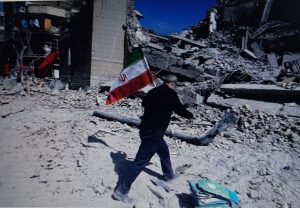
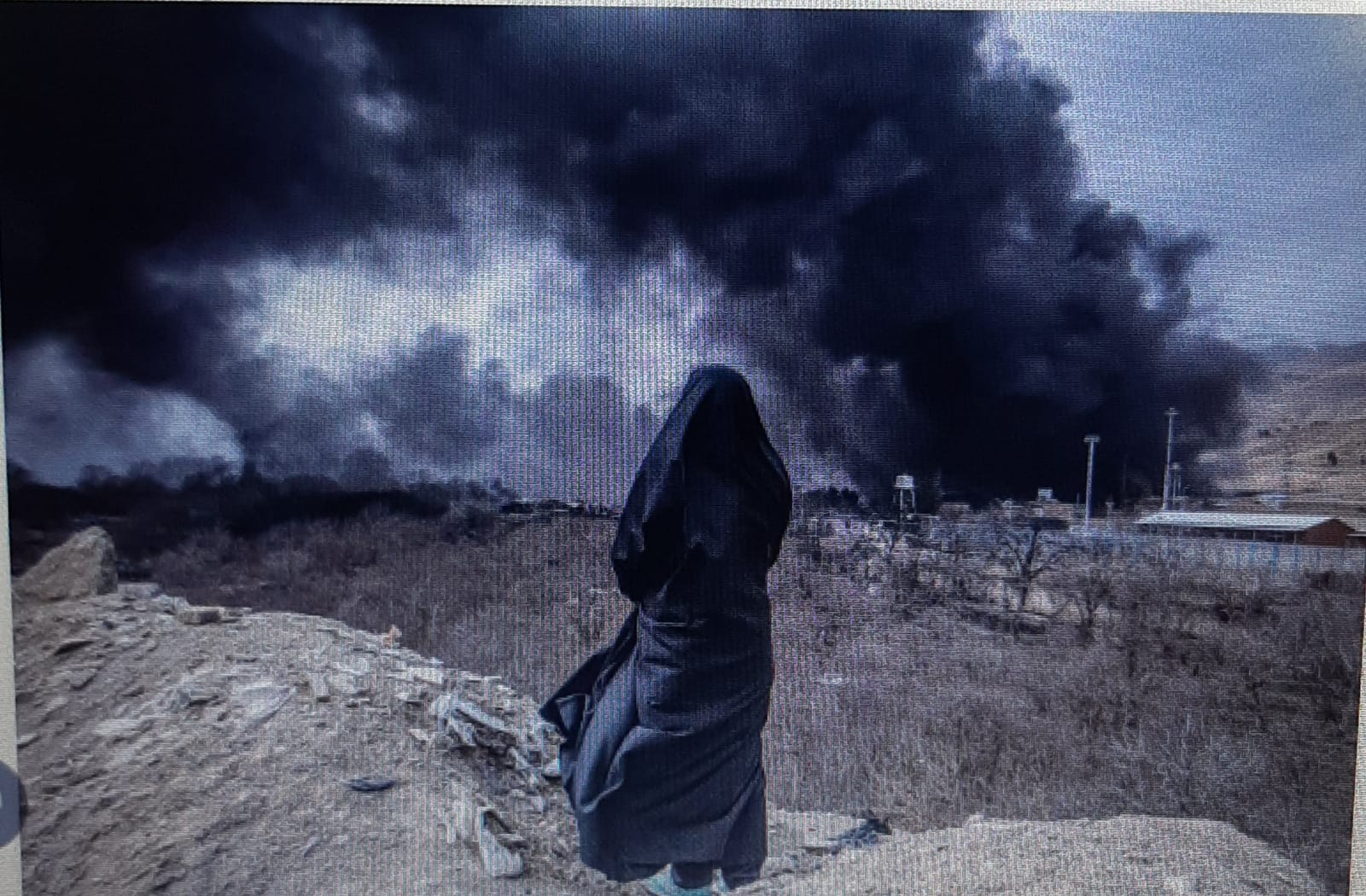
Now look at Iran in the twenty-first century. Look at the embargo, the sanctions, the slow strangulation of a nation by economic warfare. Medicines cannot reach hospitals. Babies in intensive care cannot get imported formula. Cancer patients watch their treatments become memories. The world calls it pressure or leverage. But when you see a mother in Tehran watching her child’s lips crack from preventable dehydration because medical supplies are blocked, you are seeing Karbala again. The thirst of Imam Husain is happening right now under American sanctions. A powerful empire denies basic sustenance to the powerless. And the powerless refuse to break. This is the historical perspective that the Muslim world must absorb. Tyranny does not retire. It simply changes its uniform.
That is why the saying holds such a terrifying and beautiful truth. Every land is Karbala and every day is the Day of Ashura. Tyranny is reborn in every generation, in new flags, new blockades. And so must resistance be reborn. When you see the people of Gaza, where entire families are erased by bombs, where children are pulled from rubble with the same silence that fell over Husain’s camp, you are seeing the Umayyad army again. The same logic of crushing those who will not submit. The same cries of thirsty children that the powerful pretend not to hear. For the Muslim world, Gaza is not a distant headline. It is a mirror reflecting Karbala.
But there is another side to this story. In Iran, despite the embargo that would have broken any other nation, scientists work in hidden labs to make their own medicines. Mothers organise underground networks to smuggle insulin. Engineers keep the lights on with salvaged parts. This is the spirit of Abbas, reaching across centuries to offer water when every hand has been cut off. It is humanity doubling down on justice when justice has become expensive. And this is the lesson for the Muslim world. Sanctions are designed to break your will. But will is broken only by hopelessness. And hopelessness is a choice you can refuse to make.
The tragedy of Karbala was never about defeat. Husain knew he would die. He gave his followers a choice to leave before the battle. Not one left. They chose to die standing rather than live kneeling. That choice turned a massacre into a revolution. Ashura became the day when cruelty put on its most terrifying mask and humanity looked it in the eye and said no. From a historical perspective, this was the moment when the Muslim world learned that power without justice is not power at all. It is just noise.
Now consider Ayatollah Khamenei, the leader of Iran, standing against the weight of the world’s most powerful empires. Like Imam Husain, he knew what his end would be. The sanctions were designed to starve his people into submission. The assassinations of his nuclear scientists, the bombing of his generals, the constant whisper of regime change. And yet he did not hide. He did not give in. He told his people the truth that no tyrant wants to hear. That dignity is worth more than comfort. That survival without honour is not survival at all. And when the moment came, he died fearlessly. Not for power, not for wealth, but for his ideals, for his people, and for the dignity of a nation that refused to bow. He died as Husain died, with empty hands and a full heart, knowing that the body can be killed but the truth cannot be buried. The Muslim world has seen this shape before. A leader who could have surrendered to the empire. And instead, he chose the thirsty path.
Just before Karbala, Husain told his followers they could slip away and save themselves. Not one left. In Iran today, under the most crushing embargo any nation has endured in modern times, the same scene unfolds. Sanctions have turned ordinary life into an endurance test. Medicines are scarce. Jobs are lost. Futures are cancelled. And yet the people do not budge. They do not rise up against their leader as the enemy had hoped. Instead, they pour into the streets, and their pouring itself turns the day into Ashura. Every crowded avenue becomes Karbala. Every clenched fist becomes a flag. Every cry of Labbaik Ya Husain becomes a declaration that they would rather die on their feet than live on their knees. They have seen what happens to nations that kneel. They have seen Iraq, Afghanistan, and Libya. They have seen how empires promise democracy and deliver only rubble. So, they choose the hard path. They choose the thirst. They choose the martyrdom they have already accepted in their hearts. For the Muslim world, this is the deepest lesson. Sanctions and blockades are not new. The Quraysh once boycotted the Prophet in the valley of Abu Talib and starved his clan for three years. They did not surrender. The weapon is old. The response must be older.
When we say every land is Karbala, we mean that injustice migrates. Today, it wears the face of sanctions that starve Iranian children. Tomorrow, it wears the face of a blockade that drowns Gaza in darkness. But when we say every day is Ashura, we mean that resistance also has no single address. It lives inside the Iranian mother who hides medicine in her hijab. It lives inside the Palestinian father who digs for his daughter with his bare hands. It lives inside a leader who died without flinching and a people who turn every street into a battlefield of conscience. This is the historical perspective that the Muslim world must carry forward. The Umayyads are gone. The British are gone. The Soviet Union is gone. Empires crumble. But Karbala remains. Because Karbala is not a place. It is a choice.
Thirst is not only the absence of water. Thirst is the absence of mercy. And mercy is not given by empires. It is created by ordinary people who refuse to let each other die of shame. Karbala teaches the Muslim world that the tyrant always has more swords. But the thirsty have something the tyrant can never own. They have the truth of their own suffering. And that truth, once spoken, is an unkillable thing. From the seventh century to the twenty-first, cruelty wears new masks. Resistance wears the same face. The face of a man without hands still reaching for water. The face of a mother hiding medicine. The face of a nation that turns every ordinary day into Ashura.
So, remember, Abbas, with his severed arms, is still trying. Remember the children of Gaza. Remember the hospitals in Iran where doctors work without an anesthetic because the shipment is stuck at a border that politics has poisoned. Remember the leader who died fearlessly for his ideals, his people, and his dignity. And remember that the Muslim world is not a helpless witness. You are part of the same story. Every time you choose to see another person’s thirst as your own, you become a waterskin carried through enemy lines. You become Karbala’s echo, whispering across every land, on every single day, that justice is not dead. It is just very, very thirsty. And thirst, as history proves, is the beginning of every revolution.