

It is a misnomer and highly hypocritical to assume that politics at local government can be a part-time activity. The Corporators, Councillors, Sarpanch and Ward members necessarily have to reside in their constituency. The voter does not make a distinction about what powers s/he has or what subjects have been transferred to urban and rural local governments or not, writes former IAS officer Sunil Kumar
In the recent past, among other things, the leader of opposition in the Lok Sabha has been attacked on grounds of being a ‘part-time’ politician, unlike those of the current ruling dispensation, who live and breathe politics 24 X 7, all 365 days in a year and never take holidays! No attempt has been made to define as to who is a part-time politician and why and how it fits the leader of the opposition in the Lok Sabha. I have not come across any such criticism aimed at numerous ‘lawyer turned politicians’ who continue to practise law despite becoming a MP or MLA. In the past, the first Chief Minister of West Bengal, Dr. B.C.Roy continued to find time to treat patients (albeit free of cost) even when he was the chief minister and no one called him a ‘part-time politician’. It seems to be just a personal political jibe since it is well recognized that politics in India is very demanding, time-consuming and cannot be practised half-heartedly. Apart from the political jibe, there is in India one large set of elected representatives (ER) who are viewed by the system as engaging in ‘part-time’ politics. These are the ERs of urban and rural local governments.
Despite the Panchayats and Municipalities being granted constitutional status by the 73rd and 74th Constitution Amendment Acts (CAA) and India adding 3.2 million democratically elected representatives to rural and urban local governments, which cemented it’s stature as the largest democracy in the world, these ERs are treated as ‘part-time’ politicians and poor country-cousins of the 5000 odd MPs and MLAs who wield real power at the union and state level. The same set of voters elect all three set of ERs at the local government, state and union level. While the Election Commission of India (ECI) conducts the Lok Sabha and Vidhan Sabha elections, it is the State Election Commission (SEC) which organizes the local government elections. Their tenure is the same. The only difference is in the size of their constituency.
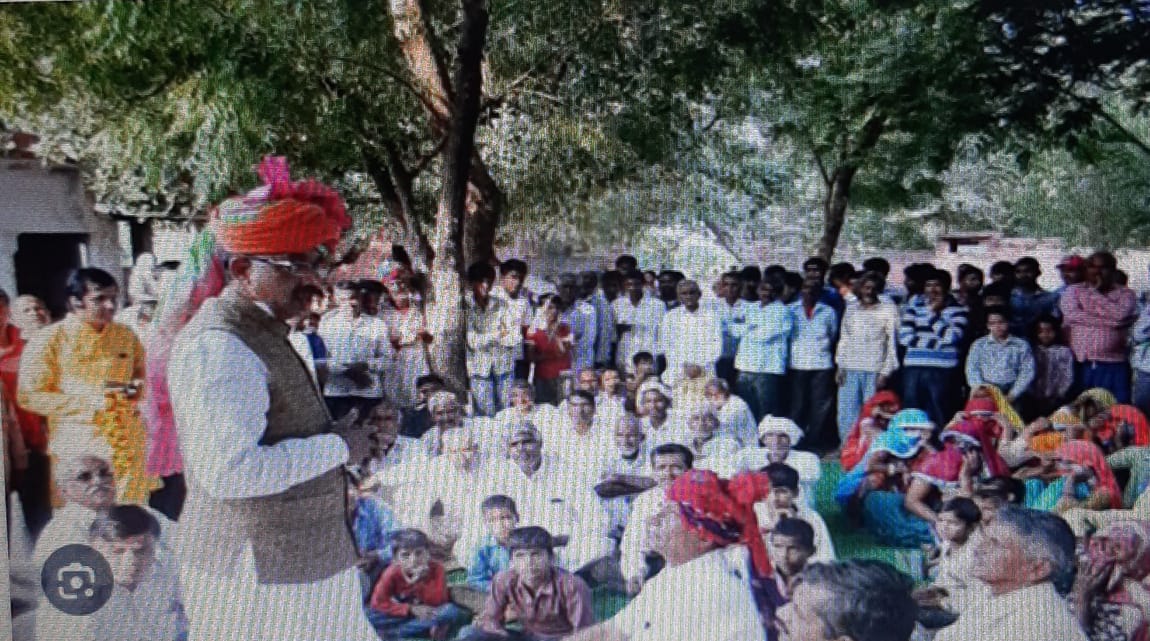
However, while the MPs and MLAs are expected to reside in New Delhi and the state capitals respectively (they are allotted free government accommodation), the corporators, councillors of ULGs, District Panchayat and Block Panchayat members and Ward members of Gram Panchayats are expected to reside in their constituency among the voters who elected them. They are available to their voters 24 X 7, all 365 days of the year. This aspect had come to the fore during the covid lockdown when the ERs of local governments alone were available and residing with their constituents and providing semblance of governance when government, at large, had shut down. They are also the ones before whom voters can freely vent their grievances and frustration unlike before MLAs and MPs who generally move around under tight security cover and meet their voters at government dak bungalows and inspection houses which are more ‘formal’ and ‘intimidating’ spaces for an average citizen/voter.
A study[i] conducted in Dehradoon highlighted that, on an average, a corporator spent Rs.20,831 per month as out-of-pocket expenses for meeting costs such as stationary, phone, petrol, office rent, and maintenance costs and providing financial support to needy citizens. Sometimes, for acting as political intermediaries between citizens and officials, corporators collect a portion of the cost from the citizens in the absence of any institutional support and inadequate and ‘gair sammanjanak’ honorarium paid to them.
With women reservation in place, 46 percent of ERs of both RLGs and ULGs are women. The women ERs have regularly highlighted that they had to turn to their family for financial support and responsing to the needs of voters at odd hours due to security concerns. These impacted their freedom to act independently as a political leader and fulfil their role as an ER.
Table 1: A comparative Chart of Monthly Remuneration paid to ERs of Parliament, Legislative Assembly & Urban & Rural Local Governments in select States
| State | Parliament | Legislative Assembly | Municipal Corporation | Municipality | District Panchayat | Gram Panchayat | ||||
| MP | MLA | Mayor | Corporator | Chair – person | Councillor | Chair – person
|
Member
|
Sarpanch
|
Ward Member | |
| Kerala
|
Rs.2.86 lakh | Rs.70,000 | Rs.
15,800 |
Rs.
8,200 to 8,600 |
Rs.
14,600 |
Rs.
7,600 |
Rs.
15,800 |
Rs.
8,800 |
Rs.
13,200 |
Rs.7000 |
| Maharashtra
|
Rs.2.86 lakh
|
Rs.2.52 lakh | Rs. 55000 | Between Rs. 10000 to
30000 depending on class of MC |
Rs.
2000 to 5000 |
Rs.10 to 15000 + allowances | Rs.8 to 10,000 + sitting allowance | Rs.3 to 10,000 | Under Rs.5000 | |
| Uttar Pradesh | Rs.2.86 lakh
|
Rs.2.66 lakh | Rs.
25000 |
Rs.
20000 |
Rs.
15,500 |
Rs.1500 per meeting (not exceeding 6 per annum) | Rs. 5000 | Rs.100 per meeting subject to maximum of 1200 per annum | ||
| Odisha
|
Rs.2.86 lakh
|
Rs.1.11 lakh | Rs.
50,000 |
Rs.
2000 per meeting |
Rs.
15,000 |
Rs.
500 per meeting |
Rs.
30,000 |
Rs.
10,000 |
Rs.
10,000 |
Rs.480 per meeting (not exceeding 2 per month) |
| Himachal Pradesh | Rs.2.86 lakh
|
Rs.1.25 lakh | Rs.
25,000 |
Rs.
9,400 |
Rs.
10,800 |
Rs.
4,500 |
Rs.
13,000 |
Rs.6500 | Rs.7200 | Rs.480 per meeting (not exceeding 2 per month)
|
| Bihar | Rs.2.86 lakh
|
Rs.1.65 lakh | Rs.
12,000 |
Rs.
2,500 |
Rs.
10,000 |
Rs.
1500 |
Rs.
12,000 |
Rs.
2,500 |
Rs.5,000 | Rs.800 |
It is clear from Table 1 that there is a very wide variation between the remuneration being paid to ERs of local governments and those of MLAs and MPs. While a new bill needs to be introduced and passed by the state legislature whenever the salary and allowances of MLAs are to be revised, those of MPs have been delinked from this process which used to focus public attention on the salary, allowances and perks of MPs. Through the Finance Act, 2018, Parliament has amended the Salary, Allowances and Pension of Members of Parliament Act, 1954 to increase the salary, daily allowance, and pension of MPs every five years on the basis of the Cost Inflation Index published under the Income Tax Act, 1961. State governments need to put in place some similar arrangement for MLAs and ERs of local governments too. The current practice of revising the remuneration of ERs in an ad-hoc manner and with an eye to garner their support before elections is not conducive to strengthening democratic system or practices and reeks of patron-client relationship between the Chief Minister and the ERs of local governments.
It is a misnomer and highly hypocritical to assume that politics at local government can be a part-time activity. The Corporators, Councillors, Sarpanch and Ward members necessarily have to reside in their constituency. The voter does not make a distinction about what powers s/he has or what subjects have been transferred to urban and rural local governments or not. For the voter, if s/he has any problem, s/he looks to the ER for help and it is the ER of local government who is readily available. Consequently, the ERs have to respond and satisfy their voters even if it means spending money from their own pocket. It is another matter that ERs have devised informal means of recouping such expenditures by collecting ‘intermediation’ costs from those who can pay.
Even the MPs and MLAs are not immune from such pressure from their voters. Their official residences often double up as a place for stay for their constituents if they need to visit the state or national capital for any work. Often they have to intermediate in works which, by definition, fall in the domain of local governments. The voter makes no distinction among the ERs although his expectation from the MLA and MP is higher. The local representative of the MLA and/or MP fill in for their leaders in the constituency and their behaviour, response and effectiveness in solving problems make or mar the fortunes of the ER.
However, this is not to suggest that ERs cannot take short holidays or spend some time with their families. But they have to make some arrangement for their constituents even when they are absent temporarily. Unlike government officers, they cannot tell their voters that their office is closed. In the digital age, the ERs are increasingly using modern digital tools, social media to keep in touch with their constituents and address their grievances.
Since ERs of local governments need to and do engage in full-time politics, it is only appropriate that their time, services and efforts are also suitably recognized and they be adequately compensated. Currently what they receive is ‘demeaning’, and inadequate in several states. Sooner this is recognized better it would be for strengthening both democracy and federal system in the country and restoring the status and respect of ERs of rural and urban local governments. It must be remembered that even Nehru and Patel had started their political career as Councillors.
(Sunil Kumar is a visiting Senior Fellow associated with Centre for Cooperative Federalism and Multilevel Governance in Pune International Centre and a former civil servant. Views expressed are personal.)
[i] A Respectable Honorarium for Municipal Corporators; Tanya Jakimow, Josphin Singh, Rekha Pundir, Pushpa Bisht; Economic & Political Weekly, Pg. 22-26, February 17, 2024 Vol LIX No 7