

The ‘indifferent’ attitude of the civil servants, most notably the District Magistrate and the Superintendent of Police and the Secretaries of various departments, exhibited towards MLAs/MPs is also a reflection of the changed power. When PM-CM-DM trio is calling the shots there is hardly any the scope for elected representatives for required protocol, writes former IAS office Sunil Kumar.
A report published in the Indian Express[i] mentioned that Maharashtra government had issued a Government Resolution on April 28, 2026 amending its previous directives dated November 20, 2025, which mandated officials to rise and greet elected representatives (ER). The new directives state that ‘if an elected representative has been convicted in a criminal or other case, or if they have been summoned as an appellant or a party for an inquiry/hearing, or if they are present in a government office for election related processes (such as filing nomination papers), officials are not required to stand up or greet the Member of the Legislative Assembly / Parliament upon their arrival or departure.”
On the face of it, there seems to be nothing new in the government circular. One recalls that similar circulars have been issued from time to time by the Chief Secretary in other states as well. It has been reported that Government of Uttar Pradesh issued tenth circular in this regard in August 2023 (between 2017-23) asking officials to show adequate courtesy and observe protocol while dealing with public representatives.[ii] A similar circular was issued by Government of Haryana in June 2018.[iii] Even the Department of Personnel & Training in Government of India issued a comprehensive circular in this regard on 19th November, 2014[iv] wherein all Ministries/Departments were requested to ensure full compliance with the basic principles and instructions laid down in the consolidated instructions/guidelines issued by DOPT on December 1, 2011. All circulars state that violation of the guidelines/instructions will be viewed seriously.
However, what sets the Maharashtra circular apart is that it acknowledges that there are MLAs/MPs with criminal backgrounds who could have been convicted or are facing inquiry. In that case officials, civil and police, need not stand up to greet them and see them off when they come to their office in connection with their case or inquiry. Same is true when the election process is on and the officials are performing election related work. Then the courtesies extended to MLAs/MPs in normal course do not apply as all candidates should be treated ‘equally’ by the election officials and no message should go in the public that officials are ‘deferential’ towards one candidate. This differentiation has perhaps not been made in the circulars issued by other states or even the Government of India to the best of my knowledge. However, by and large, in almost all states, when officials were performing the function of Returning Officer or Assistant Returning Officer, the tradition had been that they would not stand up to greet any candidate even if they happened to be MLAs/MPs or Ministers in the state or union cabinet.
Before we examine the implications of the aforesaid Maharashtra circular, it would be useful to examine the extent of the problem. Data available in the public domain (See Table 1) in respect of major States reveal that the percentage of MLAs with criminal cases ranges between a low of 13 percent in Haryana to a high of 79 percent in Andhra Pradesh. Andhra Pradesh has the dubious distinction of also having the highest percentage (56) of MLAs with serious criminal cases against them. In Maharashtra, 65 percent of MLAs have criminal cases and 41 percent have serious criminal cases against them. For all states, on an average 29% MLAs are facing serious criminal cases. As for MPs, 251 (46%) had criminal cases registered and 170 of them (31%) had serious criminal cases against them. It may be noted that serious criminal cases are those offences which are non-bailable or carry maximum punishment of five years or more.
Table 1: Details of MLAs of selected States with criminal background
| State | Total No. of MLAs analyzed | No. & % of MLAs with criminal cases | No. & % of MLAs with serious criminal cases |
| Maharashtra | 286 | 187 (65%) | 116 (41%) |
| Uttar Pradesh | 403 | 205 (51%) | 158 (39%) |
| Bihar | 243 | 131 (54%) | 102 (42%) |
| Madhya Pradesh | 230 | 90 (39%) | 34 (15%) |
| Andhra Pradesh | 174 | 138 (79%) | 98 (56%) |
| Telangana | 119 | 81 (68%) | 58 (49%) |
| Karnataka | 223 | 122 (55%) | 72 (32%) |
| Kerala* | 136 | 96 (71%) | 37 (27%) |
| Odisha | 147 | 85 (58%) | 66 (45%) |
| Tamil Nadu* | 224 | 134 (60%) | 58 (26%) |
| West Bengal* | 294 | 143 (49%) | 114 (39%) |
| Rajasthan | 199 | 61 (31%) | 44 (22%) |
| Himachal Pradesh | 68 | 28 (41%) | 12 (18%) |
| Haryana | 90 | 12 (13%) | 6 (7%) |
| Punjab | 117 | 58 (50%) | 27 (23%) |
| Jharkhand | 80 | 43 (54%) | 36 (45%) |
* Data pertains to the previous Assembly Elections
Source- my neta info- Association for Democratic Reforms
It also emerges that so far 28 MPs and MLAs have resigned or been disqualified[v] in the light of Supreme Court judgment delivered on 10 July, 2013 in Lily Thomas vs Union of India & Ors case (along with Lok Prahari vs Union of India & Ors) wherein the SC ruled that any MP/MLA/MLC who is convicted and sentenced to two years or more imprisonment would cease to be a member of the House with immediate effect. The Bench also declared Section 8(4) of the Representation of People Act, which provided three months time to elected members to file appeal against their conviction, unconstitutional. These include 4 MPs of Lok Sabha and 2 of Rajya Sabha and 22 MLAs. In three cases, the conviction was stayed and disqualification lifted by the constitutional courts. The party affiliation of disqualified MPs/MLAs can be viewed at Table 2 below.
Table 2: Party Affiliation of Disqualified MPs & MLAs
| Political Party | MP (Lok Sabha) | MP (Rajya Sabha) | MLA |
| Rashtriya Janata Dal (RJD) | 2 | 0 | 4 |
| Indian National Congress (INC) | 1 | 1 | 4 |
| Bhartiya Janata Party (BJP) | 0 | 0 | 5 |
| Samajwadi Party (SP) | 0 | 0 | 3 |
| Bahujan Samaj Party (BSP) | 1 | 0 | 1 |
| DMK | 0 | 1 | 0 |
| AIADMK | 0 | 0 | 1 |
| All Jharkhand Student Union (AJSU) | 0 | 0 | 1 |
| Shiv Sena (SS) | 0 | 0 | 1 |
| Jharkhand Party | 0 | 0 | 1 |
| CPI (ML) | 0 | 0 | 1 |
Source: Wikipedia
The number of pending criminal cases against sitting and former MPs/MLAs in District and Sessions Courts across Maharashtra stands at 405 with maximum 226 cases pending in Mumbai division, followed by 106 in Aurangabad and 73 in Nagpur division.[vi] Various reports suggest that despite orders of the Supreme Court to set up fast track courts for speedy trial of criminal cases pending against sitting and former MPs/MLAs, the number continues to be well over 3000 cases. In the meantime, the SC has also ordered that withdrawal of prosecution against MPs/MLAs would not be allowed without the permission of the High Court since it was misuse of the powers of the prosecutor under Section 321 of erstwhile CrPC.
In this situation, to return to the issue of protocol vis a vis elected representatives of legislative assemblies and parliament, it is praiseworthy that a separate class of ‘tainted’ elected representatives has been created! Recently, a Minister in Maharashtra government, Nitesh Rane was sentenced to one month’s imprisonment and a fine of Rs. one lakh by a Sessions Court in Sindhudurg[vii] for insulting an engineer of NHAI in 2019 when he was a Congress MLA and had not joined the BJP. So he is a convicted MLA and a Minister to boot! So it would be interesting to see how many officials choose not to stand up and greet the Minister when he comes calling. Experience suggests that none would do so. Almost everyone would invariably be getting up to greet the Minister/MLA who happens to be convicted notwithstanding the instructions issued by the Maharashtra government.
The next logical question that would arise is as to how a civil servant, posted in a remote district, is expected to know whether a MLA or MP has been convicted or not. Is s/he expected to rely on newspaper reports or would the state government be regularly circulating an authentic list of all convicted MLAs/MPs to all officials of the state government? Given the high number of sitting MLAs/MPs facing criminal charges and some of them even becoming Minister and Chief Minister, it seems the aforesaid Government Resolution issued by Maharashtra government is more for record than actual implementation.
What should be the response and behaviour of civil servants towards MLAs/MPs who have been accused and chargesheeted in serious criminal cases but final decision has not been pronounced by the Court? If a leader has been accused of crimes like rape and murder, then what should be the response of the district officials like DM and SP? This assumes importance given the fact that as many as 47 percent of Ministers (state and union taken together)are reportedly facing criminal cases and the snail’s pace at which even ‘fast-track courts’ dealing with criminal cases of MLAs/MPs seem to be moving in the country. These questions have, so far, not been addressed by any government, union or state. Are these netas to be treated as ‘potentially tainted’ and a separate set of protocol instructions issued for them?
Instructions issued by state governments regarding protocol to be extended to MLAs and/or MPs are regularly ignored by most officials in almost all states. This is also borne out by the fate of similar directives issued in other states such as Uttar Pradesh where the BJP government itself has issued ten such circulars to state government officials with little effect. Why has this been so?
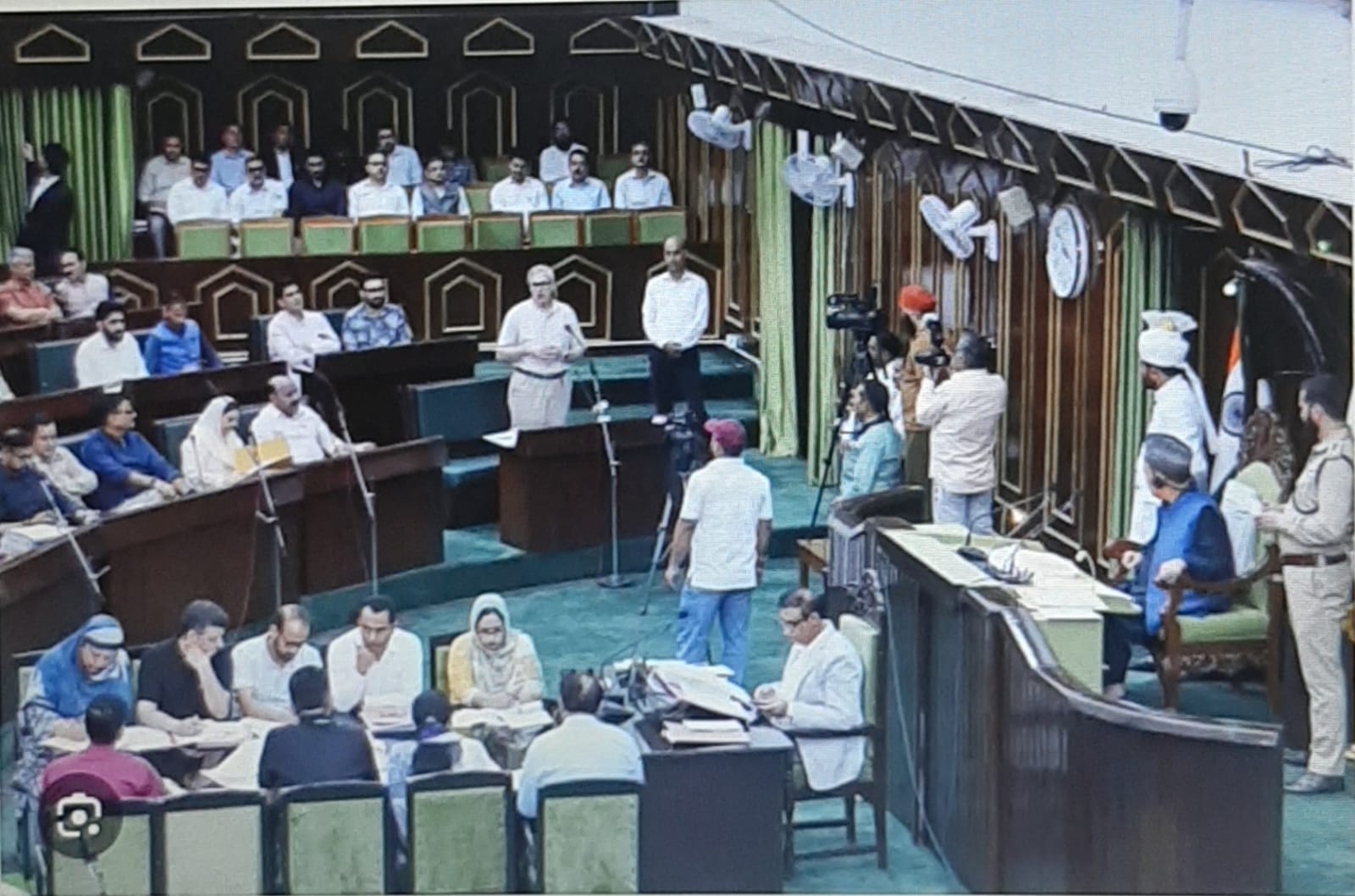
To my mind, the ‘indifferent’ attitude of the civil servants, most notably the District Magistrate (DM) and the Superintendent of Police (SP) in the districts and the Secretaries of various departments in the State Secretariat, exhibited towards MLAs/MPs is also a reflection of the changed power dynamics in the state. Power in almost all states is now concentrated in the Chief Minister’s Office (CMO) which is largely run by the civil servants. It is these officials who wield real power as they have easy access to the Chief Minister – a privilege denied to even most Cabinet Ministers much less the MLAs and MPs. Further, files pertaining to almost all departments are routinely summoned by the CMO and instructions given to departmental Secretaries. Quite often even the Cabinet Ministers are not privy to these instructions. Hence, they choose to suffer their ignominy in silence rather than confront the Chief Minister and question the civil servants. Hence, it is not uncommon to see MLAs/MPs sitting in the ‘waiting room’ in the CMO to meet the senior officials in connection with their work. They are more than happy to get an audience rather than worry about whether the official rose in his seat to greet them and see them off or not. The Chief Minister too believes that s/he can get work done through the officials rather than his cabinet ministers. When PM-CM-DM trio is calling the shots then where is the scope for other elected representatives be it the MLA or the MP?
Next is the actual subject matter of issues that are brought before the officials, most notably the DM/SP at the district level and the Secretary of departments and senior officials of the Police department in the States. Experience suggests that in almost 90 percent cases, the elected representatives come with ‘individual’ requests – those relating to appointment, transfer and posting of officials and award of contracts under the garb of public interest. In most of these cases, acceding to the request would mean ‘bending the rules’ and/or even outright flouting of rules or the stated policy of the government. If officials refuse to accommodate them, then threats are commonly issued – veiled or open – depending on the seniority and maturity of the leaders. Here the issue is not extending courtesies to the elected representatives like standing up to greet them or not. It is more basic. If an officer refuses to succumb to the pressure, then the issue of ‘bureucratic high-handedness’ is raised in the House. The Chief Minister and/or the Parliamentary Affairs Minister also take the easy way out of assuaging hurt feelings of members by assuring that strict instructions would be issued. This perhaps is the story behind ten circulars issued by Government of Uttar Pradesh between 2017-23 with little or no impact on the officials.
Incidentally, none of these circulars address the issue regarding protocol to be extended to ERs belonging to rural and urban local governments. While the number of all MLAs/MPs taken together is just about 5000 or so for the country as a whole, the number of elected representatives of local governments is around 32 lakh! These ERs have their own stories to tell regarding bureaucratic apathy and ‘slight’.
Thus, at best, the Government Resolution issued by Maharashtra may be applauded for bringing to the fore the issue of ‘tainted’ elected representatives and the protocol to be extended to them! Since those ERs sentenced with imprisonment of two years or more lose their seat straightaway as per the SC judgment, this instruction is perhaps applicable more to those ERs who have been convicted for less than two years such as the State Minister Rane in Maharashtra. Instead of asking the concerned Minister to resign, the state government chose to issue the aforesaid instruction. Further, it does not address all the issues that arise due to the fact that around 30 percent of all MLAs/MPs are facing serious criminal charges and yet continue to function as honourable elected representatives.
Unless and until the larger issue of ‘criminalisation of politics’ and the crumbling police and judicial system is addressed, aforesaid directives are for mere cosmetic effect. It must be noted that the real issue is the ‘character of political leadership’ in the state/union. Leaders must remember that ultimately respect is to be earned and that depends on the conduct of leaders in public and private life. If the conduct is unbecoming of a political leader, laying down the protocol or mere appendage of honorific titles like Hon’ble or Mr. in the FIR (First Information Report) before the name of MP/MLA[viii] is not going to enhance the image and prestige of elected representatives. The tragedy and absurdity of our political rulers adhering to the hollow forms of protocol and propriety while jettisoning integrity and probity of content with impunity is so abundantly in evidence in such apparently puerile orders.
(Sunil Kumar is a visiting Senior Fellow associated with the Centre for Cooperative Federalism & Multilevel Governance in Pune International Centre and a former civil servant. Views expressed are personal.)
[i] Maharashtra to officials: No need to rise to greet tainted MLAs and MPs; Pg.10, The Indian Express, 30th April, 2026; New Delhi , Late City edition
[ii] UP officials told to show courtesy to MLAs and other public representatives;The Economic Times, August13,2023; https://economictimes.indiatimes.com/news/politics-and-nation/up-officials-told-to-show-courtesy-to-mlas-and-other-public-representatives/articleshow/102685491.cms?utm_source=contentofinterest&utm_medium=text&utm_campaign=cppst
[iii] ‘Give MPs, MLAs standing welcome’: Haryana issues rules for government officers, say reports; June 19,2018, Scroll.in; https://scroll.in/latest/883279/give-mps-mlas-a-standing-welcome-says-haryana-in-etiquette-lessons-for-officers-reports
[iv] https://documents.doptcirculars.nic.in/D2/D02est/11013_2_2012-Estt.A-19112014.pdf
[v]Disqualification of convicted representatives in India; https://en.wikipedia.org/wiki/Disqualification_of_convicted_representatives_in_India
[vi] Maha: 405 criminal cases pending against MPs, MLAs: Mumbai tops list; April7, 2026; https://www.uniindia.com/~/maha-405-criminal-cases-pending-against-mps-mlas-mumbai-tops-list/States/news/3801176.html
[vii] Nitesh Rane sentenced to one month in jail for insulting NHA engineer; The Hindu, April 30, 2026; https://www.thehindu.com/news/national/maharashtra/nitesh-rane-sentenced-to-one-month-in-jail-for-insulting-nha-engineer/article70920038.ece
[viii] Constitutional Functionaries Like MPs, Judges, Ministers Entitled To ‘Hon’ble’ Honorific, Civil Servants Are Not: Allahabad HC Sparsh Upadhyay 5 May 2026; https://www.livelaw.in/high-court/allahabad-high-court/allahabad-hc-constitutional-functionaries-mps-judges-ministers-honble-honorific-civil-servants-not-532915