

It is a settled law that Chief Election Commissioner is first among equals, not a sole decision-maker. If decisions were taken without the knowledge or concurrence of the other members, that is a procedural problem regardless of whether the outcomes were correct. The Commission would strengthen its position by publishing its minutes, agendas and the basis of contested decisions, or by describing precisely how the objections were resolved, writes former IAS officer V.S.Pandey
The Election Commission of India has rarely been as publicly contested as it is now. Over the past year, its handling of the Special Intensive Revision (SIR) of electoral rolls, a series of internal objections reported by this newspaper, and a Supreme Court petition seeking the suspension of Chief Election Commissioner Gyanesh Kumar have pushed a constitutional body into a debate about its own credibility. The question is not whether the ECI is under pressure. It is whether the allegations against it rest on evidence, and what the Commission owes the public in response.
The SIR exercise began in Bihar in mid-2025, ahead of the state assembly elections, and was later extended nationally. The Commission argued that rolls needed cleaning of ineligible and duplicate entries and that the exercise was lawful and widely accepted by political parties. Opposition parties contended that the timing and documentary requirements risked disenfranchising large numbers of voters, particularly the poor, migrants and marginalised communities. The Supreme Court first examined the Bihar exercise in 2025, and on May 27, 2026, it upheld the SIR’s legal basis under the Representation of the People Act, holding that the Commission has a constitutional duty to ensure free and fair elections. That ruling settled the question of power. It did not settle the question of how the power was exercised.
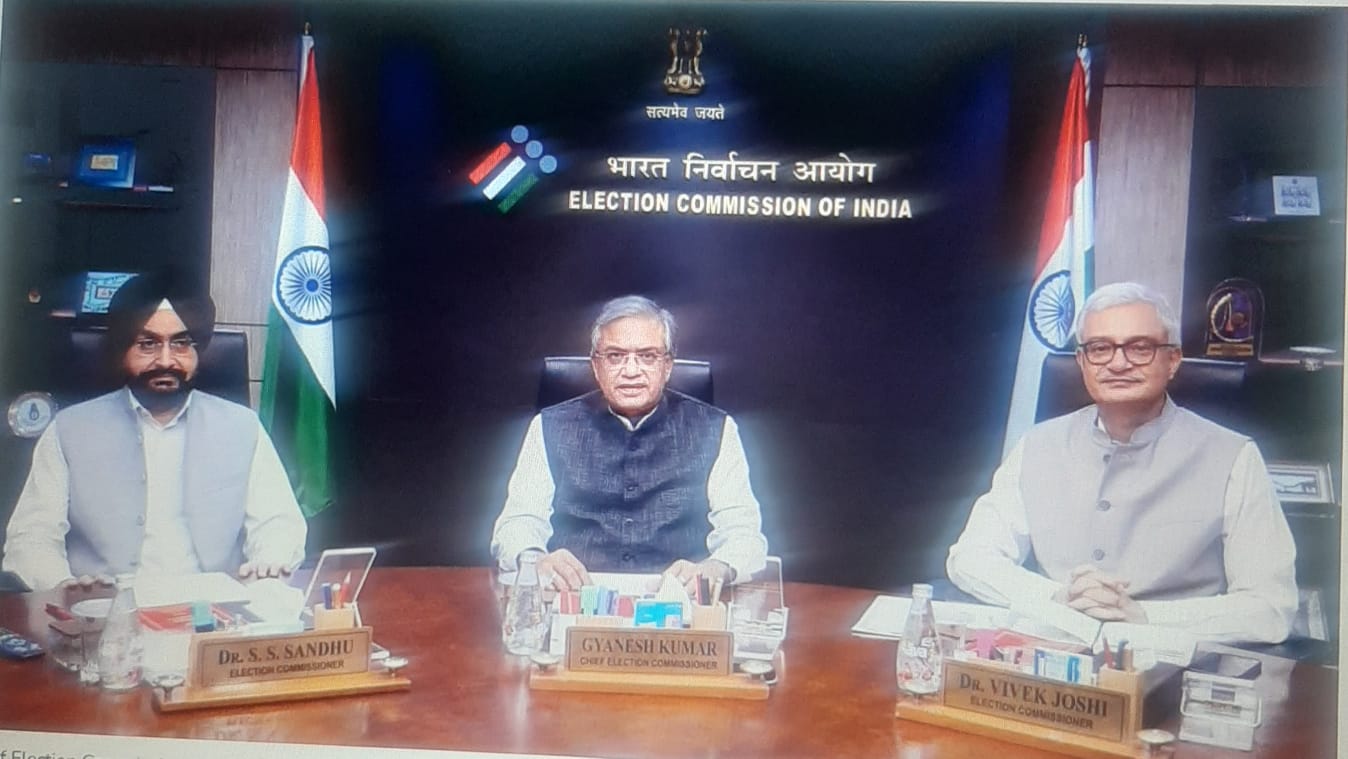
The more serious allegations concern decision-making within the Commission. In September 2026, a newspaper investigation reported that the other two Election Commissioners had formally recorded objections at least 14 times over roughly ten months to decisions on voter registration, deletion and restoration of names, changes to Form 6, and control of the electoral roll database. The objections were reportedly addressed to the Chief Election Commissioner and, in some cases, escalated to the Cabinet Secretary. The Commission’s response was that all decisions were unanimous.
It is a settled law that Chief Election Commissioner is first among equals, not a sole decision-maker. If decisions were taken without the knowledge or concurrence of the other members, that is a procedural problem regardless of whether the outcomes were correct. The Commission would strengthen its position by publishing its minutes, agendas and the basis of contested decisions, or by describing precisely how the objections were resolved.
The Supreme Court’s hearing on October 5, 2026 reflected this caution. Notice was issued to the Union government, the Commission, the CEC and the other commissioners. It is worth separating the strands of criticism, because they differ in quality. The most substantive is the documented claim of internal objections, which the Commission has disputed but has not comprehensively rebutted. The claim that the Commission acts as a partisan instrument is harder to prove and rests largely on inference from outcomes and rhetoric. Some of the commentary, including slogans describing the CEC as a government “puppet” or calling for arrest, is political and does little to advance the institutional question. Opposition leaders are entitled to contest the Commission’s decisions, but the strength of their case lies in the procedural record, not in the language of accusation.
The reputational question also cannot be separated from the Commission’s past conduct in disputes over political parties. In 2023, the Commission recognised the Shinde faction as the real Shiv Sena and, in early 2024, recognised the Ajit Pawar faction as the NCP, awarding each the party name and symbol. Those decisions were taken under the previous Chief Election Commissioner, Rajiv Kumar, not under Gyanesh Kumar, who took office in February 2025. Critics argue that the test applied in those disputes, which relied heavily on legislative majority, favoured parties then aligned with the Centre. The Commission has maintained that it followed established tests. Whatever the merits, the outcomes weakened public confidence in its neutrality, and the current controversy has revived that suspicion. The Commission’s credibility depends on showing that its tests are applied evenly, regardless of which party benefits.
Several things would help the Commission now. It should publish the procedure by which decisions are taken and recorded, including dissent notes, and state how contested orders such as changes to Form 6 were approved. It should answer the specific objections raised by its own members rather than issuing general denials. It should ensure that the SIR does not remove eligible voters without a clear, documented and appealable process. And it should accept that the Supreme Court’s pending examination is an opportunity to demonstrate openness, not merely a threat.
For the opposition, the path is to press the procedural case in court and in Parliament with specific evidence, rather than letting it harden into a general charge that cannot be tested. For the government, the interest in a credible electoral process is as strong as anyone’s, because an election whose results are widely doubted serves no one.
The charge of bias against the Election Commission is not yet proven, and the Commission deserves the presumption of good faith until the courts decide otherwise. But the allegations of internal dissent are documented enough that they cannot be dismissed as a gimmick. The institution’s authority rests on its neutrality and its procedures being visible to all. When those are in doubt, the remedy is not better rhetoric from either side, but transparency about how decisions are made. The Supreme Court will decide what the law requires. The Commission can decide now what it wants its record to show.
(Vijay Shankar Pandey is former Secretary Government of India)