

Upholding, safeguarding and nurturing democracy, human rights and the rule of law cannot be entrusted to governments alone. Citizens need to be eternally vigilant and vigorously vocal about all issues so that accountability and responsibility cannot be evaded by those in power. The fight to preserve democracy is a perennial one, like the act of breathing. It is a process which has to perpetuate itself at all times else, as we have seen, victories would be only momentary and democracy could be snuffed out everyday in innumerable ways writes Sunil Kumar, a former civil servant.
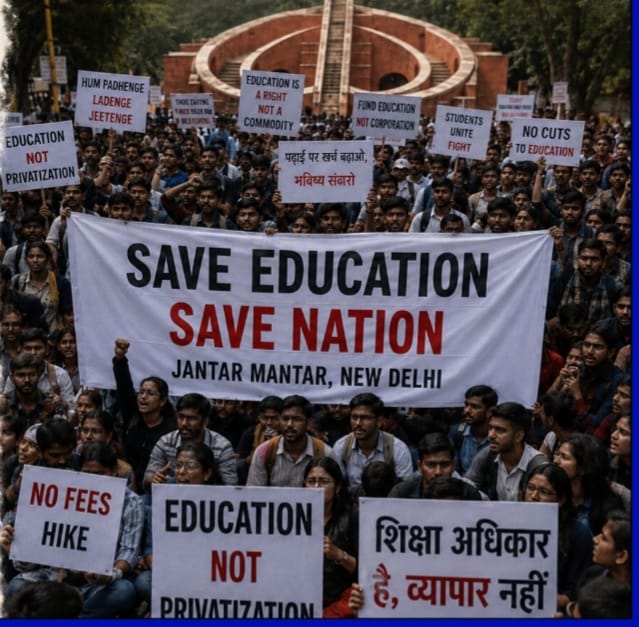
Euphoric celebration broke out among Gen Z and their supporters as news of the resignation of the Union Education Minister Shri Dharmendra Pradhan trickled in around 2 pm on Saturday, July 25, 2026. Later in the day the Government agreed to all the demands raised by the protesting students and the 36-day protest dharna at Jantar Mantar was called off by the Cockroach Janata Party (CJP). Scenes of jubilation were seen all across the country. Truly, the young students showed great courage in initiating and persisting with the protest despite an initial lukewarm response and the air of disbelief even among their well-wishers that anything would really come of it. However, things took a different course since the morning of July 18 when Sonam Wangchuk was forcibly whisked away by the police from the protest site and the rest is history. The youngsters forced the resignation of Dharmendra Pradhan. It was certainly not volunteered as Pradhan and the Government would like the public to believe. Had that been the case, the resignation would have come two months back when the NEET exam papers were leaked.
However, there is the danger of this eventually turning out to be a Pyrrhic victory. This successful outcome has been achieved at a great cost. If all youngsters and their supporters, citizens at large (who have been dismayed by the turn of events after the brutal use of force on protesting students at Delhi and other parts of the country) do not remain vigilant and cognizant of the realpolitik at play, the costs would be phenomenally large, perhaps even nullifying the gains.
Let us face facts. When the Defence Minister Rajnath Singh had said that resignations do not take place under the Modi Government, he was stating the obvious and trying to distance the present regime from the UPA Government led by Dr. Manmohan Singh. In this light the resignation of Dharmendra Pradhan is momentous. But it is only symbolic. The real malaise affecting the education system runs deep and cannot be redeemed by the change of a few personnel at the top. The rot in the education system will be dealt separately. In this article focus would be on the issue of accountability.
The barbaric use of force against unarmed students (of both sexes) by the central paramilitary forces and the Delhi Police personnel deployed on duty on 20th July is shocking. In the aftermath of the violence, the police filed hundreds of FIRs against protesting students. Police and the University officials (Delhi University, JNU, Jamia Millia) formally and informally warned that protesting students would be made to pay the price. Even their supporters were reportedly not spared as eateries and volunteers supplying food and water to agitators were warned by the local police officials to desist or face the music. Naturally, the demand of the students shifted, from fixing the accountability of the police personnel who resorted to such savage use of force, to getting the FIRs lodged against protesting students rescinded keeping in mind the grave consequences these would have on their future. The West Bengal Chief Minister has announced in the State Assembly that action under the Goonda Act (West Bengal Public Safety and Control of Anti-social Activities Act, 2026) against those accused of orchestrating violence during the NEET protest in Kolkata on 24th July would be such that ‘these goons and even their next three generations will remember it..this is precisely why this law was enacted.” The same situation is likely to unfold in Bihar, Uttar Pradesh and Maharashtra which witnessed violence during student protests in several districts.
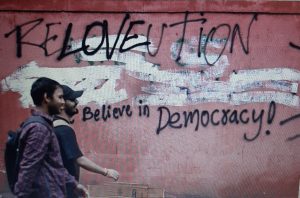
This is extremely serious. We may recall Justice Ujjal Bhuyan of the Supreme Court in his recent address at the National Law Institute University at Bhopal[i] reportedly saying that peaceful protest is central to a democracy but ordinary acts of dissent are increasingly being treated as criminal conduct. He cited the example of environmental activists and said that “people who come to voice their anguish over environmental degradation, which is a reality, are chased away as if they are criminals. Students protesting in campuses are arrested and they do not get bail for 30-40 days.” Seen in this light, there is every likelihood of the Government cracking down hard on students and persons who participated in these protests in different States, even and particularly, after these events have faded from public memory (with able support from the Godi media). There will be no one to support them and the alleged ‘culprits’ would have to fend for themselves running from one court to the other. It will be the same police that unleashed violence on the protesters that would be deciding as to whose name is to be included in the FIR or not and also the sections of BNS to be invoked even if there is no evidence to support such decisions. It may be recalled that earlier in the month, Justice Madhav J Jamdar of the Bombay High Court had quashed a one- year externment order passed against a political activist, holding that organising or participating in peaceful protest against government policies cannot justify such an extraordinary preventive measure[ii].
It must be remembered that whether in Delhi, Kolkata, Prayagraj (Allahabad) or Mumbai, the Police Commissionerate system is in place. The powers of the Magistrate have been granted to the Commissioner of Police and delegated further to other senior police officers working under him/her. Thus the power to use force against protestors (whether lathi charge, tear gas or firing) is now with the police officers and not executive magistrates who are civil officers. This means that if orders have been given from the highest levels of political authority that ‘strict’ action is to be taken, then it is up to the police officers present on the spot to decide what action to take and when. There is no executive magistrate present to assist the police officers and provide the civilian (and often judicious) point of view about the evolving situation and how to tackle it. Given the colonial legacy of the police in India, the chances of excessive use of force against protestors are very high. This seems to be playing out in different cities under the police commissionerate system. In case of non-adherence to Standard Operating Procedures (SOP), such instances would be decided internally after the event. In all probability, the wrong-doers will get away lightly.
It is extremely important that the officials who authorised use of force and those who implemented those orders against the peaceful protestors during the Sansad March on 20th July are held to account. The importance of this issue seems to have escaped the attention of the negotiators of the CJP. So also the issue of compensation to those students/persons who were grievously injured and received pellet wounds or were badly beaten by batons. The presence of police personnel (or private?)in plain clothes armed with batons and their role in attacking the protestors also needs to be examined. The issue involves not just use of excessive force but also illegal and banned arms against unarmed citizens. These are important if the fundamental right of citizens to stage peaceful protest and voice their dissent against government policy is to be safeguarded.
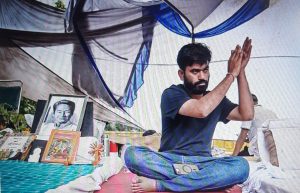
The mindset of authorities (including Chief Ministers) who are hell bent on ‘teaching a lesson’ to dissenters and tend to treat all dissent as ‘anti-development’ if not outright ‘anti-national’, poses a very grave threat to the future of democracy in the country. In these grim circumstances, to read ‘victory of democracy’ in the resignation of the Union Education Minister seems to be wholly and naively pre-mature.
Civil administration is trained to be accessible to the public, to listen to people and resolve their grievances. Refusing permission to hold demonstrations on the frivolous plea that all protests could lead to a ‘law & order’ situation is a sign of an insecure and worried government. Concentration of magisterial and police powers in the Police Commissioner is wrong in policy and is proving to be ineffective and counter productive. In a real sense it embodies a conflict of interest. Yet States take pride in proclaiming that they have introduced the Police Commissionerate system in so many cities. There was a reason why the judicial powers of the District Magistrate were transferred to judicial officers when the Code of Criminal Procedure, 1973 (CrPC) was enacted. Separation of powers is part of the basic structure of the Constitution. Even the current Bharatiya Nagarik Suraksha Sanhita, 2023 (BNSS), talks of separate powers of the Magistrate and Police Officers. In this context there is an urgent need to rethink the distribution of magisterial powers between the civil and police officers in cities having Police Commissionerate system.
Transparency and accountability constitute the core of governance. Governments at all levels (local, state and Union) need these in good measure. Accountability to citizens is the core issue. After all, in a democracy any elected government is, at best, a trustee of the voter’s confidence for a period of five years… nothing more. It has to listen to citizens’ voices at all times. It cannot and ought not to live in an echo chamber. The voice of the opposition matters and cannot be stifled in a democracy. Institutions like the Parliament, Legislative Assemblies and the Gram Sabhas provide formal spaces for citizens to air their concerns. Public protests, whether in the form of dharna (sit-in strikes), processions or Bandhs, are recognized means of the freedom of expression guaranteed to all citizens. These cannot be banned and so regulated by the executive and the judiciary as to end up stifling or silencing questioning or dissent expressed by the people. It is an issue which no government can ignore or sidestep. Further, no democratic government can afford to appear vindictive and use the investigating agencies as tools to browbeat their rivals and pulverise them into submission.
It is the duty of all citizens seriously to reflect on the core issue of accountability. It is not a question of exam paper leaks alone. When citizens begin to ask questions, those in power would need to provide credible answers. All governments must learn to take criticism in the right spirit and stop filing FIRs (or threatening to file defamation suits) against persons who happen to criticize them.
It is a good omen that Gen Z has convincingly demonstrated how fear can be overcome, just as the farmers had done during their year-long protest ,which after more than 700 deaths, finally forced the Union Government to repeal the controversial Farm Laws. However, that victory too could, sadly be termed as a Pyrrhic victory as the condition of farmers has not improved at all and farmer suicides continue unabated. The Minimum Support Price (MSP) law remains a distant dream.
Upholding, safeguarding and nurturing democracy, human rights and the rule of law cannot be entrusted to governments alone. Citizens need to be eternally vigilant and vigorously vocal about all issues so that accountability and responsibility cannot be evaded by those in power. The fight to preserve democracy is a perennial one, like the act of breathing. It is a process which has to perpetuate itself at all times else, as we have seen, victories would be only momentary and democracy could be snuffed out everyday in innumerable ways.
(Sunil Kumar is a visiting Senior Fellow associated with the Centre for Cooperative Federalism and Multilevel Governance in Pune International Centre and a former civil servant. Views expressed are personal.)
[i] Consuming chicken biryani no offence: Justice Bhuyan; The Sunday Express, New Delhi, July 26, 2026, Late City edition
[ii] Participating in peaceful protests against government policies cannot justify externment: Bombay High Court; https://indialegallive.com/constitutional-law-news/courts-news/participating-in-peaceful-protests-against-government-policies-cannot-justify-externment-bombay-high-court/