

V.S.Pandey
Coaching industry beginning with admissions in medical , engineering institutions , universities and then the competitive exams for entry into government jobs has created such an octopus like grip over our country’s education system that it is impossible to avoid coaching if one wants to beat the existing system .For many students taking NEET and JEE, which require intensive coaching, and access to it often depends on where they live and what their families can afford. Instead of correcting this malaise, and end the grip of coaching mafias, unfortunately ,Centre is now designing its free coaching network to fill this gap, taking up the two high-stakes entrance tests first and prioritising students from economically weaker families and areas with limited access to quality coaching.
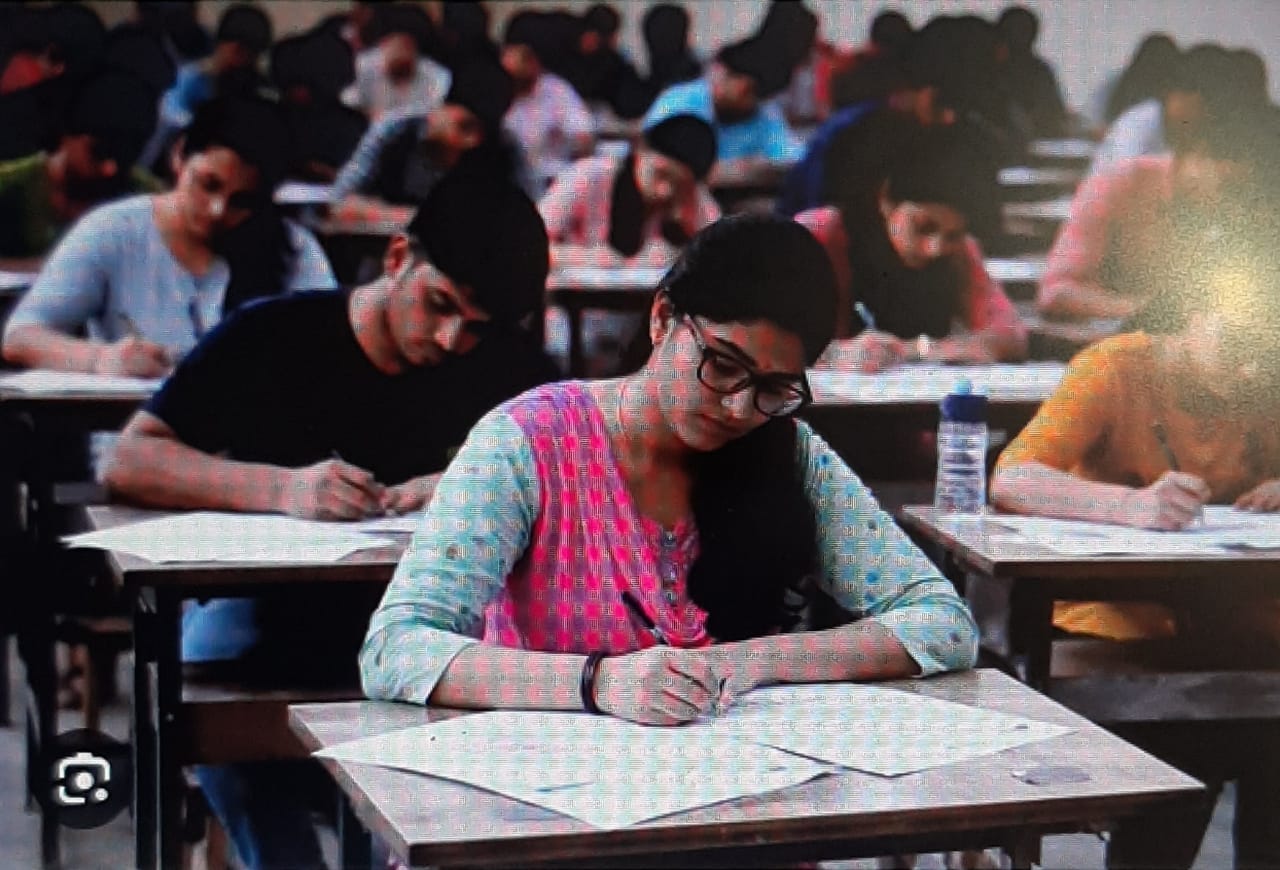
This is a stark reality for millions of Indian teenagers that the real examination begins long before they enter the hall. It starts in the coaching classroom, often in Kota, Hyderabad, Delhi or a mushrooming centre in a smaller town. Success in the Joint Entrance Examination (JEE) for engineering institutes, the National Eligibility cum Entrance Test (NEET) for medical seats, and even the UPSC Civil Services Examination has become tightly linked to expensive, intensive private coaching. Families stretch budgets, students abandon normal childhoods, and an industry now valued at over ₹58,000 crore thrives on the anxiety of limited seats and high stakes.
The deeper question remains: why have we created a system in which regular classroom teaching in schools is widely regarded as insufficient?
The root of the problem is the entrance exam design itself. Each year, roughly 1.3–1.6 million students register for JEE Main, competing for a few tens of thousands of seats in premier engineering institutes; only a fraction of those advance to JEE Advanced for the IITs. NEET sees over two million candidates for roughly 1–1.5 lakh medical seats across government and private colleges. UPSC attracts more than a million aspirants for around a thousand civil services posts. When the prize is so scarce, any examination inevitably becomes high-stakes. But India’s competitive exam papers design have evolved into something more than tests of the school curriculum. Paper setters, over a period of three to four decades , started competing with each other to set questions that demand exceptional speed, pattern recognition, multi-concept integration, and familiarity with obscure tricks. Many items sit at the outer edge of, or beyond, the syllabus that schools are expected to cover. Multiple-choice formats with negative marking reward drilling and strategy as much as conceptual understanding. Coaching institutes specialise precisely in these skills: daily timed tests, exhaustive question banks, shortcut methods, and psychological conditioning for pressure. Schools, already strained by uneven teaching infrastructure cannot match this intensity. The result is the rise of “dummy schools,” in which students remain formally enrolled for attendance and board exams while spending the bulk of their time in coaching centres.
This is not an accidental byproduct; it is structural. As one analysis notes, coaching has shifted from a supplement to the de facto education system for aspirants. Students routinely spend six to seven hours in school followed by four to five hours of coaching, with homework stretching into the night. The human cost is visible in elevated stress, mental health crises and student suicides — Kota alone has repeatedly recorded dozens of cases in recent years, while national data show thousands of student suicides annually, with examination failure among the cited factors.
The coaching industry feeds on information asymmetry and desperation. High fees (often ₹1–2 lakh or more per year for classroom programmes, plus living costs), aggressive advertising of toppers (sometimes without clear disclosure of whether they were long-term students), and limited refund options lock families in. Access is stratified by money and geography. Students from rural government schools or lower-income households start at a severe disadvantage. Free government schemes for SC/ST/OBC and economically weaker sections exist, and the Centre is expanding technology-enabled free coaching, but these remain partial responses to a demand created by the examination system itself.
Contrast this with systems in the United States and much of Europe, where entry into higher education and professional training relies far more heavily on sustained school performance and multi-dimensional evaluation.
In the United States, college admissions are largely holistic. High school Grade Point Average, the rigour of courses taken (Advanced Placement or International Baccalaureate), extracurricular activities, personal essays, recommendation letters and demonstrated interest matter. Standardised tests such as the SAT or ACT once carried heavy weight, but a majority of institutions are now test-optional or test-blind. Even where scores are considered, research indicates that coaching effects are modest; long-term academic preparation in school remains the dominant factor. Test-prep exists and is used disproportionately by higher-income families, yet it does not displace the centrality of the high school transcript. Selective universities seek evidence of intellectual curiosity and sustained achievement rather than pure exam-cracking skill. The system is imperfect — grade inflation and inequality persist — but it does not systematically render ordinary classroom teaching irrelevant.
European models vary but generally anchor admission in the secondary school leaving examination. In the United Kingdom, A-level (or equivalent) results form the core, processed through UCAS. Selective universities may require aptitude tests (UCAT for medicine, subject-specific papers at Oxford and Cambridge) and interviews or personal statements, but these assess reasoning and suitability rather than superseding years of school work. France uses the baccalauréat together with the Parcoursup platform; school records and motivation statements play significant roles. Across these systems, the secondary curriculum and its culminating assessments are designed to prepare students for higher education. Intensive private coaching for a single high-stakes MCQ paper is not the cultural or structural norm.
The Indian coaching culture has damaged the education system by diverting attention, resources and student time away from deep learning, curiosity and broad development. It has incentivised paper setters to create ever-more-coachable instruments and schools to become secondary. Solutions must address root causes rather than merely subsidise the symptom.
Entrance and other competitive examinations should be rigorously aligned with the school/ university curriculum. Difficulty levels and question styles should test genuine understanding of what is taught in classrooms, not obscure tricks or accelerated problem-solving that only specialised coaching delivers.
India’s competitive examinations once aimed at meritocratic selection in a resource-scarce environment. Over time, the combination of extreme scarcity, coachable paper design and weak confidence in school assessments produced a parallel education system that privileges those who can pay and those willing to sacrifice childhood to the treadmill. The mad race of paper setters to produce questions that demand specialised tutoring is not inevitable; it is a policy choice. By looking at how American holistic review and European school-leaving examinations keep mainstream education central, India can redesign its gateways so that the classroom — not the coaching centre — becomes the primary path to higher education and professional training. Only then will the race begin where it should: in the examination hall, on a foundation built by schools rather than by an industry that profits from their perceived inadequacy. The center should not join the mad race of coaching institutions, rather it should focus on completely reforming the education system and devise policies which will end the practice of paper setters vying with each other to set question papers beyond the capacity of even our outstanding students who excelled in their school exams but they fail to perform in our coaching led entrance exam systems. Decision to start coaching centers rather than reforming the existing skewed system , will be a retrograde step to say the least.