

‘Pygmalion’ written in 1912, still carries important lessons and interesting ideas by which we in modern India can cause social transformation to happen. The noble aspiration of equality for all human beings is still very far from being fulfilled. Shaw’s perceptively illuminating take on the way this could happen highlights the eternal, universal connection between great literature, higher thought, humanism and the practical redemptive possibilities of sound human actions. The play entertains, educates and provides food for thought and action, writes Juthika Patankar, a former civil servant.
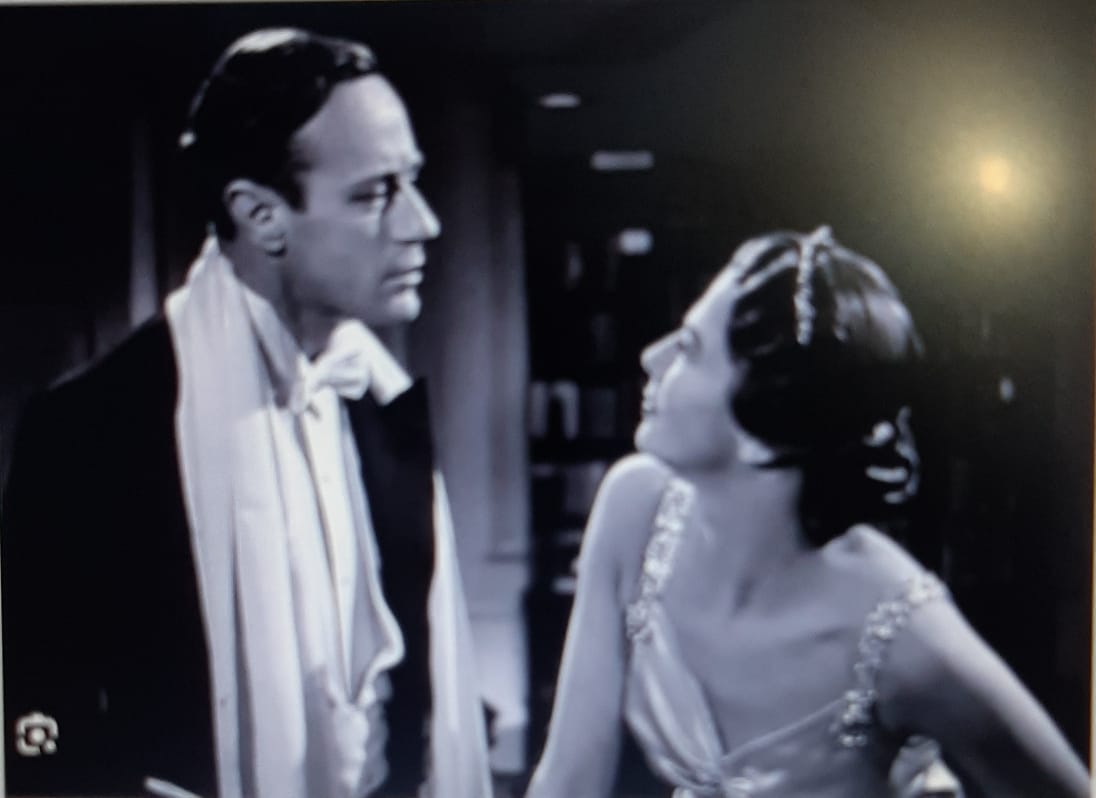
George Bernard Shaw’s play ‘Pygmalion’ is perhaps more widely known owing to the Broadway musical based on it as well as the Hollywood film, both titled ‘My Fair Lady’. Marathi-speaking theatre audiences know it through the brilliant adaptation titled ‘Ti Phulrani’ by eminent Marathi litterateur, P L Deshpande while Hindi cinema-goers saw a Hindi version titled ‘Man Pasand’.
The title of Shaw’s play refers to the Greek mythical sculptor Pygmalion, who fell in love with his own creation, the statue Galatea, which was then brought to life by the Goddess Aphrodite. In Shaw’s play, the protagonist is a professor of phonetics, who lays a bet that with his teaching of phonetics, he can convert a working-class flower-girl into a high-class, well-spoken society elite, ‘create’ or fashion a Duchess, no less. This he duly does and wins his bet. The argument Shaw posits is that refinement of diction and spoken language is what separates the upper-class genteel society from the proletarian masses. It is an enormously significant observation because it implies that upward social mobility can be perfectly within the reach of the working-class by learning to speak and pronounce correctly and fluently. Such a proposition becomes particularly interesting for us in the context of caste and the limitations caste imposes on social mobility and acceptability in India.
We speak many tongues and dialects in India. Like the world over, the speech in any tongue of the educated upper social classes is distinct from the illiterate, the uneducated or the rustic people who also speak in the same tongue. Refined, polished diction and the correct grammatical use of language immediately raises the social status of a person. The so-called ‘Bambaiya’ Hindi suggests that Hindi is merely a very basic mode of communication among persons from all walks of life, varying socio-economic status and from different regions where Hindi is not the mother tongue and is used only to convey simple meaning or actions. However, when one encounters the urbane, sophisticated and idiomatic Hindi spoken by the educated elite in the Hindi heartland, it at once elevates the speaker as well as the language to a far higher social status.
If we, as educated speakers of our mother tongues close our eyes and listen to the speech around us we would tend to classify the socio-economic standing of the different speakers based upon their clarity of enunciation, grammatical usage and the polished diction. Now imagine if we were to discover after opening our eyes that among those we had slotted as unmistakably upper-class there were those who were, to all appearances, shabbily attired and engaged in menial labour. The plain point being made here is that fluency in language, correctness in diction and grammar and refinement in enunciation is an acquired skill. The acquisition of such skills need not be beyond the reach of the less-privileged working-classes or the poor or, as in India, also the so-called lower castes. Consequently for society to become inclusive and egalitarian, phonetics or the science of speech can make an enormously useful contribution.
People perceive and judge one another from various prisms of prejudice based on their own region, religion, income, language, culture or caste. Caste in India often determines the way persons speak, eat, dress; the professions into which they might be bound; the skills they would have imbibed; their mores of social interaction. Shaw’s lesson in ‘Pygmalion’ can simply be applied to removing the difference in people’s perception of caste discrimination if they were to meet persons who spoke with flair and distinction overriding their natural birth-inherited caste particularities or limitations.
The important issue here is the fundamental difference between a handicap imposed by the circumstances of one’s birth (over which one has no control) and the means of removal of that handicap which can be accessed and acquired by all. Training in phonetics confers distinction in social manners even without having undergone education or being born privileged. It is a democratic means of gaining an equal footing in society and social acceptability. The implications for our caste-ridden society suffering the stigma and trauma of caste discrimination based on birth are huge and liberating.
The play highlights the contribution of good speech and diction in expanding the cultural horizons of the speaker, regardless of less-privileged origins. Phonetics can transform the cultural profile of any individual and can bring about an aspirational change in outlook. It can cause Sanskritisation without anyone having to undergo the long process of education and gradual reform brought about by incremental increase in income and social status.
The core idea in ‘Pygmalion’ combines truths which are apparently superficial as well as profound. So much of what is regarded as ‘high society’ is based on appearance and apprehension by the ear and the eye. Persons who speak well carry an aura of sophistication which raises certain expectations in others and which also confirms the fulfilment of those expectations. What the ear apprehends will impact the perception by the eye. Social discrimination falters and drops based upon this. A person who enunciates with grace and correctness may well be an impoverished genteel upper-class (or upper caste ) member.The odds are in favour of such a person being high-born. And so, social discrimination against such a person will be reduced to be almost non-existent. Phonetics has helped to surmount the restrictions imposed by birth. And when this happens, the profound truth of all persons being equal, the principle on which civilised democratic society ought to base itself, becomes operational.
It is interesting that while P L Deshpande’s Marathi adaptation demonstrated the applicability of Shaw’s precept perfectly in an Indian situation, the Hindi film adaptation seemed to miss the point completely. In ‘Man Pasand’ the illiterate sounding speech of the working-class girl is substituted by an untrained but fundamentally musical singing voice possessed by the low-income, socially under-privileged ‘datun-seller’ whom the professor of music trains to become an accomplished classical singer. But Shaw’s tenet, grounded in socialism, is rendered null and void here because it has never been anybody’s contention that an excellent singer is also an upper-class or upper-caste person. The point about ‘Pygmalion’ is that crudity in speech, language and diction is felt to be aligned with a lower socio-economic-cultural background and so, by improving speech to the highest attainable levels, transformation of social status can be possible. The well-spoken flower-girl can rise to owning or serving in a genteel flower-shop which caters to the highest social classes which opportunity she would never have were she to continue to sound illiterate by bad enunciation and poor diction.
‘Pygmalion’ written in 1912, still carries important lessons and interesting ideas by which we in modern India can cause social transformation to happen. The noble aspiration of equality for all human beings is still very far from being fulfilled. Shaw’s perceptively illuminating take on the way this could happen highlights the eternal, universal connection between great literature, higher thought, humanism and the practical redemptive possibilities of sound human actions. The play entertains, educates and provides food for thought and action.
In caste-ridden India, ‘Pygmalion’ opens up possibilities to counteract the centuries-old prejudices of caste by pointing to accessible means of transforming and moulding persons beyond their caste confines, thereby enabling them to take their place in society on an equal footing with everyone else. We have already been witnessing a very slow but definite process of education challenging caste pre-conceptions, beginning with the towering example of Dr B R Ambedkar, often hailed as modern India’s brightest intellect. In our age of AI, the social media with audios and reels, the overwhelming desire among the young to be seen as savvy, the way language is spoken and heard can make futures. Language laboratories in schools, public speaking and theatre training for careerists in fields ranging from top corporate sector jobs to tertiary sales jobs, to advertising, to peddle social skills are all doing in their own way exactly what the phonetics professor in Shaw’s play did. May this inexorable march towards equality continue.
(Ms. Juthika Patankar is a Visiting Faculty in Gokhale Institute of Politics and Economics, a member of Pune International Centre and a former civil servant. Views expressed are personal.)