

Only when Uttar Pradesh is able to attract not only investments but also people from other States to work in the manufacturing, service or even agriculture and allied sector in other parts of the State (other than a few districts adjacent to Delhi) and they settle down in the state that the state can be classified as a ‘developed’ state. Being known just as the ‘expressway state’ of India’ or the state with most international airports and/or even a trillion-dollar economy would not make Uttar Pradesh (or Bihar for that matter) a developed state writes Sunil Kumar, a former civil servant.
India@2047 is a dream that is being sold to the public since 2022. The 100th year of independence has been fixed by the government as the time by which India would become a ‘developed’ country. India becoming a 5 trillion-dollar economy by 2024-25 and a 35 trillion-dollar economy by 2047 were initially routinely bandied about by the Prime Minister and other senior Union Ministers, economists and spin doctors of the ruling party. During the ongoing monsoon session of Parliament, the government has informed the Parliament that India would become a 5 trillion-dollar economy by 2029 based on the International Monetary Fund’s (IMF) projection that India’s GDP could reach that mark by 2029. No explanation is offered when deadlines publicly announced previously are routinely missed. Instead, new deadlines begin to be routinely bandied about and/or replaced by new targets and dreams. Under the current dispensation, not only are the rules of the game changed but the game itself! If ever, there was a seller of dreams or ‘sapnon ka saudagar’, then it has to be the BJP led NDA government.
States have quickly latched on to this trend set by the Union government. The Chief Minister of Uttar Pradesh was quick to get off the mark. Even before his counterparts in Maharashtra and/or Tamil Nadu could react, Yogi Adityanath was first to announce that Uttar Pradesh would become a one trillion-dollar economy by the time India touched 5 trillion-dollar mark! It does not really matter whether the size of UP economy has not even reached one-third mark till date.
This article is not about Gross Domestic Product (GDP), the controversy surrounding the revision of methodology, change of base year for calculation or the quality of data used. Instead, I will be focusing upon what development and progress could mean to an average Indian and resident of a state and what could reasonably symbolize development and progress. Thus, development and progress would carry different meanings for different people depending on their economic and social strata.
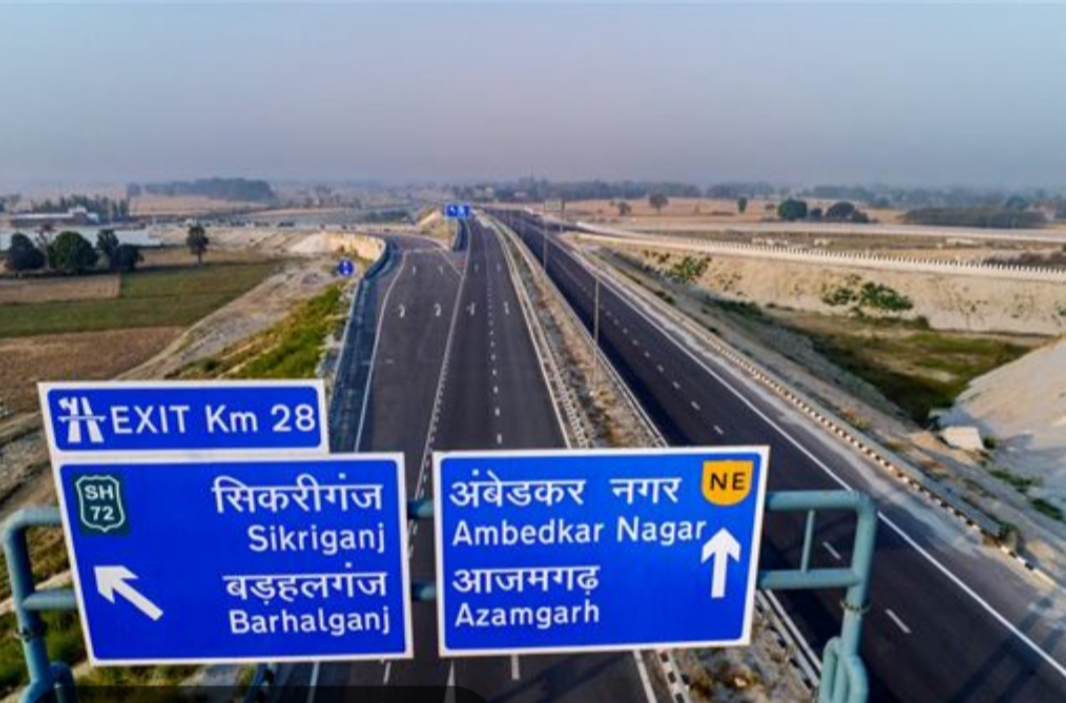
The term ‘development’ must necessarily include economic growth but cannot be divested of aspects of life captured in the term ‘human development’ and ‘sustainable development’. Unfortunately, what is being peddled to the public as symbol of development is at its core exclusionary. It is certainly not inclusive. Today, government showcases new expressways, elevated roads, airports, tall glittering buildings, metro, river-front development, roads bursting with different models of cars and passenger vehicles, bullet train and semi high-speed trains etc. as symbols of development. It remains silent on whether rising per capita income and growing income inequality can co-exist. Leaders are hesitant to commit whether ‘out-migration’ from their state is welcome or not especially when ‘in-migration’ is frowned upon and ‘son of the soil’ argument is routinely put forth during election time.
The Prime Minister has made it a point of fetish to fete and be feted by Indians settled abroad in almost every country that he has visited in the last twelve years. That 40 million persons of Indian origin (PIO) are settled abroad and doing well is showcased as a matter of pride. So also, over 150 billion dollars received back as remittances from Indians working abroad, mainly as labour engaged in construction industry in the Gulf countries. Yet the state goes to great lengths to deport a few hundred foreigners who allegedly enter the country illegally from neighbouring Bangladesh and Myanmar and are engaged in menial works such as rag-picking or working as domestic help.
In a connected world, it is but natural that labour would move out in search of employment and better life. That invariably leads them to continents and countries where they can reasonably expect to find employment. North America, whether the United States of America or Canada and much of Europe have largely been made by migrant labour over the last century and more. The Gulf countries have emerged as another attractive destination for migrants in the last five decades. Australia is also emerging as another favourite destination for migrants from different countries. But now ‘anti-migrant’ sentiments are coming to the fore.
Within India, Punjab, Haryana and western Uttar Pradesh attract seasonal migrant labour to work in the fields especially during the sowing and harvesting season. Some migrant labourers are now also trickling into Kerala to work on their fields and plantations where local labour is either not available or too costly. Brick kilns and civil construction projects across the country attract migrant labour especially from Bihar, Jharkhand, Uttar Pradesh, Chhattisgarh, Odisha, West Bengal and even Telangana and Tamil Nadu.
Likewise, the manufacturing industries located in Gujarat and Maharashtra largely employ migrant labour especially those working as contractual workers. Mumbai continues to attract a disproportionately large number of migrants as it is a city that continues to provide livelihood opportunities despite bursting at the seams. The IT powerhouse of Bengaluru, Hyderabad, Pune, Noida and Gurgaon among others employ large number of workers from outside the state. A large number of these employees eventually settle down in these cities.
Similarly, states and cities which offer reasonably good standard of education, especially Engineering and Medical education, have begun to attract a significantly large number of students from outside the state. Maharashtra, Karnataka and Delhi lead the pack. A surprising addition to this list is Kota in Rajasthan which has emerged as a major ‘coaching centre’ where school students are trained for ‘cracking’ engineering and medical entrance exams.
Based on analysis of Census 2011 data, it has been concluded that about 54 million (12 percent) of 450 million migrants were inter-state migrants. The same study concluded that the states with largest intercensal out-migration were Uttar Pradesh (4.86 million), Bihar (3.05 million), Rajasthan (1.35 million) and Madhya Pradesh (1.17 million). The net out-migration figure showed that Uttar Pradesh with 3.43 million was at the top, followed by Bihar with 2.73 million. Other states with large net out-migration are Rajasthan, West Bengal, Odisha and Madhya Pradesh (0.37, 0.29, 0.28 and 0.27 million respectively). On the other hand, Maharashtra attracted 2.44 million net migrants from other states, followed by Delhi (1.5 million) and Gujarat (1.4 million).
However, the picture that emerged during the Covid lock-down in March-April 2020 revealed a rather grim story. The numbers were much higher although the originating and destination states remained more or less the same.
No wonder, despite the end of ‘jungle-raj’ in Bihar and beginning of ‘suraaj’ under Nitish Kumar in 2005, there has been no decline in the number of out-migrants from Bihar. The number is currently estimated at around 50 million. Studies show that almost 80 percent of workers migrating from the State hail from districts located in north Bihar and very little from South Bihar.
The position appears to be similar for Uttar Pradesh despite nearly ten years of ‘double-engine sarkar’ under Yogi Adityanath. Majority of the out-migrants hail from eastern UP districts. This perhaps is also a pointer to continued under-development of these regions. Given that most workers migrating outside the state also belong to the OBC and SC/ST categories, the out-migration is also an indicator where the workers are unwilling to work on the fields of the upper and dominant castes. It may also be noted that Uttar Pradesh and Bihar are now the top two states sending most emigration check required (ECR) emigrant workers abroad. Kerala (the erstwhile top state) has slipped to fourth position behind even Tamil Nadu.
This raises serious questions about what would constitute development and why existing models of development appear to be failing especially when looked at from the point of view of the most vulnerable sections of society. What is being passed off for development today does not even touch the lives of a large section of the population who can neither drive on the expressways or use the airports or enter the shopping malls which are constructed through their labour. Despite hundreds of crores being collected by the state by means of labour cess, the living condition of labour engaged on work sites remain largely unchanged. This is both in terms of protection from work related accidents and/or quality of life of workers and their families engaged by labour-contractors. Reliable data remains elusive. The migrant labour continues to remain ‘invisible’. Promises regarding construction of suitable rental – accommodation for the migrants and their families in the wake of the Covid lock-down remain largely on paper.
Despite tall promises made, skill development and consequent better bargaining power of labour, has failed to fructify. Quality of education in government schools remains a matter of concern. Now even access to these schools is declining as schools run by urban local governments and the state governments are being shut down. Access of migrants to social security schemes providing better health facilities and even food security remains largely elusive despite claims by the Government of implementing ‘one nation, one ration card’ successfully.
Seen in this context, there appears to be merit in the suggestion that “only when people from other states start coming to Bihar for employment can we truly claim that meaningful progress and real change have arrived”. Similarly, only when Uttar Pradesh is able to attract not only investments but also people from other States to work in the manufacturing, service or even agriculture and allied sector in other parts of the State (other than a few districts adjacent to Delhi) and they settle down in the state that the state can be classified as a ‘developed’ state. Being known just as the ‘expressway state’ of India’ or the state with most international airports and/or even a trillion-dollar economy would not make Uttar Pradesh (or Bihar for that matter) a developed state. They would continue to remain the suppliers of cheap human labour. If benefits are cornered by a few and the vast majority are forced to be the bystander and look at ‘development’ whizz past, then something is definitely amiss in the very concept of development.
This would call for total revamp of the education and health sector in these States. Functioning city governments, improved civic infrastructure and good law and order situation are essential for attracting migrants to the state. This would become possible not with installation of ‘double engine or triple engine’ governments but only when focus shifts to governance issues. Honesty, transparency and accountability of political representatives and the bureaucracy at all levels of government, adherence to rule of law and functioning systems are essential for this transformation. Sooner the politicians as well as the bureaucracy shed the ‘maai-baap’ culture, the better it would be for the growth trajectory of these States.
Same would apply for India as a whole. If India is the fastest growing large economy in the world, it would naturally attract labour from other countries. Already highly skilled expatriate managers are working as CEOs and at senior positions in multi-national companies (both Indian and foreign). Japanese, Korean and Taiwanese cities are coming up to cater to the rising demand for suitable accommodation for expatriate managers and engineers in the National Capital Region. Chinese labourers are also being engaged by Chinese companies working in India. Hence, it is time the country recognised this trend and offered work permit to workers from neighbouring countries and thereby check illegal immigration.
To conclude, in-migration seems to be a good indicator of development and out-migration for lack of development especially when driven by survival instinct rather than seizing new and better opportunities outside the state. With focused attention on governance issues, revamp of education and health services, balanced and judicious use of resources and strong political commitment, it is possible to reverse the trend. India can truly become a developed country when reverse migration of PIOs begins to take place, India opens up to receive foreign labour and forced out-migration of labour from States like Uttar Pradesh and Bihar become a thing of the past.
(Sunil Kumar is a visiting Senior Fellow associated with Centre for Cooperative Federalism and Multilevel Governance in Pune International Centre and a former civil servant. Views expressed are personal.)