

India has likely spent somewhere between USD 400 and 450 billion on gold imports over the past decade — twenty times what ethanol blending has saved. Switzerland alone supplied gold worth over USD 24 billion to India last year. Precious metals now account for more than 5 per cent of the country’s total imports, and gold has historically driven a quarter or more of India’s trade deficit in high-import years, writes former IAS officer V S Pandey.
Why the government’s favourite forex-savings story leaves out the elephant in the room?
Every few months, a minister stands at a podium and announces, with justified pride, how much India has saved by blending ethanol into petrol. The most recent figure, cited by Petroleum Minister, is striking: nearly USD 19.3 billion in foreign exchange saved over the past decade, alongside more than USD 15 billion paid directly to sugarcane and grain farmers. Blending rates have shot up from a token 1.5 per cent in 2014 to 20 per cent in 2025, five years ahead of schedule.
It is a genuine policy success — cleaner fuel, higher farm incomes, reduced crude dependence. But it is also, when placed next to India’s other import obsessions, a fairly small number being made to carry an outsized share of the “curbing imports” narrative.

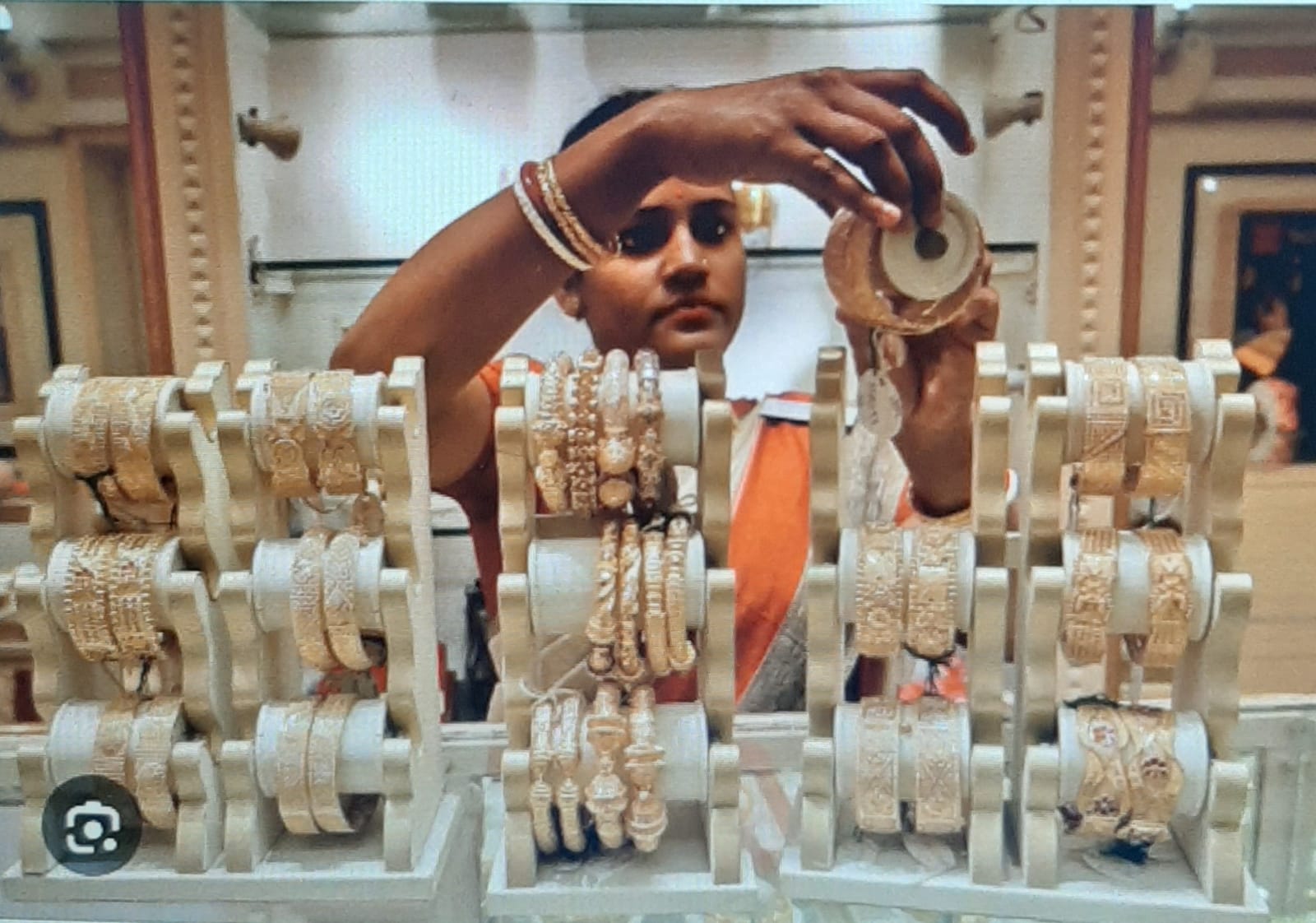
Consider gold. India’s gold import bill hit an all-time high of USD 71.98 billion in 2025-26 alone — nearly four times the *entire decade’s* worth of ethanol savings, in a single year. The trajectory over the past ten years tells its own story: roughly USD 35 billion in 2015, dipping through the pandemic, then climbing to USD 35 billion again in 2022-23, USD 45.5 billion in 2023-24, USD 58 billion in 2024-25, and now nearly USD 72 billion. Add it up and India has likely spent somewhere between USD 400 and 450 billion on gold imports over the past decade — twenty times what ethanol blending has saved. Switzerland alone supplied gold worth over USD 24 billion to India last year. Precious metals now account for more than 5 per cent of the country’s total imports, and gold has historically driven a quarter or more of India’s trade deficit in high-import years.
Then there is the money leaving the country for education. Here the numbers depend on what is counted. The Reserve Bank of India’s narrow “studies abroad” remittance category — which captures tuition and living costs sent through formal banking channels runs into billions of dollars. According to NITI Aayog estimate, presented earlier this year, puts India’s students’ overseas tuition and living costs at nearly Rs 6.3 lakh crore, or roughly USD 75 billion, accumulated with a nearly 2,000 per cent rise in outflows over the past decade under the Liberalised Remittance Scheme. One industry estimate pegs annual spending on foreign education at USD 44 billion in 2024 alone, projected to touch USD 91 billion by 2030. For every one foreign student who comes to study in India, 28 Indian students go abroad — a lopsided ratio with real consequences for foreign exchange.
Put these three numbers side by side, and the imbalance in public discourse becomes obvious. Ethanol blending gets the press conferences and the five-year-ahead-of-schedule congratulations. Gold, which costs the exchequer many times more, gets treated as an immovable cultural fact. And the slow bleed of foreign exchange through students seeking a quality of education and research infrastructure they cannot always find at home barely features in the conversation about import bills at all.
This is not an argument against ethanol blending — it should continue, and be expanded further. But it should be pursued with open eyes about its costs. Diverting sugarcane and foodgrain to ethanol raises legitimate food-security questions, particularly given that sugarcane is a notoriously water-intensive crop grown in states already under water stress. And on the consumer side, E20 fuel reportedly cuts mileage by roughly ten per cent in vehicles not built for it — which describes the overwhelming majority of India’s existing fleet of some 30 crore vehicles. A driver burning more fuel per kilometre to compensate is quietly eating into the very import savings the policy is meant to deliver, not to mention the warranty and engine-wear disputes already surfacing. None of this makes ethanol a bad policy; it makes it an incomplete one if pursued in isolation, without matching investment in E20-compliant vehicle transition and safeguards for food and water security.
Gold is harder to fix by fiat, precisely because it isn’t really a policy failure — it’s deeply embedded in Indian household behaviour as a wedding necessity, an inflation hedge, and a form of savings that doesn’t require trusting a bank or a stock market. Import duty hikes, the Gold Monetisation Scheme, and Sovereign Gold Bonds have all been tried, with only partial success in denting physical demand. But precisely because the number is so large, even a modest success in nudging household savings from idle gold into productive financial instruments would swamp any single-fuel-policy gain many times over. This deserves at least as much ministerial attention as ethanol blending does.
Education is the slowest fix of the three but arguably the most important. Building genuinely world-class research infrastructure, faculty pipelines, and industry-linked laboratories takes decades of sustained investment, not one budget announcement. It is also worth being honest that many students go abroad not purely to save money but for research quality, global exposure, and post-study work opportunities that Indian institutions, for all the progress of the IITs and IIMs, still cannot fully match. Investment in domestic higher education will not stop the outflow entirely — but it would help at the margin, and unlike gold, it is a lever entirely within government control.
The larger point is this: India’s import bill is not primarily an oil problem being solved by ethanol. It is a portfolio of habits — some cultural, some structural, some aspirational — of which oil is only one part, and arguably not even the largest one that is realistically fixable. A prudent strategy treats ethanol, gold, and education as three separate problems requiring three different tools, rather than allowing one modest success story to stand in for a comprehensive one. Continuing to celebrate ethanol blending while gold imports quietly run twenty times higher is not strategy. It’s selective arithmetic.
(Vijay Shankar Pandey is former Secretary Government of India)