

20 Lakh Dreams, One Lakh Seats: India’s Medical Education Crisis demands total dismantling of the current system
The answer to India’s doctor shortage lies not in defending a broken system, but dismantling the corrupt umbrella medical education controller system and learning from experience of other countries and some of our own states that dared to try something different, writes former IAS officer V.S.Pandey
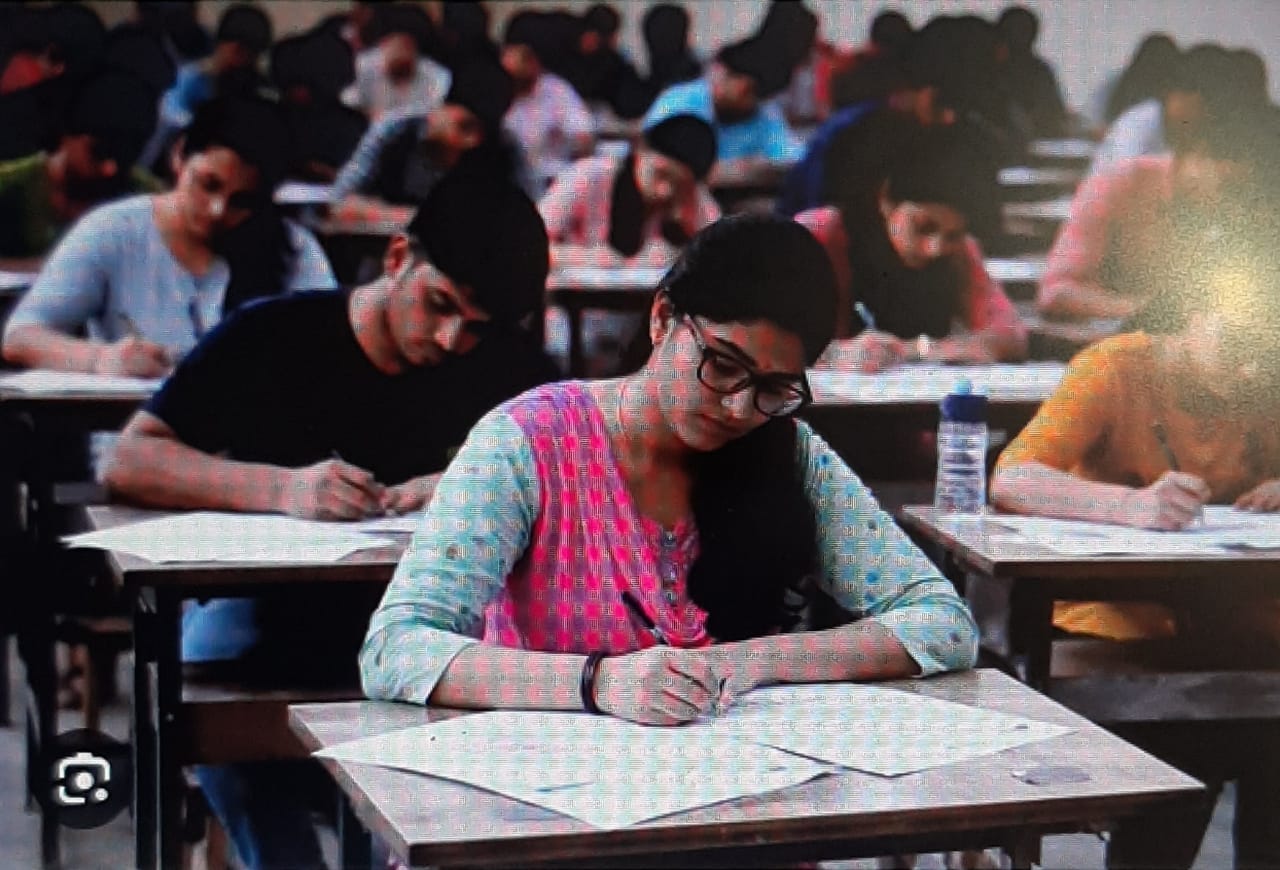
Every year, a quiet national tragedy plays out with clockwork precision. This Sunday, nearly twenty lakh young Indians — two million aspirants — sat for the NEET examination, each hoping for one of the one lakh MBBS seats available across the country. That is a ratio of twenty to one. Nineteen lakh of them will walk away without a seat. Many will try again next year, and the year after. Some will pack their bags and board flights to China, Ukraine, Russia, Kazakhstan, Nepal, or the Philippines — spending money India can ill afford to export, facing hardships India should be ashamed to impose, and returning home to face a screening examination that fails the overwhelming majority of them.
This is not a talent shortage. This is a policy failure of spectacular proportions.
The Arithmetic of Injustice
India currently has roughly one doctor per 1,511 people — below the WHO-recommended ratio of 1:1,000. Two-thirds of Indians live in rural areas, yet fewer than one-third of healthcare workers serve them. The gap is not a gap any longer. It is a chasm.
The irony is savage: India produces some of the world’s finest medical talent, yet it cannot provide enough of them to its own people. Private medical colleges charge illegal capitation fees ranging from ₹50 lakh to ₹2.25 crore for an MBBS seat — making India, remarkably, one of the few countries in the world where official policy effectively permits the sale of medical education to the highest bidder. Merit is a qualifier. Money is the decider. Students who cannot pay fly abroad.
When they return — after five hard years in a foreign land, often in difficult conditions — they face the Foreign Medical Graduate Examination, a test so stringent that the majority fail it. Trained doctors, ready to serve, are turned away at their own country’s door.
This is the system we are defending.
India Already Has the Tools — It Just Won’t Use Them
Before imagining entirely new structures, it is worth recognising what India already possesses and wilfully underutilises.
BAMS — Bachelor of Ayurvedic Medicine and Surgery — is a five-and-a-half-year degree, identical in duration to MBBS, with rigorous clinical training. India currently offers over 52,000 AYUSH seats annually. In states like Maharashtra, Karnataka, and Uttar Pradesh, BAMS graduates who complete a designated pharmacology bridge course are legally permitted to prescribe specific allopathic medicines and manage basic emergency care in rural areas. This is not a theoretical possibility — it is happening, quietly, in millions of rural consultations every day.
If this bridge course were standardised nationally by the National Medical Commission, implemented uniformly and rigorously, it would immediately add tens of thousands of competent practitioners to India’s primary care network. It would cost a fraction of building new medical colleges. It would require only political will.
The state of Chhattisgarh went further. In 2001, it launched a three-year Community Health Programme that produced Rural Medical Assistants — a shorter-trained cadre deployed exclusively in villages. Studies comparing them to MBBS doctors in diagnosing pneumonia and diarrhoea — the great killers of rural India — found no meaningful difference in outcomes. The researchers concluded, unambiguously, that clinicians with shorter training are the answer to rural India’s doctor shortage.
The programme was not scaled. The Indian Medical Association opposed it only to protect their own turf ignoring the larger public interest. The question is why government listened to them and failed to snub them.
What the World Has Already Learned
India is not the first country to face this problem. It is merely the last large democracy to refuse to solve it.
China confronted its rural doctor shortage decades ago with characteristic directness. It built a two-tier system: full physicians, and licensed assistant physicians — a formally recognised credential below MBBS-equivalent but with its own national licensing examination, its own scope of practice, and its own dignity. More importantly, in 2010 China launched its Rural-oriented Tuition-waived Medical Education programme: government-funded three or four-year courses for rural students, with full tuition waived and a six-year bonded rural service obligation upon graduation. The model converted a financial drain into a national investment. Students who would otherwise have gone abroad — or gone nowhere — became the backbone of China’s village health system.
The United States faces a projected shortage of up to 124,000 physicians by 2034. Its response has been twofold. First, about 33 medical schools now offer three-year accelerated degree programmes. Second, the Physician Associate — a mid-level practitioner trained to diagnose, treat, and prescribe under physician supervision — has become a cornerstone of American primary care, especially in rural and underserved communities. The PA credential is neither a lesser doctor nor a glorified nurse. It is a carefully defined professional with a defined scope, a national exam, and a career pathway. It works.
The United Kingdom formally regulated Physician Associates and Anaesthetic Associates through a 2024 statutory instrument, integrating them into the NHS as recognised members of clinical teams. The transition was not without controversy — but the workforce imperative won out over professional protectionism.
Brazil’s Mais Médicos (More Doctors) programme placed thousands of foreign-trained and domestically-trained practitioners in underserved areas, dramatically improving primary care access in the Amazon and the rural Northeast.
The lesson from every one of these countries is the same: a rigid insistence on a single credential as the only legitimate form of medical practice does not protect patients. It abandons them.
A Framework India Could Adopt
The question is not whether India needs a new approach. It demonstrably does. The question is what shape that approach should take. Three reforms, pursued together, could transform Indian healthcare within a decade.
First ,India should create a new regulated degree — call it the Bachelor of Community Medicine and Primary Care (BCMPC) — a four-and-a-half year programme with compressed pre-clinical science, heavy clinical rotations from the second year, and a mandatory two-year rural posting built into the degree itself. Graduates would be licensed to practice primary and preventive care — not surgery, not advanced specialisation — under a separate NMC register. The scope of practice would be defined, enforced, and expandable over time as evidence accumulates. This is not MBBS-lite. It is a professionally distinct, nationally regulated credential designed for the health needs of 700 million rural Indians.
Second , the BAMS bridge course should be nationalised, standardised, and made compulsory. Every AYUSH graduate, before independent practice, should complete a rigorous NMC-administered module in clinical pharmacology and emergency medicine. This is not about replacing MBBS. It is about honouring the five-and-a-half years these graduates already invested, and deploying them effectively.
Third, India must dismantle the wall it has built against its own returning students. A supervised practice pathway — two years of credentialed clinical work under an MBBS supervisor — should earn a returning foreign medical graduate full licensure. Several US states have already adopted this model for internationally-trained physicians. The principle is simple: demonstrated competence, not the accident of where you trained, should determine whether you may serve Indian patients.
The Obstacle That Dare Not Speak Its Name
There is a reason none of this has happened, and it is not complexity. These reforms are not technically difficult. They are politically difficult, because the established moneyed medical college running fraternity has a material interest in scarcity.
When Chhattisgarh’s Rural Medical Assistants were shown to perform as well as MBBS doctors in rural settings, the IMA did not update its position. It intensified its opposition. When AYUSH bridge courses were proposed for national rollout, the response was alarm about “dilution of standards.” When mid-level providers were introduced in the UK and the US, physicians there raised the same objections — and were proven wrong by a decade of evidence.
Every profession resists the democratisation of its expertise. This is human and understandable. But when that resistance leaves seven hundred million people without access to basic primary care, it ceases to be a professional position and becomes a moral failure.
The National Medical Commission was created, in part, to break the MCI’s stranglehold on medical education but it has created it’s own octopus like grip over the medical education system. It has the mandate. What it requires is honesty , integrity and spine.
The Stakes
Twenty lakh young Indians sat an examination this Sunday. One lakh will become doctors. Nineteen lakh will not — not because they lacked ability, but because we lacked imagination.
Some of those nineteen lakh will go to Wuhan or Kyiv or Kathmandu. They will study in a foreign language, live far from their families, and return to an examination designed to fail them. Others will abandon medicine entirely and carry for the rest of their lives the weight of a dream the system refused to honour.
Meanwhile, in a village in Chhattisgarh or Jharkhand or Nagaland, a child with pneumonia is being seen by a community health worker who is not authorised to prescribe the antibiotic that would save her life.
We know how to fix this. Other countries have fixed it. The only question is whether we have the will and honesty to act before another generation of students — and another generation of patients — pays the price of our inaction.
(Vijay Shankar Pandey is former Secretary Government of India)