

It must be remembered that if local governments come into their own, the issues determining national politics could also undergo a transformation. Citizens would gradually begin to distinguish between the local and the national and exercise their franchise differently. Politicians would have to rethink their rhetoric. Talks of ‘double engine’ or ‘triple engine’ governments would then cut no ice with the electorate. And local government and its dynamics of elected leaders and their accountability might become the launching-pad for many new politicians at the local, state and national level, writes Sunil Kumar, a former civil servant.
In the last three years I have come across four different books on India written by eminent economists & political scientists wherein they have analysed in great detail country’s development saga since independence. All of them seem to be concluding in their own style that it is high time Indian politicians gave a nod to strong local governments if India’s tryst with destiny, as Nehru famously put it, was to be realized.
The first book captioned ‘India Is Broken’ by Ashoka Mody was published in 2023. The author has examined in great detail how successive Prime Ministers have pursued development strategies which have failed to address the key challenges before the Indian state. He concludes that the state still has a primary role in promoting sustainable economic growth and especially poverty-reducing growth. Ensuring stability, well-functioning institutions and appropriate legislation (e.g. labour laws) were key state functions while other essential government actions related to skills formation, technology support, innovation financing, infrastructure development & provision of a variety of public good. Mody states that hope for India lies only in making it a true democracy – decentralization of power- and that no country has experienced a continuous phase of high growth without fixing problems relating to education, health, nutrition etc. To quote, “Despite its challenges, local self-government is the most promising way to establish social norms that induce cooperative behavior and political accountability. This path is India’s best and perhaps only hope for cleaning its rot in politics and giving it a fighting chance of establishing values that honor human development, environmental stewardship, and resilience against climate change[i].”
In the second book, ‘Breaking the Mould’ written by Dr. Raghuram Rajan & Rohit Lamba and, again published in 2023, the authors have inter alia dwelt at length on increased decentralization of powers between the Union and the States on the one hand, and between the States and local governments on the other. They have examined the issue of the governance structure for the twenty-first century. In their view, an inclusive bottoms-up approach to governance is likely to be more effective than a top-down approach as has hitherto been the case. They feel that the village Panchayat should not be seen merely as an implementing agency of the Union and State governments but should also have the autonomy and wherewithal to conceptualize, plan and implement schemes of their own. The authors have stated that ‘devolution allows for governance to be sensitive to local needs and for the governed to influence how they are governed.’[ii] On the oft-cited issues of local governments being incompetent and corrupt, the authors counter that local government functionaries make up for their lower inherent aptitude through their higher local experience and local knowledge of what works, and the fact that they can be held responsible for local results unlike IAS officers.
In the third book, ‘Accelerating India’s Development’ by Karthik Muralidharan and published in 2024, the author has noted that poor state capacity for delivering quality public services to citizens is the ‘great unfinished task of Indian democracy’ and doing so is essential for, inter alia , preserving citizens’ faith in democracy itself. In a chapter devoted to Federalism and Decentralization, he has pointed out that India is highly over-centralized which has contributed to weak democratic accountability for service delivery, governments that are slow to respond to citizen needs by being too far away from the people, ineffective public expenditure that is not a good fit for local conditions and limited development of local capacity and leadership for governance and service delivery.[iii] Professor Muralidharan has advocated acceleration of decentralization within States. He has advocated improving the autonomy and accountability of district-level officials, decentralization of service delivery to local bodies with checks and balances, greater investment in revenue generation capabilities of local bodies and how greater decentralization is also good for politicians and quality of political leadership. To quote,”We need much more decentralization of funds, functions,and functionaries, both from Central to state governments, and especially from state to local governments.”
In the most recent book, “A Sixth of Humanity: Independent India’s Development Odyssey” by Arvind Subramanian and Devesh Kapur published in 2025, the authors have again argued why debates on federalism cannot remain confined to Centre-State relations alone and that India needs to empower local bodies. To quote,”the third tier – comprising rural and especially urban institutions – is the stepchild of Indian federalism and the offending stepparent is the second tier, namely state governments, directly above and controlling it.”[iv] They have focused attention on urban local bodies and have concluded that ‘the one unambiguous failure has been the inability to create a well-staffed, well-financed and accountable third urban tier able to deliver basic services to the people. In a recent article the authors have observed that ”the push and pull dynamic unleashed not just by competitive federalism but also by competitive sub-federalism could emerge as a promising force for change.”[v]
Thus, it is evident that scholars interested in understanding and explaining India’s development strategy and future prospects are almost unanimous in pointing to the price that the country is paying for neglect of education, health and nutrition. India seems to have ‘missed the bus’ on so many occasions in the past due to political and administrative pusillanimity. The governance structure built on the troika of ‘PM-CM-DM’ is seen as increasingly failing to deliver quality public services to citizens at large. They also seem to be suggesting that the problem is not too much of democracy but rather too little of it in the real sense. Citizens seem to be missing in action on almost all occasions except on the day of polling! Excessive centralization of powers in the Union government and inertia on the part of State governments to devolve funds, functions and functionaries to the local governments despite the constitutional provisions contained in Part IX and IX A of the Indian Constitution are obviously major roadblocks.
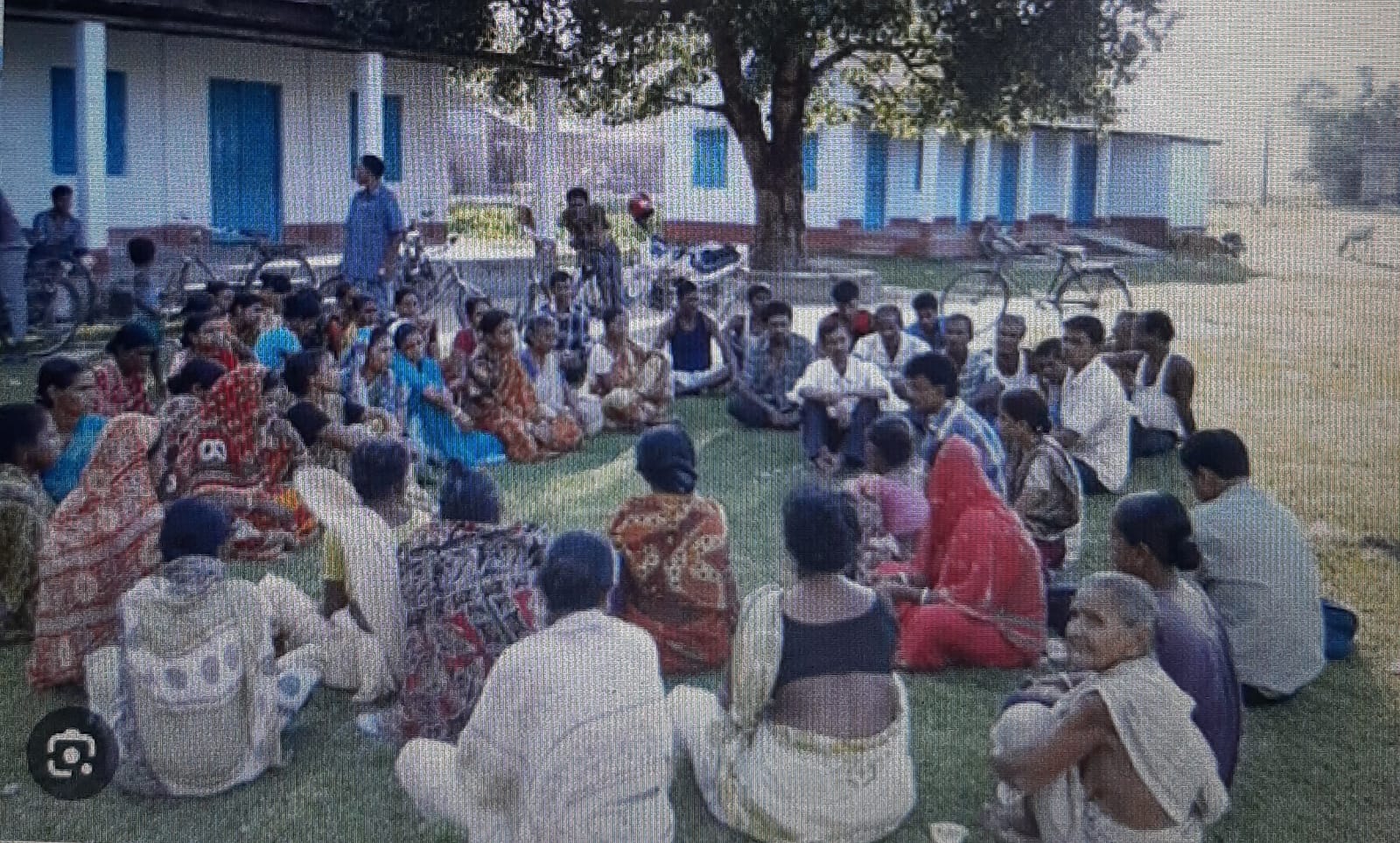
In a large country of India’s size, there is no way in which citizen-centric governance can be provided without strong local governments. In most States, rural and urban local governments, in their present form, are ill-equipped to ensure citizen-centric governance. They lack the personnel, processes, institutions and wherewithal for the same. In the absence of benchmarks for delivery of various services, the question of adherence to quality standards does not arise. If cities and towns are to emerge as growth centres, a lot more would need to be done other than creating glitzy physical infrastructure like metros and flyovers. Putting in place functioning systems with strong accountability mechanisms, ensuring transparency in functioning of local governments and adherence to rule of law are sine qua non for making the local governments drivers of growth. Special attention would need to be focused on the governance structures in not only the forty-six million plus cities, but also in the five thousand-odd statutory towns and, say, about ten thousand-odd census towns expected in the 2027 census operations currently underway.
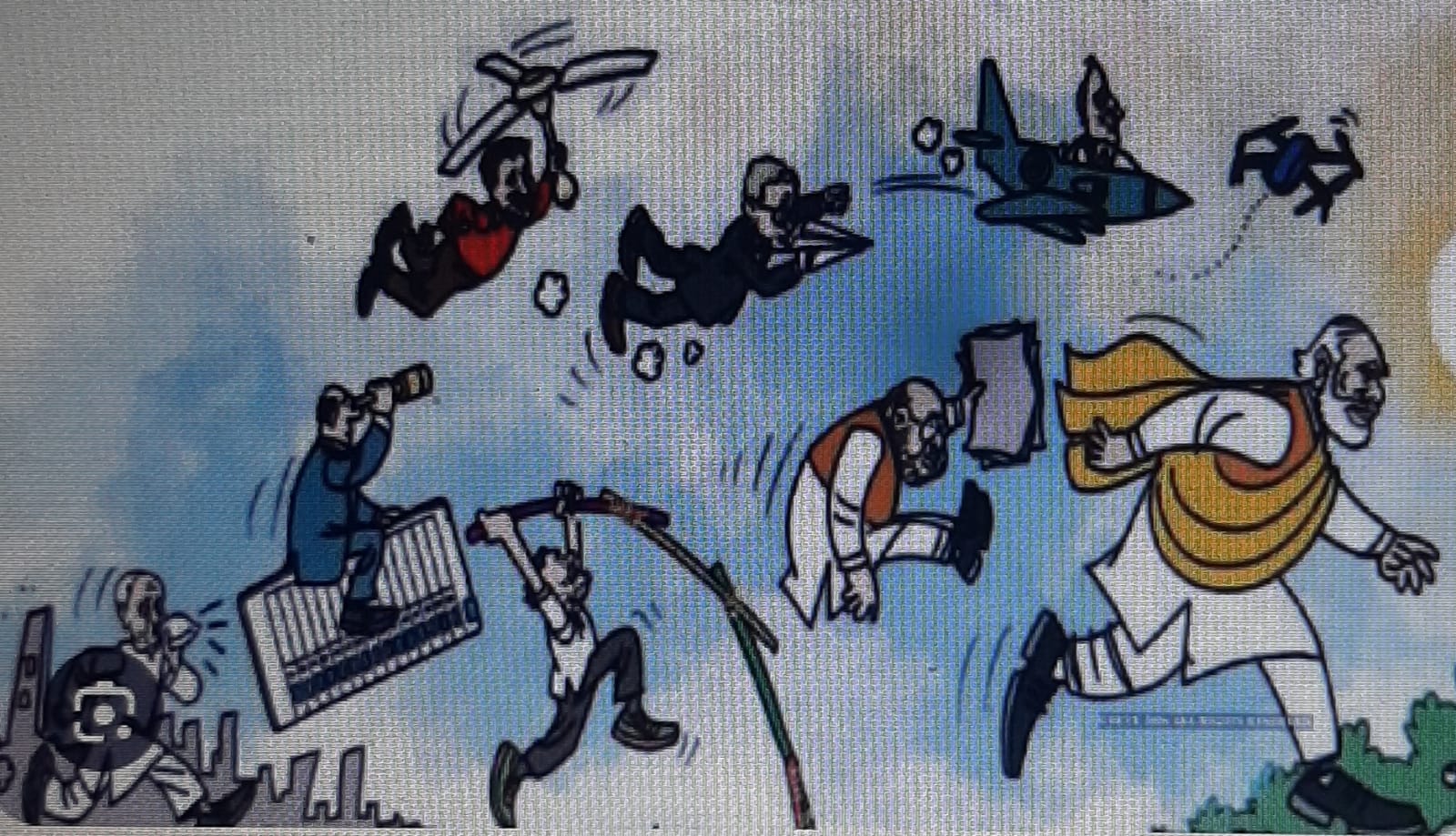
It must be remembered that if local governments come into their own, the issues determining national politics could also undergo a transformation. Citizens would gradually begin to distinguish between the local and the national and exercise their franchise differently. Politicians would have to rethink their rhetoric. Talks of ‘double engine’ or ‘triple engine’ governments would then cut no ice with the electorate. And local government and its dynamics of elected leaders and their accountability might become the launching-pad for many new politicians at the local, state and national level. Strong grassroot democracy with empowered local governments would necessarily impact the market economy too and open up new fields of enterprise and employment.
While the agenda for strengthening local governments would be long and would have several State specific features, there is no denying that this is an idea whose time has come. The future of India certainly appears brighter seen through the prism of local democratic governance.
All stakeholders need to put on their thinking caps and resolve the design flaws at the earliest. Local governments have to be, veritably, the ‘first tier’ rather than the ‘third-tier’ of government. All this can be done within the existing constitutional framework if the union, state and local governments collectively work towards this end. The nudge would need to come from the citizens as, after all, this is too important a matter to be left to a handful of well-meaning politicians, bureaucrats and academics among others. The gentle nod to local government has to become a vigorous demand for affirmative action from citizens. The time to act is now.
(Sunil Kumar is a visiting Senior Fellow associated with the Centre for Cooperative Federalism and Multilevel Governance in Pune International Centre and a former civil servant. Views expressed are personal.)
[i] Pg 407-408, Epilogue: A Feasible Idealism in ‘India is Broken’ by Ashoka Mody, Juggernaut Books, 2023
[ii] Pg.93, Governance for the Twenty-First Century: Structure in ‘Breaking the Mould: Reimagining India’s Economic Future – Raghuram G.Rajan & Rohit Lamba; Penguin Random House India, 2023
[iii] Pg.265, Chapter 8 – Federalism and Decentralization in ‘Accelerating India’s Development – A state-led roadmap for effective Governance’ – Karthik Muralidharan, Penguin Random House India, 2024
[iv] Pg.484, Chapter XIV Nation-Building Through Fiscal Federalism in ‘A Sixth of Humanity: Independent India’s Development Odyssey” by Devesh Kapur & Arvind Subramanian; Harper Collins Publishers 2025
[v] ‘Why India needs to empower local bodies’; Devesh Kapur & Arvind Subramanian; The Indian Express, May 20,2026; New Delhi, Late City edition