

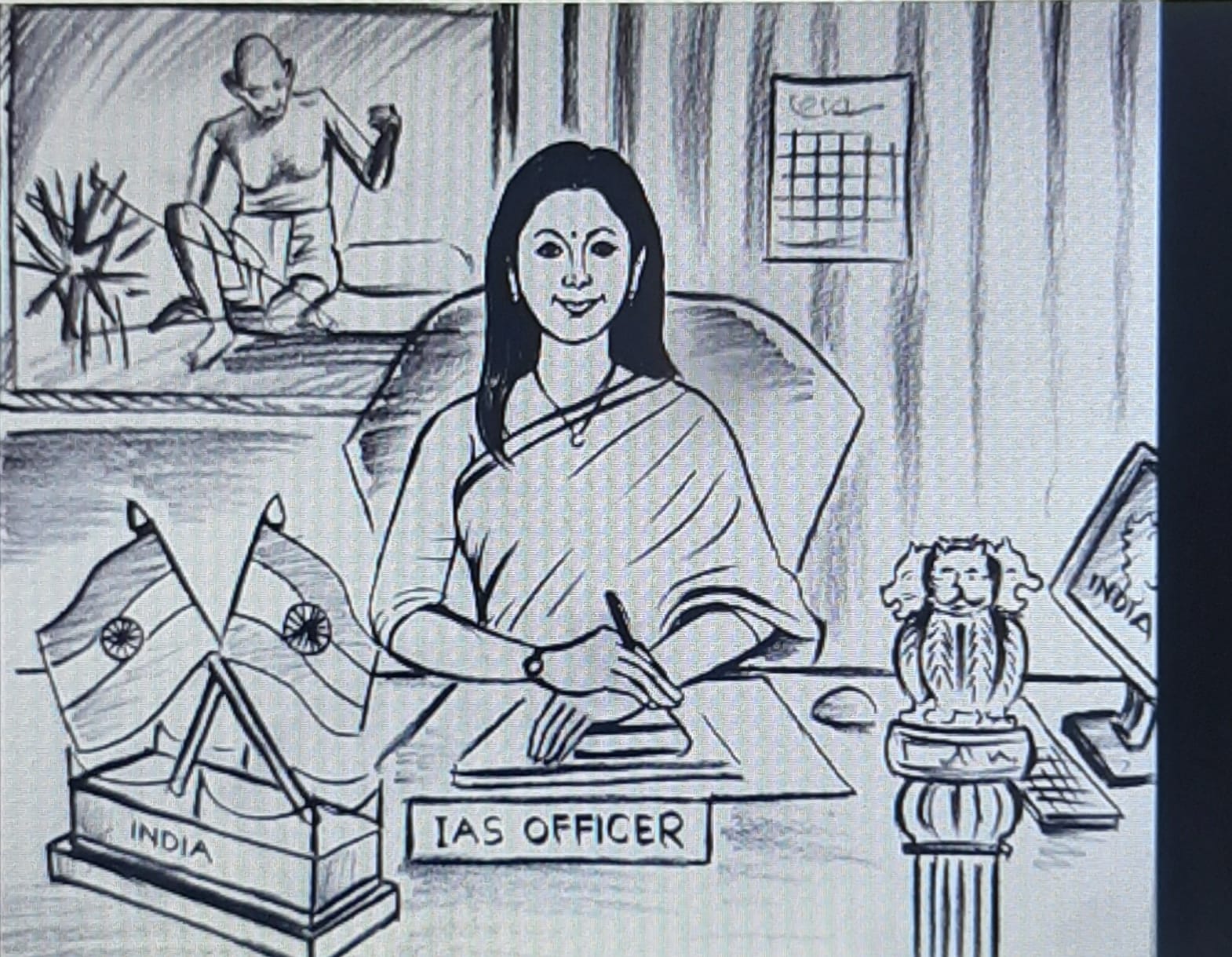
For fulfilling effectively the constitutional mandate of governance, these bureaucrats do not require publicised awards from private organizations on such a scale. Such awards send wrong signals as they appear to trivialise and glamorise the serious business of governance which is owed to the people anyway. The media organisations perhaps need to reconsider and desist from organizing such award functions, writes Sunil Kumar, a former civil servant.
These days media houses are falling over themselves to fete bureaucrats. These include the ET Government (The Economic Times), India Today Group, The Indian Express and TV9 Network, among others. The Indian Express recently ran a story on its front page captioned “Nation’s best DMs: Entries for Indian Express Governance Awards open until June 30”.
Being a former civil servant myself, this aroused my curiosity. I read the story with interest. This award was launched in 2019 and honours District Magistrates (DM) nationwide for innovations that have positively impacted citizen-welfare and government efficiency. The award covers fifteen categories which include education, healthcare, sanitation, gender & inclusion, social welfare, agriculture, e-governance, skill development, climate change & sustainability, water, energy, urban governance & liveability, MSME & industries, startup & innovations and jury awards. The jury is headed by Shri Wajahat Habibullah and includes Shri K.M.Chandrasekhar, Ms. Nirupama Rao and Shri Amarjeet Sinha – all distinguished bureaucrats in their own right. Apparently the third edition had attracted about 450 entries. These award functions have been graced by senior Union Ministers in the past.
It can be safely inferred that this award is not just editorial recognition but more in the nature of a nomination-based industry event. This is a private media-organized award. There seems to be something oddly at variance in civil servants/government officials being felicitated by media and business organizations for apparently nothing but the discharge of their mandated duties, a mandate imposed and upheld by the highest law of the land viz. the Constitution of India. Several uncomfortable questions come to mind. What is the need for such a public felicitation by private parties? Why single out District Magistrates who perform regulatory, judicial and other functions and have long been the strongest reminder of the colonial legacy? What is the need to go against the established conventions of anonymity of the non-political executive and bring them selectively into the media limelight?
Prima facie, it seems to be against the ethos of bureaucracy. A bureaucrat is expected to be a nameless and faceless person working to uphold constitutional values, enforcing rule of law and providing continuity to administration even during the change in political leadership. The face of government in a parliamentary democracy is the elected political executive, not the civil servant. Public felicitation of a bureaucrat seems to change the equation. It confers recognition and focuses media attention on an individual holding a particular position in the bureaucracy who, at best, is just doing his/her job efficiently. The colleagues and subordinates working with him/her are quietly forgotten. Effective governance requires each cog in the wheel of government to work efficiently and continuously. The system is greater than any individual, however gifted or brilliant such an individual may be. These awards seem to be ill-conceived in that they focus on individual officers without acknowledging the system. In doing so, they appear to be ignorant of the permanency of the system which goes on regardless of any single contribution.
Interestingly, in the Constitution of India, almost all the areas covered by the awards, find mention in the Eleventh and Twelfth Schedules (inserted vide the 73rd & 74th Constitution Amendment Acts). These lie under the domain of the rural and urban local governments. So, if at all any award is to be given, it should go to the concerned heads of rural and urban local governments. By publicly felicitating some DM for their ‘achievements’ in these fields, the media organizations (dubbed as the fourth pillar of democracy) seem to be acting against the constitutional provisions and unwittingly supporting the illegality of non-devolution of funds, functions and functionaries to local governments in most States.
In fact, the institution of DM, a colonial legacy, seems to be working at cross-purposes with the local governments. Today, no responsibility for failure to deliver services in any of these fields can be pinned on the DM. Blame would be apportioned to the functionaries of local governments. If such is the case, then recognition and awards should also come their way and not to the DM.
Public felicitations of DM ends up perpetuating the myth of the Indian Administrative Service being the steel frame of Indian administration. This perpetuation seems intentional and not accidental. Civil service aspirants today form the bulk of newspaper readers. Multi-crore business of civil service coaching institutes, dotting the towns and cities of India, thrive on the mythical powers of the bureaucrats symbolized by the DM and the Superintendent of Police (SP). Ordinary citizens living in the villages and cities of the 750-odd districts of India are regularly fed on a diet of stories of the power, pelf and privilege of the DM and SP. No wonder, there are lakhs of civil service aspirants toiling for years on end and sacrificing their youth running after this mirage. The dream of occupying a position of immense power (which veers towards being feudal in nature) being sold to the gullible public is seemingly fuelled by these award functions.
The so-called creme de la creme come to these posts after a grueling entrance exam often described as the toughest in the world. Civil service aspirants are led to believe that the PM-CM-DM troika rules this country. In reality, it is pure business interests which are behind this belief, a belief which is antithetical to democracy, against constitutional values and which sidesteps the recognition and strengthening of elected local governments.
For fulfilling effectively the constitutional mandate of governance, these bureaucrats do not require publicised awards from private organizations on such a scale. Such awards send wrong signals as they appear to trivialise and glamorise the serious business of governance which is owed to the people anyway. The media organisations perhaps need to reconsider and desist from organizing such award functions. Bureaucrats would also do well to read the writing on the wall and avoid participating in private award functions. Upholding the Constitution and constitutional values come first.
(Sunil Kumar is a visiting Senior Fellow associated with the Centre for Cooperative Federalism and Multilevel Governance in Pune International Centre and a former civil servant. Views expressed are personal.)